The Minneapolis Strategy for Fighting ICE Is Worth Studying
In Minneapolis, years of robust labor and community organizing set the stage for the fierce pushback against federal immigration agents’ aggressive invasion. Their experience may soon be relevant to cities elsewhere in the US facing incursions from ICE.
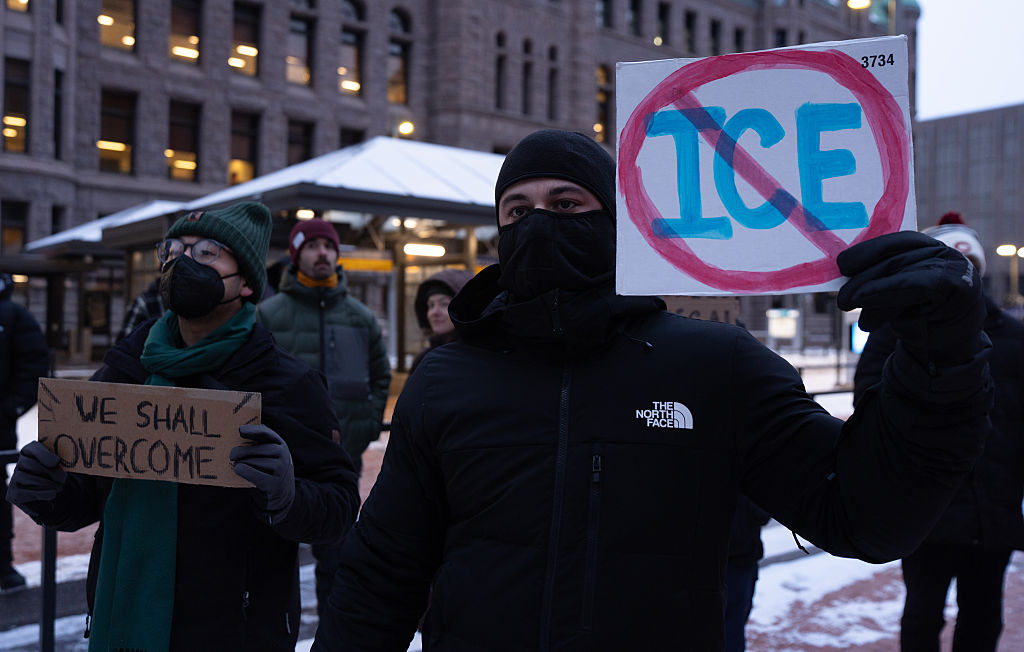
The mass protests against ICE brutality that we’ve seen in Minneapolis didn’t come out of nowhere. They were the product of years of strategic labor movement and community organizing in the city and state. (Lokman Vural Elibol / Anadolu via Getty Images)
On January 23, tens of thousands of Minnesotans braved subzero temperatures and took to the streets as part of a call for “No Work, No School, No Shopping” in protest of the brutal and deadly occupation of thousands of Immigration and Customs Enforcement (ICE) and Border Patrol agents across the state. Polling suggests hundreds of thousands in the state stayed home from work in response to that call.
Dan Denvir, host of the Jacobin Radio podcast The Dig, sat down with three organizing leaders behind the January 23 action — Emilia González Avalos, Greg Nammacher, and JaNaé Bates Imari — to discuss how that day came to be, and how their fight continues. This conversation has been edited for length and clarity.
Daniel Denvir
The organized people of Minneapolis have, with truly heartbreaking sacrifice, waged a struggle that’s now shaken the MAGA regime unlike anything we’ve seen yet. To ask this in a bigger-picture way before we get into a lot of specifics, how have organized masses of everyday people in Minnesota forced this extraordinary crisis upon Trump’s authoritarian project? How has resistance in one particular place effectuated a crisis of such giant national proportions?