Cuba Is on Edge Waiting for Donald Trump’s Next Move
Cuba has been living in the shadow of US threats and blackmail ever since the revolution of 1959. But Donald Trump’s nakedly imperialist power grab in the Americas represents one of the most serious dangers its people have faced in all that time.
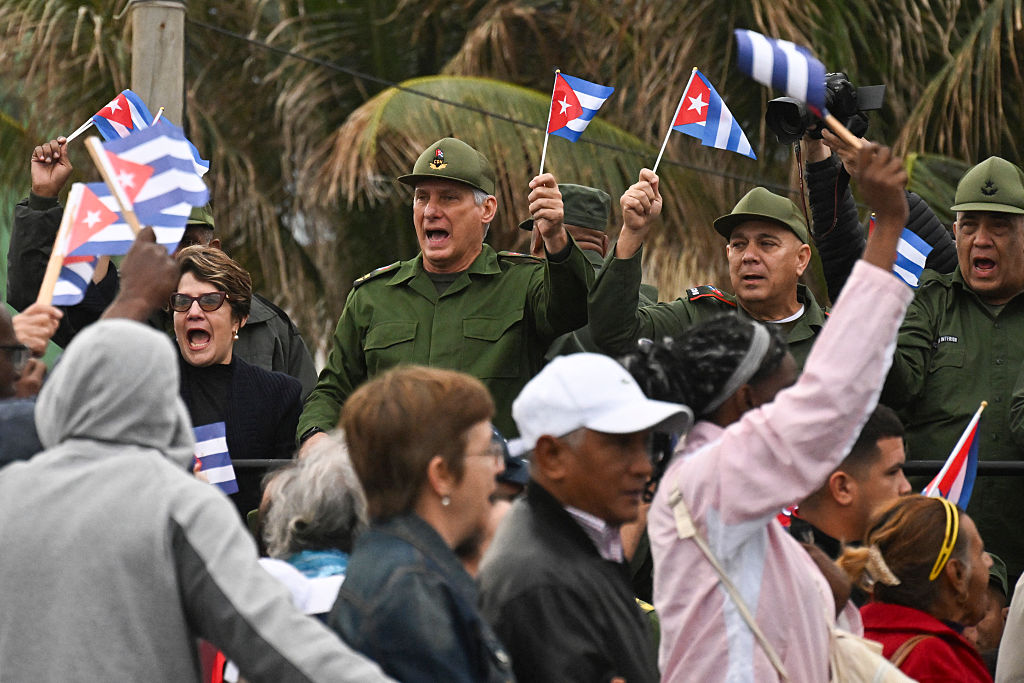
Cuba’s president Miguel Díaz-Canel takes part in a protest in front of the US Embassy against the US incursion in Venezuela, where thirty-two Cuban soldiers lost their lives, in Havana on January 16, 2026. (Yamil Lage / Pool / AFP via Getty Images)
In the aftermath of the Trump administration’s startling (and illegal) removal of Nicolás Maduro, the Venezuelan president, most global attention began to focus on Donald Trump’s follow-up threats to take control of Greenland, regardless of the implications for NATO’s possible reaction and future, and his drug-related belligerence toward Colombia.
However, Cuba is the country most obviously imperiled by what Trump vaingloriously termed the “Donroe Doctrine” and the “Trump Corollary,” proudly recalling US declarations of 1823 (by James Monroe) and 1904 (by Teddy Roosevelt), which framed US policy toward the Latin American “backyard” until the 1930s.
Ever since the days of Thomas Jefferson, Cuba has figured large in US attitudes to (and actions in) the Caribbean and Central America. However, the Maduro episode brought a new dimension to US policy in the region: as the first open military incursion in the South American mainland, it suggests that there are now no limits to US activism in the Americas. That seems to have put Cuba firmly in the firing line for future US intervention. Or has it?