The Triumph and Tragedy of Russian Women

The first decades following the Russian Revolution saw enormous changes in women’s social role, but early promises of liberation were soon stifled. The record of women’s struggle is among the revolution’s most precious legacies.
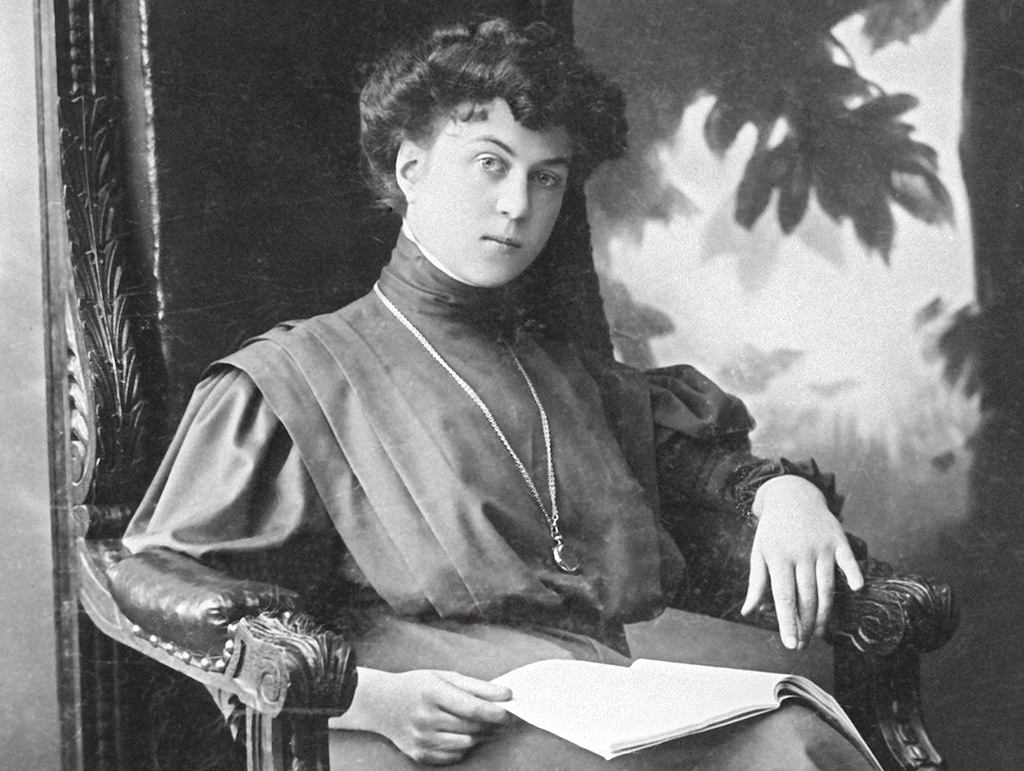
No Western government has even come close to enacting revolutionary politician Alexandra Kollontai’s comprehensive policy. (Fine Art Images / Heritage Images / Getty Images)

Julia Ioffe left the Soviet Union in 1990 at age seven, when her family immigrated to the United States. In her newly released Motherland, the Russian American journalist does a full-on investigation of the pioneering egalitarian movement in 1917 and the revolution’s profound effects on women over the last century. The results are at the same time comprehensive, emotionally jarring, tragic, seemingly petty, and amazing.

Revolutionary

The Bolsheviks ushered in the most revolutionary program of women’s rights the world had ever seen, and they didn’t call it feminism. Importantly, rather than being initiated by a separatist, feminist uprising, like that promoted by activists in the West, the changes came from the newly imposed 1918 Constitution, along with separate decrees issued by Alexandra Kollontai, the first woman in the world to hold a cabinet position.

Kollontai was a brilliant revolutionary. More than a hundred years later, no Western government has even come close to enacting her comprehensive policy. Kollontai’s decrees gave legal rights to the many children that were born out of wedlock after World War I; maternity leave was planned for eight weeks before and after birth; equality was to exist for husband and wife in marriage, divorce, and property ownership.

Universities also removed gender requirements and made tuition free (although in the Stalin era, a quota system was introduced for Jewish students, making it more difficult to get a place in a top-ranking university). The 1918 Constitution also stipulated that every citizen was required to work and to receive the same minimum wage. Kollontai’s input, according to Ioffe, “became the blueprint for Soviet family policy,” an accomplishment that Ioffe rightly gives huge praise, while it lasted.

Ioffe demonstrates the reach of these plans in the context of cultural and political events that haunted the newly formed Soviet Union. She includes reams of personal anecdotes, a host of national statistics, and a highly personalized, thoughtful account, straddling the long and deeply violent history that would deeply shape her motherland and ultimately undo most of Kollontai’s carefully constructed plans.

In the twenty-first century, Russia has fallen far behind even Western countries on such welfare programs — except perhaps in advanced education, where tuition is still low-cost or free. Ioffe fleshes out the details that paved the way for Vladimir Putin’s repressive leadership and the exorcism of most of Russia’s revolutionary, humanistic social experiments.

On a less lofty note, she confides her annoyance (upon reentering Moscow as an accomplished journalist in 2009) to find a population of Russian women no longer treasuring their varied careers. They were instead, she says, honing in relentlessly on makeup, sexy clothing, and hard-knuckled competition with other women hunting down a seemingly small population of men with prosperous careers. And it’s not that Ioffe prefers American feminists to her countrywomen. She is also annoyed when New York friends imagine that they invented feminism — but one only involving sex and reproduction.

Ultimately, though, Ioffe begins to understand her Russian counterparts — not for their makeup choices but in terms of their decades-long journey through the harshness of the Soviet Union. She describes a Russian history stretching from the “Red Terror” prompted by an attack on Vladimir Lenin’s life to the “Great Terror” killing millions under Joseph Stalin, the vast suffering of the Nazi invasion and, even after it was defeated, the US decision to stop treating its former ally as a political friend.

To some degree, Ioffe underestimates the dire effects of America’s Cold War on the average Russian, as precious resources were used to develop a huge defense program. In contrast, postwar Federal Germany was generously endowed with rehabilitation funds in order to serve the role — against the Soviet Union — as America’s most powerful European ally.

Postwar

“The Bolsheviks may have aimed to transform Russian society,” Ioffe explains, “but they were also products of that society, one that was deeply patriarchal.” She recounts many stories in her own family that were defined by these tensions. The mother-in-law of one female relative flew into a rage in the mid 1950s upon hearing that her son was doing household chores.

Still, the women in the Ioffe family worked incredibly hard and became scientists and medical doctors. They came from modest rural backgrounds in Pale of Settlement Ukraine and Belarus. Several became medical doctors over three or four generations; another was a PhD in chemistry and ran her own lab; another was a chemical engineer who oversaw the lab at a water filtration plant that supplied the Kremlin’s drinking water.

After the war was won and millions of soldiers were demobilized, it turned out that Soviet women would never see active combat again. Stalin resegregated schools by gender and reintroduced home economics. The 800,000 women who had fought in the war were forgotten by most male historians. As Ioffe points out,

The Second World War . . . capped three decades of bloodletting on Soviet territory, starting with World War I, followed by the Bolshevik Revolution, Civil War, famine, collectivization, and mass political repressions. Taken together, the forty years before Victory Day carried off more than 50 million Soviets. In the years between the Nazi invasion and the Soviet counteroffensive . . . 27 million Soviets were killed.

No doubt, these multiple horrors left deep psychological scars. Most of the dead were men. Stalin knew that in order to maintain its hard-won postwar power, the Soviet Union would have to grow its population. “Many women had stopped menstruating during the war,” explains Ioffe. “Venereal disease reached epidemic proportions among both men and women. . . . Families had been torn apart, millions of Soviets were homeless or living in earthen dugouts, the entire country subsisted on ration cards for years. . . . twenty-one million men did not come home from the war.”

Stalin had been no fan of Kollontai, and nor was his successor, Nikita Khrushchev. He, too, became obsessed with increasing the country’s birth rate. The much-touted Order of Maternal Glory was given to Soviet women with seven or more children. Under Khrushchev, Stalin’s ban on abortion was modified to include criminal punishment. In addition, there was now a clear legal line between legitimate and illegitimate children, and official marriages and common-law ones not confirmed by the state. While Khrushchev’s political policies have commonly been described as a “thaw,” his family policy, writes Ioffe, “was the worst of both — neither socialist nor bourgeois — but instead rolled into one monstrous law.”

And because his economy was centered on heavy industry and defense, appliances, food, and clothing were scarce. Refrigerators, washing machines, and vacuum cleaners did not exist for most working mothers. As Greta Bucher points out in an article, “Struggling to Survive,” “When Soviet women were not at their jobs, they had to spend hours waiting in lines, working personal connections, tilling dacha gardens, and even foraging for food in the nearby forests to make up for these shortages.”

In the countryside, historian Tony Judt has noted, the absence of men was particularly pronounced. “The Soviet rural economy now depended heavily on women for labor of every kind,” he writes. “Not only were there no men, there were almost no horses.”

And in factories, hospitals, schools, and universities, advancement was often given to men. In addition, the Soviet government mandated several hundred jobs that would be closed to women. More and more, their state-defined role was geared to mothering. In the eighteen years of stagnation and rising inflation under Khrushchev’s successor Leonid Brezhnev, the ever-“resilient” Soviet woman was increasingly fed up. Long lines and outdated clothes were often the norm, as was bringing up children on their own.

The End

As Ioffe describes it, by the time of Mikhail Gorbachev’s efforts to restructure the Soviet economy from 1985 to 1991 under perestroika, “the Soviet economy was failing faster than it could be restructured . . . the increasingly broke government printed more money at home while running out of hard currency to buy food abroad . . . Soviet factories made consumer products that were terrible quality but wildly expensive.” Tens of billions of rubles worth of these goods sat unwanted on store shelves. Meanwhile, the things that Soviets actually needed — meat, fruits, vegetables, sugar, and toothpaste — were nearly impossible to find.

Gorbachev’s perestroika was failing badly. Russian women were nearly worn out from holding down two full-time jobs — at work and at home, with little to show for it due to low wages. They did the laundry in steaming pots on crowded stoves and on washboards, dried it on clothing lines in small apartments, and then ironed every piece of it, she explains, in a kind of “history from below” right out of Fernand Braudel. “We still apply the old stereotype of the all-capable and resilient woman. . . . Yes, she can do everything, but she doesn’t want to anymore.”

The end of perestroika, with the collapse of the Soviet Union itself, didn’t usher in a bright future. Although many will disagree — including possibly Ioffe herself — the United States also played a significant role over many years in weakening a ravaged, newly evolving Russia, dealing badly with overwhelming internal and external dilemnas. Let’s face it: Wall Street’s boisterous privatization honchos, aiding and abetting Russia’s avaricious oligarchs in the late 1990s under Bill Clinton’s infamous Third Way, were no great heroes.

In many ways, things have gotten worse in today’s Russia under Putin — especially since he invaded Ukraine. “In the fall of 2022,” the Moscow-born author sums up, “at the height of the draft, Russian social media brimmed with jokes and memes about men vanishing from society, leaving behind a country populated mostly by women. . . .” Yet, only time will tell if Russia’s women will again have their say.