Francesca Hong Is a Socialist Running for Wisconsin Governor
In Wisconsin, state assembly member and democratic socialist Francesca Hong has announced she is running for governor. We spoke to her about the campaign.
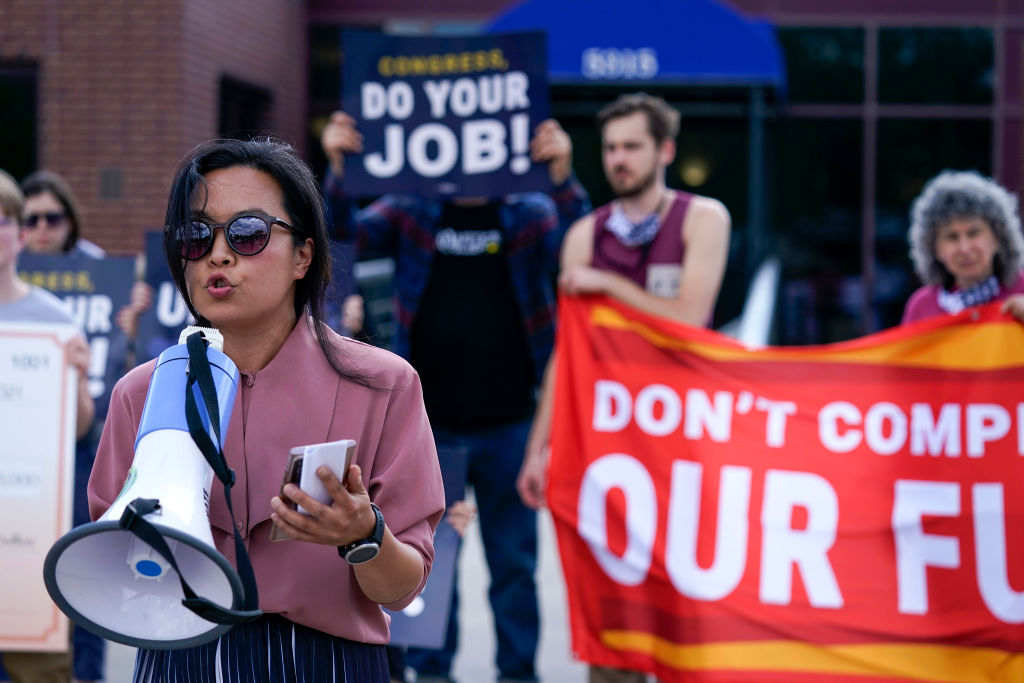
Wisconsin socialist candidate for governor Francesca Hong: “It is imperative we stay hyper-disciplined on affordability.” (Andy Manis / Getty Images)
- Interview by
- Eric Blanc
Wisconsin politics has become a bellwether for American politics: the costs of living keep climbing, public institutions have been hollowed out, and right-wing politicians respond to insecurity by trying to turn resentment into a governing strategy. Across the country, Donald Trump’s authoritarian hard right is testing how far it can go. But the story of the moment isn’t only one of reaction. In city after city, democratic socialists have started to notch real breakthroughs — proving that when the Left runs on material demands like rent relief, health care, and public investment, it can energize voters who’ve spent decades being told politics can’t improve their lives.
That mix of danger and possibility has deep roots in Wisconsin itself. Long before “democratic socialism” became a national lightning rod, the state produced America’s most successful socialist organization — the “sewer socialists,” who governed Milwaukee for nearly fifty years by fighting for and delivering meaningful improvements to the lives of working people. Standing in that tradition, Francesca Hong is a democratic socialist, service industry worker, and single mother currently serving in the Wisconsin State Assembly. Now she’s running for governor and currently seeking an endorsement from the state’s Democratic Socialists of America chapters on a platform centered on affordability, working-class organizing, and rebuilding a politics that puts ordinary people first.
What motivated you to take this leap and run for governor? What’s your vision?
In terms of corruption and chaos, there is an opportunity for change. Right now, Wisconsin is demanding that politicians put working-class people first, that we achieve permanent affordability, and that we stop the harms of austerity.
The first thing I did after I won a seven-way primary for the 76th Assembly District was travel across the state knocking doors and working with candidates who are running in deep red or purple districts. I’ve been traveling across the state for the last five years and have talked to educators, farmers, students, and workers of all different backgrounds. Now is the time we can build a working-class movement, because it is the power of organizing workers that will ensure that we don’t go back to a system that got us here.
How do you see your campaign relating to the broader national debate about the direction of the Democratic Party? And how do you respond to people who say that if you run too far left, you’ll have a harder time overcoming MAGA?
Electability and viability are subjective. I think oftentimes the messenger is just as important as the message. Building a coalition and uniting the Left with working-class people who feel very left behind, who are frustrated with the Democratic Party — we have to capitalize on the growing popularity of democratic socialism.
We have to ensure that the multiracial coalition that I’m building right now with organizers, with DSA chapters, is what is going to unite workers and working-class people who are ready for bold change, because they know that the system we are in now is not only rigged but causing immense stress and strain. We have a responsibility in our movement to show folks that it doesn’t have to be this way.
What would you say to skeptics who argue that even if you’re elected governor, you’ll be in the minority and your hands will be tied? What’s your theory of change for what you can do from the governor’s office?
To put political courage ahead of political complacency. To wield power effectively — whether that means declaring a state of emergency, to ensure that there are avenues to circumvent the legislature, to work the leverage that we have, even if it is a split legislature.
Republicans will have to concede in areas because they have to go back to their communities to show what they’ve done to get reelected. So there is political strategy involved. But again, the people I surround myself with want to ensure that I’m using every power, privilege, and the platform that I have to deliver policies for working-class people.
Because if we do not show folks that it is socialist leadership that can deliver change that improves your life, it is going to be difficult not only to govern, but to advance socialism. The priority has to be delivering policy, building relationships, and being unafraid to wield that power when negotiations and collaboration with the legislature are not serving working-class people.
You’re a DSA member. What does being a democratic socialist mean to you?
That I prioritize democracy, fairness, and human rights. Improving the quality of people’s lives — where we have all been harmed by a capitalist system — and moving toward showing that government can be a force for good. And that happens with relentless organizing and campaigning. Democratic socialists and DSA members are committed to that organizing and coalition-building.
There is a unique opportunity with a candidate like me, and a campaign that is bringing in young voters — folks who have lived here their entire life and have never voted. People are excited that they get to be excited for a campaign and excited about a candidate. The chapters will not only hold me accountable to be a better elected official, but I have to make sure that we are building organizing infrastructure — both through delivering policy, but also building electoral power by providing resources for DSA candidates.
We have to understand coalition-building cannot just be going in and saying, “I’m a democratic socialist, join DSA.” It is going to require relational organizing and a recognition that at times you will be unhappy with your elected official. But our shared vision is one of building a better world, and we cannot lose sight of that.
Wisconsin is emblematic of a big political divide between urban and rural areas. What’s your approach to breaking beyond blue urban areas and winning statewide?
This divide has been manufactured by austerity politics that pits workers and communities against one another by scapegoating diverse cities like Milwaukee and Madison. But right now there is a growing resentment toward politicians and the establishment, which requires a working-class candidate that is relatable.
It is imperative we stay hyper-disciplined on affordability, with the plan to implement that agenda: universal childcare, paid leave for all, fully funding public education, cheaper, fairer health care.
We maintain a razor-sharp focus on those issues, but at times how I communicate it will vary depending on the community I’m in. Rural communities are not a monolith. Urban communities are not a monolith. At times I have to use the psychology of asking folks: Aren’t you angry? Doesn’t it make you scared that we have a legislature that is closing your schools because they won’t fund them? Or we can’t fix roads because your municipalities don’t have money from the state to actually make sure that you have good parks and libraries?
So the messaging and how we have these conversations may change depending on where people are. But naming a villain, presenting a plan to fix things, and ensuring that this is the campaign of change that you can take a chance on — because I’m unlike any other candidate.
I’ve been researching and writing a lot on Wisconsin’s sewer socialists, the strongest socialist movement our country has ever seen. Do you see your campaign as being in dialogue with that legacy?
This campaign is about reclaiming the power of sewer socialism — how much it delivered for communities in terms of climate and clean water and investing in public education. This was a time where people saw that there can be a government for good.
So we’re reclaiming and being proud of the fact that Wisconsin is where Social Security was born, where unemployment insurance was born, to ensure families and communities are protected from the harms of capitalism.
This is a campaign to show folks that we can move forward by reclaiming these socialist progressive roots, a campaign that points to sewer socialism as a time when socialism worked.