Aijaz Ahmad’s Marxism Challenged India’s Hindutva Regression
Aijaz Ahmad belonged to a generation of South Asian left intellectuals who came of age in the heyday of anti-colonial revolution. He was an uncompromising opponent of the Hindutva right that betrayed the heritage of India’s struggle against colonialism.
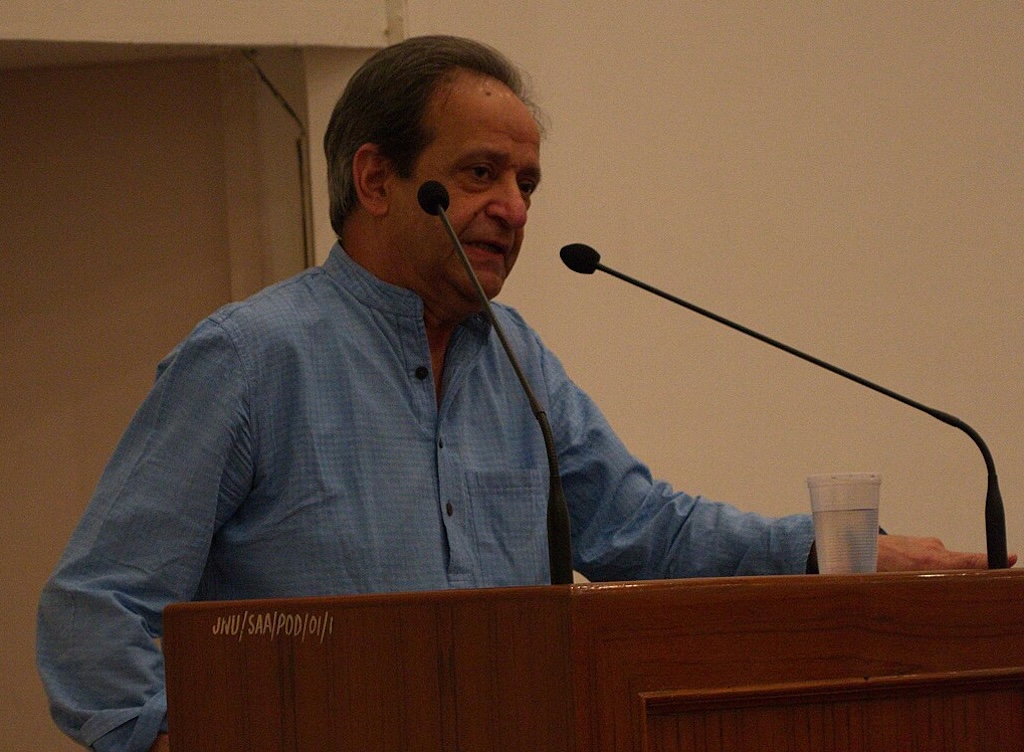
Aijaz Ahmad’s brilliant analysis of India’s Hindutva far right contains vital lessons for the Left today in South Asia and beyond. It offers one of the most creative readings of Antonio Gramsci’s work for a postcolonial context. (Subin Dennis, used under CC BY-SA 3.0 / Cropped)
The late Aijaz Ahmad was a voice that could not be ignored. He was a literary critic, poet, and translator, a representative of the last truly Indo-Pak generation of revolutionary intellectuals, and a figure steeped in the revolutionary and aesthetic traditions of Marxism (both “Eastern” and “Western”). He was also one of the great political essayists of our time.
Ahmad’s interventions spanned the great faultlines of our epoch: liberalism and fascism, imperialism and nationalism, Hindutva and Islamism, postcolonialism and poststructuralism, “world” literature and Urdu literature, and down to Indo-Pak and US politics. His restless intellect and unmatched erudition made Ahmad an essential cornerstone for the great theoretico-political debates of our time.
A Sui Generis Marxism
Coming of age in the immediate aftermath of independence in India and Pakistan and inspired by the great prestige of anticolonial revolutions in China, Cuba, Vietnam, and beyond, Aijaz Ahmad was one of a group of subcontinental intellectuals who took their public and political vocations very seriously. These intellectuals, including figures such as Eqbal Ahmad, Feroz Ahmed, and Romila Thapar, were eminently conscious of their role in shaping the nebulous entity-in-making called “the nation.”