The Dismantling of the New School

The New School was founded as an institution dedicated to critical inquiry and the free exchange of ideas. The current austerity measures at the university are dismantling the radical democratic aspirations it once represented.
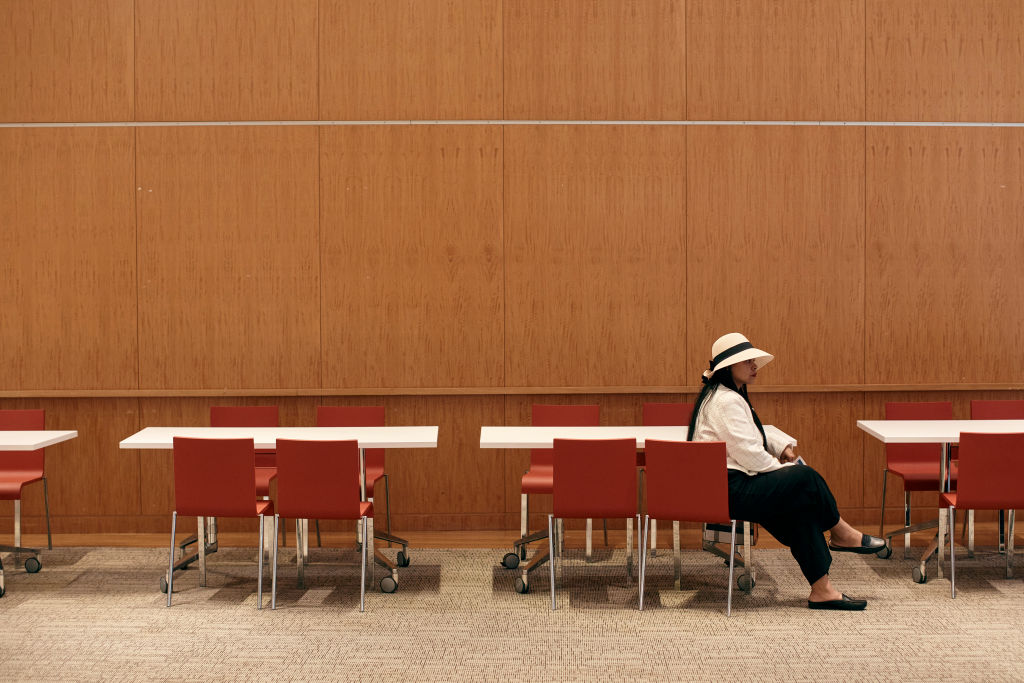
The once proud institution of radical thought is in danger of being gutted. (Andres Kudacki / Getty Images)

When a group of prominent American intellectuals banded together to create the New School for Social research in 1919, the world had just witnessed its first total war. Besides killing millions of people, the war had a chilling effect on major democratic institutions in Europe and the United States. In the States, the Espionage Act of 1917 and the Sedition Act of 1918 were used to suppress free speech and punish antiwar organizers and socialists like Eugene V. Debs. The Palmer Raids of 1919–20 followed soon after: a time during which the State Department aggressively surveilled, arrested, and deported immigrants accused of seditious activity (i.e., those with socialist, anarchist, and communist leanings). This, the nation’s first Red Scare, was the backdrop for the founding of the New School for Social Research, an institution of social inquiry and free speech in a country that increasingly viewed these values as a threat to power.

The New School’s mission: to “secure from the various institutions of the country a small corps of selected specialists in the several branches of social science, relieve them from administrative responsibilities, grant them self-government, and set them free to investigate, publish and teach. Make them responsible for the correct and impartial use of their several specialities [sic] in interpreting the issues of current life in the classroom.” Importantly, the New School pledged to “eliminate presidents and deans and the usual administration retinue and cut the overhead expenses to the minimum.”

This founding mandate, in the form of a tidy screenshot, has been making the rounds among New School faculty and staff of late, as the university’s executive leadership has begun enforcing austerity measures. This is the trouble with treating trained humanities scholars as pesky employees: they tend to keep the historical receipts. So far, the university’s austerity measures have included freezing retirement benefits, pausing PhD admissions, merging or discontinuing academic programs (mostly in the humanities), and separating a considerable share of full-time faculty (“voluntarily” for now, but involuntarily soon, from what we’ve been told).

This is all happening in the context of a widespread existential crisis for higher education, especially for the humanities and liberal arts. The targeting of higher education for censorship and defunding is by now a familiar tactic of Donald Trump’s unhinged administration, a practice that he seems to have inherited from the fascists of yore. In the words of Hannah Arendt, one of the many exiled European intellectuals who found their way to the New School after fleeing fascism in the 1940s:

Intellectual, spiritual, and artistic initiative is as dangerous to totalitarianism as the gangster initiative of the mob, and both are more dangerous than mere political opposition. The consistent persecution of every higher form of intellectual activity by the new mass leaders springs from more than their natural resentment against everything they cannot understand. Total domination does not allow for free initiative in any field of life, for any activity that is not entirely predictable. Totalitarianism in power invariably replaces all first-rate talents, regardless of their sympathies, with those crackpots and fools whose lack of intelligence and creativity is still the best guarantee of their loyalty.

Like many colleges and universities under the second Trump administration, the New School has struggled to thrive amid ongoing threats to federal funding, the general collapse of social services, and the lasting effects of the COVID-19 pandemic. Enrollment has dropped precipitously since 2020, at the same time as administrative costs have increased. Though President Joel Towers tasked several faculty working groups with recommending solutions to the school’s multimillion-dollar deficit this past summer, their rigorously researched proposals seem to have fallen on deaf ears. The final decision-making process involved only President Towers and Provost Richard Kessler, with the eventual approval of the Board of Trustees.

In early November, the President sent out an email announcing the restructuring of the university from five colleges into two combined units: one for undergraduate liberal arts and graduate programs, and another for design, performing arts, and media programs. To achieve this restructuring, the President announced a series of “cost-saving measures”: a pause on all PhD admissions except for in clinical psychology, discontinuance and merging of academic programs where there is “low demand or duplication,” cancellation of courses with low enrollment, and early retirement and voluntary separation offers for full-time faculty.

The specifics of which academic programs were being cut was initially obfuscated by the administration, and information passed through informal channels of faculty and staff in the week to follow. At the Eugene Lang College of Liberal Arts, where I teach as a part-time faculty member, undergraduate majors were dropped, as if by fiat, at the behest of the president, with no input from faculty. History — my discipline — was among the majors chosen to be “indefinitely discontinued,” along with anthropology and sociology.

Soon after the restructuring was announced, roughly 40 percent of New School full-time faculty and all unionized staff with more than four years of experience received voluntary separation or early retirement offers, primarily across the New School for Social Research and Lang. These faculty were given less than two weeks to decide if they would end their careers at the New School — a life-changing decision given the near impossibility of finding an open professorship in the humanities right now.

Meanwhile, President Towers is slated to make roughly $1 million this year, with no plans to retire early. He and the provost rejected the American Association of University Professors’ recent proposal to cap all salaries at $200,000 across the university. They seem not to have read, or remembered, the New School’s founding mandate to “eliminate presidents and deans and the usual administration retinue and cut the overhead expenses to the minimum.” This should come as no surprise, given the administration’s evident disregard for shared faculty governance.

As a part-time faculty member, I am hardly an expert in the internal workings of the university. I don’t pretend to know how someone keeps a major urban university afloat at a time when higher education is under attack both federally and existentially. I don’t pretend to know how to go about slashing a multimillion-dollar deficit in a time of soaring tuitions and decreasing enrollment.

But I do know this: the New School was founded a little over a century ago precisely because you can’t put a price on critical inquiry and the free exchange of ideas. The dismantling of this promise spells disaster not only for the university itself but for the radical democratic aspirations it once represented.

It is one thing for conservative universities to tamp down on free speech. It is quite another for one of the country’s most outspoken bastions of leftist thought to crumble under the weight of neoliberal cowardice.

What would the New School’s founders make of this turn of events? I can only imagine they would balk at the mass voluntary separations of faculty and threatened layoffs carried out by a well-heeled administration. I can only imagine they would cringe at the targeting of the humanities, the wholesale destruction of graduate education, and the apparent devaluing of the liberal arts in all but name.

Above all, I imagine they would not let any of this happen without putting up a fight. After all, they were themselves exiles from cowardly institutions of higher learning when they first created the New School. Founders Henry Dana and James McKeen Cattell had been dismissed from their positions at Columbia University in 1917 for being, respectively, a socialist and a pacifist, both of which opposed the war in Europe. In response, Charles Austin Beard and James Harvey Robinson, both progressive historians at Columbia, resigned in protest. In partnership with the first editor of the New Republic, Herbert Croly, the former professors joined together to draw up plans for a “new school” — one where such bare ideological pandering to power would not be tolerated.

It is my hope that this legacy will continue to inspire students, staff, and faculty at the New School and elsewhere to find creative solutions to the current crisis, even if that means abandoning institutions that once felt like home. The New School’s administration may believe that replacing full-time faculty with part-time faculty (as is bound to happen given the circumstances) and offering humanities à la carte will lead to a more pliable workforce, one that costs less both financially and institutionally. They may believe that we are easier to control, unprotected as we are by the (false) promises of tenure, isolated as we are by our anomic existence — no offices, no mandatory meetings, no curriculum to collaboratively manage.

But if they think this, they are wrong. We will not clean up the administration’s mess, and we will not stand by idly as the humanities are dismantled. We will fight back, or we will take our talents elsewhere. After all, isn’t this the purpose of a humanistic education? To produce citizens who take the responsibility of democracy into their own hands? To cultivate critical thinking and inspire thoughtful dissent?

It is we, the faculty and students of the New School, who most passionately believe in this guiding mission. And it is we who are best equipped to protect it, no matter the cost.