Capitalism and the Commodification of Nature
Good books offer new arguments, while excellent books pose new questions. Alyssa Battistoni’s Free Gifts, on the unfinished commodification of nature and care, is an excellent book.
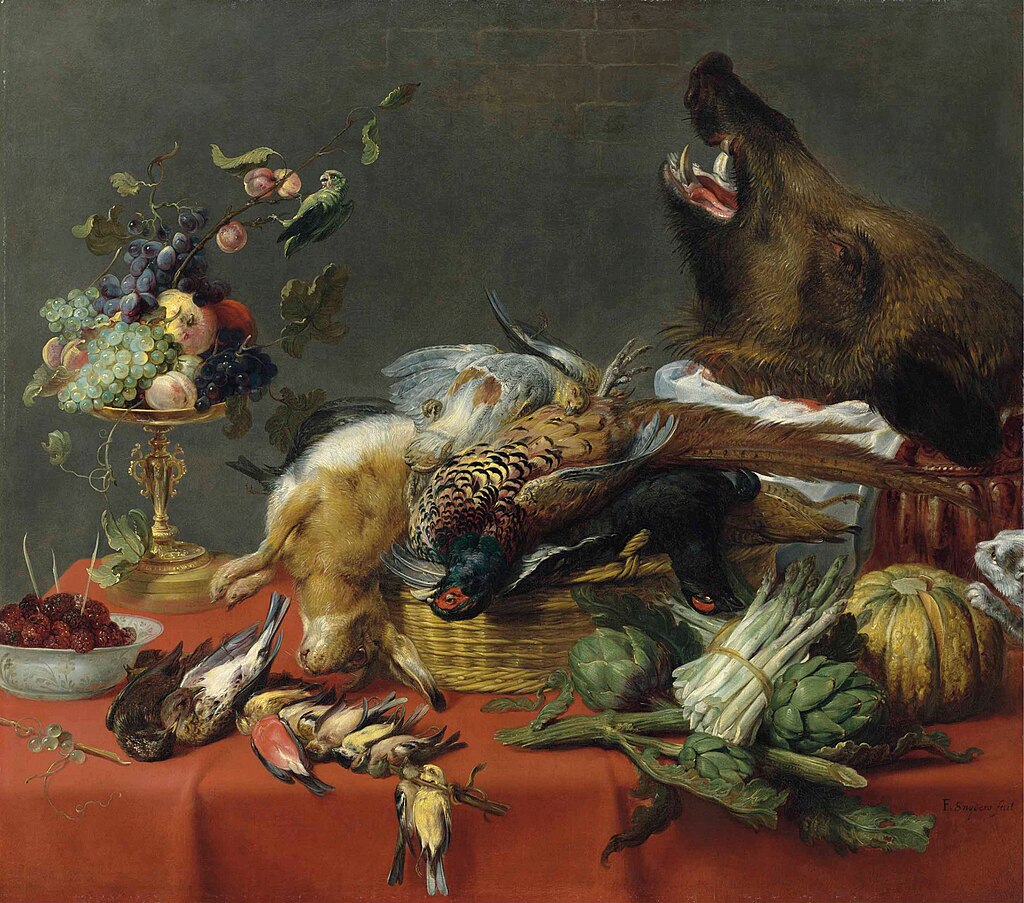
In a world of ever more polluted land, water, and air, fertile land, fresh water, and clean air become scarce and thus massive sources of wealth. The socialist case for collective ownership of these common endowments couldn’t be clearer. (Frans Snyders, A draped table laden with game, fruit, vegetables and a boar’s head)
Last Friday, I spoke on a panel at NYU on political theorist Alyssa Battistoni’s new book Free Gifts: Capitalism and the Politics of Nature. The room was packed, somewhat unusual for an academic book of political theory. But if you’ve read Battistoni’s book or know of her work, you’ll understand why.
The book is not only a remarkable synthesis of a variety of literatures on the environment, climate change, work, Karl Marx, feminism, and the politics of care — if you were just looking for an excellent account of the last fifty years of political theory, plus Marx and a lot of twentieth-century economics, this would be your book — but also a brilliant intervention in these debates. It has given me all sorts of new ways to think about the connections between how we treat the environment and how we treat the world of childcare, eldercare, and the household; between economic accounts of negative externalities and Baumol’s cost disease; Marx’s view of nature; and more. It’s a model of what political theory should be, and a sign of its renaissance in the hands of a new generation of scholars.
I’m posting here my comments at the panel, but there was so much more I could and would have said with more time. While I’m mulling over these additional topics, I hope you buy and read the book.