Israel and Its Leaders Are Still on Trial for Genocide

John Reynolds

Western states would like to move on as if the Gaza genocide never happened, even though Israel is still terrorizing the Palestinian people. But the legal cases holding Israel and its leaders accountable are going ahead despite their best efforts.
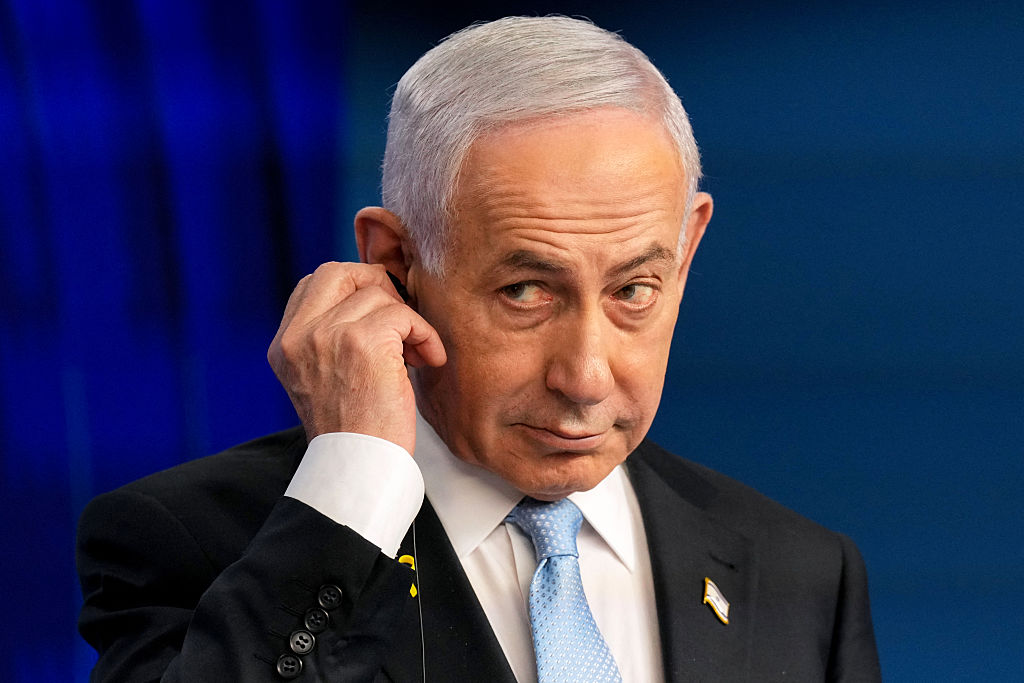
Israel is on trial for genocide at the International Court of Justice, and its prime minister is a wanted fugitive. There can be no real peace without accountability and restitution for the crimes committed in Gaza over the last two years. (Ariel Schalit / AFP via Getty Images)

Interview by
Daniel Finn

Since Donald Trump announced a ceasefire deal between Israel and Hamas, Israeli forces have killed hundreds of Palestinians while continuing to occupy much of Gaza. Despite the ongoing violence and repression in both Gaza and the West Bank, Western states clearly want to move on and act as if the atrocities of the past two years had never happened.

Yet Israel is still facing efforts to hold it accountable for its crimes under international law. South Africa has brought a case before the International Court of Justice (ICJ) accusing it of genocide, which is still in progress. The International Criminal Court (ICC) has issued a warrant for the arrest of Benjamin Netanyahu on charges of war crimes and crimes against humanity.

John Reynolds is a professor of law at Maynooth University and the author of Empire, Emergency, and International Law. He spoke to us about the ICJ and ICC cases and other efforts to challenge Israel’s impunity through national legal systems. This is an edited transcript from Jacobin Radio’s Long Reads podcast. You can listen to the interview here.


Daniel Finn

Let’s begin with the ICJ case. Can you give us an update on what has been happening since January 2024? How has Israel responded to the South African case? When is the case likely to be heard, and do we have any sense at this point of what the outcome is likely to be?

John Reynolds

It was nearly two years ago now that the case was filed by South Africa. At that point, we were talking about the urgency of the situation, trying to stop the genocide as it was unfolding. It’s been nearly two years of continuing genocide since then, so obviously there are questions about the ability and capacity of an institution like the ICJ to adequately respond and intervene.

There was a series of provisional measures orders in January, March, and May 2024 — all increasingly clear that there was a serious risk and evidence of genocide unfolding, and all increasing their demands of Israel to stop its offensives in Gaza. That was the first stage of the proceedings. The South African state was then given until October 2024 to submit its full memorial, which would be its full set of detailed arguments and evidence.

That was five months after the provisional measures order, and for the South African legal team at the time that was a massive undertaking, doing the amount of work and coordination needed to get that memorial in on time and at the level of quality and depth that it wanted. But it got it in on time for the deadline that the ICJ had given it.

Israel then had six months or so to respond to that and file what is called its “countermemorial.” It was given a deadline of July 2025 for that. Once the court has the memorial and the countermemorial, it then proceeds to the next round of hearings. But in the meantime, Israel requested an extension.

Initially it got an extension granted by the ICJ to the end of 2025. Then when it came to October 2025, Israel requested another extension, saying the case was complicated, there were lots of documents it had to go through, and some other new questions had come up in the meantime because of other ICJ advisory opinions relating to Palestine.

South Africa argued this request should be rejected, making quite a persuasive argument that Israel had already gotten one extension on the same grounds that it was now asking for again. They also argued that another delay would be irreconcilable with the urgency of the case and the whole principle of equality between the two states, because South Africa had its memorial in on time and had a shorter window to do so. But despite all that, the court did give Israel another extension for five more months until March 2026.

These are similar tactics from the Israeli state to what Russia has been doing in the Ukraine v. Russian Federation case at the ICJ — requesting extensions, then filing various objections and counterclaims to try and delay things. My sense would be that the ICJ is indulging Israel here to a certain extent, possibly for fear that Israel may end up otherwise dropping out or just not participating to the end. If that was the case, the case could still go ahead, but it creates more scope for criticism of its legitimacy.

That is what Israel has done in relation to a lot of other international institutions, courts, and bodies — it has refused to engage and then said that the institution is biased against it. If it does continue to participate and files its countermemorial in 2026, then we’ll be into the second stage of the case.

The second stage could involve any “preliminary objections” that might be filed, and then there would need to be a judgment on that before we get to the final judgment on the merits of the case. At this point, that is not going to be realistically before 2027 at the earliest, and could be later. There’s another genocide case going on, where Myanmar has been accused of genocide against the Rohingya people by Gambia. There was a preliminary objections judgment in that one in July 2022, more than three years ago, and we’re still waiting for the final judgment on the merits.

Every case is different obviously, and it will depend on what issues and objections are brought up by the states and how the judges engage with that. But this is just to emphasize that it is a very slow process, which is frustrating for a lot of people looking on in expectation of the judgment.

When South Africa first filed the case in December 2023, there was a lot of criticism, particularly from Western states and supporters of Israel, saying that this was undermining the seriousness of the ICJ with gratuitous, unserious allegations of genocide. Since then, we’ve seen nearly all of the major international human rights organizations, associations of genocide scholars, and United Nations experts and commissions of inquiry agree that there is genocide being perpetrated by Israel against the Palestinians in Gaza.

Whereas there might have been a bit of uncertainty initially as to whether this case would be successful, there is probably a much stronger likelihood now of the court ruling in some shape or form that Israel has perpetrated genocide in Gaza. But there’s still a bit of time and process to go through before getting there.

Daniel Finn

In the early months of 2024, there were specific orders handed down by the ICJ to prevent genocide, to prevent incitement to genocide, and to facilitate food and other humanitarian supplies for Gaza. Those orders were flagrantly violated by the Israeli state from the very beginning. Has there been follow-up action from the ICJ? Are there consequences for the violation of those orders? What is the significance of the recent ruling by the ICJ in relation to the status of the United Nations Relief and Works Agency for Palestine Refugees in the Near East (UNRWA)?

John Reynolds

There are two parts to that question. The advisory opinion that has since come up in relation to the UN agencies, including UNRWA, is a separate process, but obviously it overlaps with what’s been going on in the genocide case.

You had those provisional measures orders in early 2024. It’s important to emphasize here that the Genocide Convention is the convention for the prevention and punishment of the crime of genocide. The court decided in this case to issue these provisional orders in relation to that first part about preventing genocide.

It was effectively saying, “We have to reserve judgment on an absolute, definitive decision as to whether and to what extent genocide has been perpetrated, but there’s a serious risk that it is being or could be perpetrated, so we have to make these orders now to try and prevent it.”

The punishment part will come separately because, as with the genocide cases against Serbia, by the time you have a final ICJ judgment, the genocide itself will often no longer be ongoing. By then, it’s a question about reparations, remedies, accountability, and punishment. The punishment part for individuals also comes up in the ICC as well.

But the ICJ’s duty to play its role in trying to prevent genocide gives it the scope to issue these provisional orders. That’s what it did for Israel — orders to stop the Israeli military forces in Gaza from perpetrating genocide, to stop incitement to genocide in the public sphere, and so on. It’s obviously a somewhat absurd situation where you are ordering the state that’s perpetrating the genocide to stop its own officials or its own forces from perpetrating genocide.

The May 2024 order went beyond specifically ordering Israel to refrain from any acts of genocide in Gaza or incitement to genocide in the public sphere. It also said that in order to be sure that the genocide was halted, the Israeli forces needed to halt their military offensive altogether — either in Rafah specifically, or in Gaza as a whole, depending on your interpretation of the judgment. There was a whole debate at the time about the positioning of commas and whether it meant just Rafah or Gaza more broadly.

In any case, the order was immediately and overwhelmingly ignored by the Israeli forces. They went and bombed Rafah sixty times in the forty-eight hours following the handing down of that order. They carried out the first of what came to be known as the tent massacres by bombing the safe zone in the Rafah camp. That set the tone for what has followed for the best part of a year and a half since then, with complete and flagrant noncompliance with the ICJ orders.

There was also a clause in the orders under which Israel was supposed to submit reports to the ICJ on all the measures it was taking to comply. Those reports were due to be confidential, so we don’t know if Israel has submitted anything, but it would be surprising if it has done so. Every time there is a decision or an order like this against the Israeli state, not only does it not comply, but it also reacts by intensifying some of its attacks, and the Palestinians are the ones that bear the brunt of it.

What we had going on at that same time was an attempt by Israel, with the full support of the Biden administration, to delegitimize and ultimately defund and exclude UNRWA altogether from its activities in Gaza. There was a request from the UN to the ICJ, separate from the genocide case, for an advisory opinion on Israel’s obligations concerning the presence and activities of the UN and other international organizations in Palestinian territory.

We had the advisory opinion issued by the ICJ on this request in October 2025, which was a restatement and confirmation of the general rules and obligations under international law before applying them to the situation on the ground in Gaza. It said that Israel’s legal obligations in Gaza come under two capacities: one as the occupying power in control of the territory with duties toward the Palestinians, and the second as a member of the UN with duties toward the organization and its agencies.

According to the ICJ, Israel has a binding legal obligation to facilitate relief and aid schemes being provided by the UN and its entities, including UNRWA. The court said that the population in Gaza has not been given the supplies that it needs of food, water, medical care, and so on.

It also said that Israel has specific obligations to protect relief and medical personnel and facilities, including UN staff, and that Israel must respect the prohibition on forcible transfers and deportations, because that also was coming up at the time the case was being heard. In addition, Israel has to respect the right of Palestinian detainees and prisoners to be visited by the Red Cross.

There was a lot of language in the opinion about the starvation of civilians as a method of warfare being strictly prohibited. It went quite substantively beyond the question of allowing UNRWA to operate and deliver its programs.

In relation to UNRWA, the ICJ said that Israel hadn’t provided any substantial or valid evidence to back up the allegations that UNRWA was breaching impartiality. The UN is the primary provider of essential services in Gaza: its role is indispensable, it is deeply integrated into the humanitarian infrastructure, and it can’t just be replaced by another agency. Israel can’t invoke blanket “security concerns” to justify the obstruction of humanitarian aid, as it had been doing.

The opinion found that Israel must facilitate access for UN agencies and allow them to carry out their mandate without interference. It also had language about the protection of immunities and privileges for UN staff. It found Israel to be in violation of many of those obligations and said that it has to do more and that third states must compel it to do more in their own relations with Israel.

The ICJ was also explicitly critical of the Gaza Humanitarian Foundation, which was the alternative model of aid distribution that had been installed by Israel and the United States, with distribution sites that were essentially functioning in many instances as kill zones and massacre sites instead of distributing aid.

Israel predictably responded by calling the ICJ ruling shameful and trying to deflect, repeating allegations about UNRWA but refusing to engage with the substance of the opinion. The advisory opinion was almost unanimously agreed to by all the judges, apart from the Ugandan judge, Julia Sebutinde. It’s now up to the UN and its member states to enforce that ruling as robustly as they can in their dealings with Israel.

Although this was a case about access for aid agencies and humanitarian provisions in Gaza, the court also had some very clear and strong language about Palestinian self-determination. It said that UNRWA’s unique mandate as a support agency for Palestinian refugees — bearing in mind the specificity of the Palestinian refugee question going back to the Nakba in 1948 — reflects the UN commitment to supporting Palestinian self-determination and Palestinian refugee rights as a cornerstone principle of its activities.

Daniel Finn

You mentioned the dissenting view of the Ugandan judge, and I wanted to ask about that in particular, because it’s been notable from the early stages that she has dissented from more or less every criticism of Israel. Recently it was reported in the Ugandan press that she had been speaking to an audience in Uganda and said, “The Lord is counting on me to stand on the side of Israel.” She was expressing some of the standard rhetoric of Christian Zionism, with a real apocalyptic flavor, talking about the end-times. Has there been any fallout from those reports?

John Reynolds

Sebutinde, the Ugandan judge, belongs to a church with a very strong Christian Zionist influence. She’s been quite open in saying that her church and its pastors have been a big influence and contributed significantly to her role as a judge in Uganda and more recently at the ICJ. One of the concerns that has come up around this has been around the question of impartiality and integrity. She is making statements that are religiously and ideologically inflected and that have a direct bearing on the cases that she’s hearing as a judge.

For people who might not have been familiar with her track record, her dissenting judgments in these cases have raised red flags. She has advanced very pro-Israel and Zionist narratives of the situation in Palestine in her judgments, sometimes going beyond the specific questions at issue in a case and writing big-picture histories of Greater Israel with a lot of biblical references to frame it.

There was also just a particular set of events with the turnover of judges on the court while the South African case was starting to play out in early 2024. After the first provisional measures order came in January 2024, a couple of weeks later, there was a scheduled term of office that was finishing for a number of the judges, with some new judges coming on. As part of that turnover, there were elections for a new president and a new vice-president of the court, and Sebutinde was elected as vice-president at that point.

There was some controversy at the time because of the material that she had included in her dissenting opinion in that first provisional measures order. She was worried the controversy was going to affect her getting elected as vice-president of the court: she said she felt at that point that the devil was against her, but then God turned it around in her favor.

That became significant later on, because the judge who took over as president in February 2024 was the Lebanese judge Nawaf Salam, who subsequently stepped down so he could return to Lebanon to become prime minister. There was then a question about whether as vice-president, Sebutinde would automatically become president for the remainder of the term. There had been no previous experience of a sitting ICJ president leaving midterm.

She became the interim president by default. Perhaps if it had been a different vice-president, the other judges would have been okay with the idea of leaving her there. But maybe because of the controversy around Sebutinde, they decided to have an election, and the Japanese judge, Yuji Iwasawa, was elected as president instead. Sebutinde is still in place as a judge and vice-president of the court though, despite all of the issues that have come up.

She made the comments that you mentioned, about the Lord counting on her to stand on the side of Israel, at an event at her church in Kampala in August this year. She was presumably talking about the interventions in the ICJ case and advisory opinions by third states who had been making submissions. She said, “There are now about thirty countries against Israel, and the Lord is counting on me to stand on the side of Israel.” Many lawyers have been making the point that there is a question here about her impartiality.

There is language in the ICJ statute that says no judge can be dismissed unless, in the unanimous opinion of the other members, they have ceased to fulfill the required conditions of the values and duties of the judge of the court. Unless all of the other fourteen judges decide collectively to kick her out of the court altogether, there’s no real mechanism for her to recuse herself from a specific case or set of cases where she may have a conflict of interest or be accused of a particular bias.

It is an unusual and somewhat bizarre situation to have someone like this, who is a judge on the ICJ, making these kinds of statements. At the same time, I don’t want to overstate her influence either. She’s one judge out of fifteen. If she had become the president, that would have been significant — she would have had a significant role in shaping the court’s approach in its cases. But that hasn’t happened, and so it seems (for now anyway) that things are proceeding as they were.

Daniel Finn

There have been warrants issued by the ICC for the arrest of Benjamin Netanyahu and Yoav Gallant, his former defense minister. Which states have pledged to enforce those warrants if they have the ability to do so, and which states have pledged to defy them? Is there a sort of holding pattern until such a time as they are actually apprehended, or is there any allowance for them to be tried in absentia?

John Reynolds

Within the European context, you have some states like Belgium and Slovenia that have been quite vocal in their support for the ICC and have indicated that they would take any steps needed to facilitate the prosecutions of anyone that has an arrest warrant. Similarly, many states in the Global South, particularly countries that are part of the Hague Group led by Colombia and South Africa, have been very clear on supporting the ICC.

Other ICC member states have maintained something of a tactical silence, and then there are cases like that of Hungary, which is a particularly extreme example. Hungary had been an ICC member state, but instead of arresting Netanyahu as ICC membership expects and requires, it used the moment of his state visit to Hungary to announce its withdrawal from the court instead. This position is tied into the reactionary international imperial axis led by the United States that is engaged in a full-frontal assault on the ICC.

Other significant ICC member states have been quite equivocal. Germany has been openly critical of the ICC decision to issue the arrest warrants, and the likes of Britain, France, and Italy have sent mixed messages at best, while ultimately expressing opposition to the ICC intervention and implying that Netanyahu may have some form of immunity. Some of these countries have also let him travel through their airspace on his way to the US.

Then you have countries that would present themselves as liberal-democratic supporters of the court, like Canada and Switzerland, saying, “Of course we respect the independence of the ICC, but we don’t want to get involved or prejudge anything here, and maybe this is not the most helpful process for the ICC to be pursuing.”

Trump’s so-called peace plan has no mechanism whatsoever for any form of accountability or reparations for genocide and war crimes that have been perpetrated. Yet it is being deployed to put pressure on any pursuit of justice for the Palestinians on the grounds that it would hamper the peace plan efforts. We’ve seen that pretense already being used by the European Union to drop any discussions that it had been forced into having about potential sanctions. It is now hiding behind the line that “there’s a peace process in place, so we’ll defer to that.”

That is making it more difficult for bodies like the ICC to advance their case. You’ve also had the United States ramping up sanctions over the course of 2025, initially against the prosecutors and then even against some of the judges. Most recently, they’ve moved with really debilitating sanctions against some of the human rights organizations, specifically Palestinian ones, that have been making submissions to the court.

That pressure is raising issues for the ICC when it is looking at going further than the arrest warrants for Netanyahu and Gallant by issuing warrants for other perpetrators. A holding pattern is probably a good way of describing where things are at now. It is possible for international criminal trials to happen in absentia, but it’s not foreseeable that it would happen here.

Until there’s a possibility of having any of them in custody, the line from the court will be that they continue their investigations — they’re looking at other crimes or potential perpetrators, building their evidence, and so on. But that’s where we are at the moment.

Daniel Finn

It has been reported that ICC prosecutor Karim Khan has drawn up warrants for at least two other ministers in Netanyahu’s government, Bezalel Smotrich and Itamar Ben-Gvir. Are there likely to be further warrants, and how much is that going to be affected by the pressure that’s been applied on the ICC, in public and in private?

John Reynolds

In general, the ICC doesn’t necessarily publicize its arrest warrants. The normal standard would be that they are confidential. However, when we’re talking about high-level suspects or state officials, in practice, it’s almost impossible to maintain that confidentiality. When the warrants were requested for Netanyahu and Gallant, that was very publicly announced by the prosecutor. When the warrants were issued six months later by the judges, again that was made public.

But since April of this year, there has been an order made by the judges in the ICC for any further arrest warrant requests on the situation in Palestine to be kept secret. This is partly to try and respond to the issue of all the external pressures and maneuvering going on around the case, so as a result, we don’t know for sure what the situation currently is.

As you said, there were reports over the summer that there were arrest warrants ready to go for Ben-Gvir and Smotrich. There had been calls and submissions long before October 7, 2023, urging the ICC to investigate and prosecute crimes being perpetrated not just in Gaza but also in the West Bank, in relation to the colonial settlement enterprise and other crimes there.

The crimes that are associated most directly with Ben-Gvir and Smotrich concern the settlement enterprise in the West Bank. The reports also suggested that the arrest warrant request was going to include charges of the crime of apartheid, which would be a first. Going by the accounts that we have, those requests may not have been submitted yet, partly or primarily because of the pressure on the court and the fear of further sanctions being imposed on more staff and officials, or even on the ICC itself as an institution.

Certainly, the pressure and sanctions have had a bearing on the court. There is plenty more evidence presumably being collected and documented by the ICC investigators on further crimes in Gaza, beyond what has been submitted so far in support of arrest warrants for Netanyahu and Gallant. There is a wider range of charges and perpetrators that could be in the mix, including those who have been overseeing the siege and starvation of Gaza in the period since the original warrants were requested, but that external pressure is probably putting the brakes on things.

The pressure is not new. This has really been going on since 2009, when the Palestinians first asked the ICC to investigate and Israel had its mechanisms kicking into gear with the Ministry of Strategic Affairs. There was consistent pressure all the way through. The United States imposed sanctions on the ICC staff during Trump’s first presidency, when the ICC was looking into US war crimes in Afghanistan. That set a precedent in terms of the US willingness and capacity to impose sanctions.

On the Palestine case, things have ramped up since 2021 when the court formally opened its investigations and again since 2024, when those arrest warrants were issued. We’ve seen all the reports during these periods of surveillance and attempts at intimidation by Israeli intelligence and security agencies. The ICC has also been subject to lobbying and threats by prominent political figures such as David Cameron when he was British foreign secretary.

The court is continuing to do its work, and the judges who have been sanctioned remain defiant in saying that it will continue to carry out its investigations and prosecutions undeterred, but the circumstances now are very difficult. Staff at the ICC who are US citizens have reportedly been warned that they could risk being arrested if they return to the United States, even to visit family.

Those working at the ICC who are not US nationals are banned by the sanctions order from entering the United States, and they could have any accounts or assets there frozen. They are being put in a position of having to decide whether to stay on working for the ICC or to resign. Six senior officials are reported to have left their positions at the court “over concerns about sanctions.”

There is a set of lawsuits being taken by some of the US citizen members of staff against the Trump administration, saying that the sanctions are infringing on their civil liberties and the right to do their job. The sanctions have made it extremely difficult for the court to do some of its basic work, with travel bans being imposed, bank accounts being frozen, and credit cards being blocked — even by banks outside the United States that should be outside of any US jurisdiction.

A number of the judges, including French judge Nicolas Guillou and Canadian judge Kimberly Prost, have spoken about their effective financial blacklisting by the sanctions, and how the role of US financial institutions in the Society for Worldwide Interbank Financial Telecommunication (SWIFT) system has made daily tasks and online transactions almost impossible. There are issues even with access to email, because Microsoft and other tech companies have been taking an excessively broad approach to complying with the sanctions. That has affected the capacity of the court to work not just on the Palestine case but also on its other investigations on Sudan and many other countries.

Daniel Finn

Karim Khan has been on a leave of absence for the past several months while dealing with allegations of misconduct into his own behavior. Without going into the details of what those allegations might be and what the process is for addressing them, what would you say the impact of the absence of Khan himself has been on the functioning of the ICC?

John Reynolds

The ICC line has been that the deputy prosecutors would continue the work that the court is doing across all the cases that they’re investigating, including the Palestine one. But obviously, this has brought a big cloud over the court itself, and by all accounts the atmosphere inside the ICC is not good. That makes it very difficult for any institution to operate when its resources are already so limited and spread so thin.

While the United States has ramped up the pressure, other ICC member states have come out with statements saying they defend and support the work of the court and its independence. But they don’t seem to have stepped up in terms of resources or offering more robust protections or defenses of the court and its staff. I don’t think there’s any denying that it is having a serious negative impact on the institution overall.

Daniel Finn

Aside from the avenues that have been explored so far on the international legal front, are there other avenues at the level of individual nation-states that have been (or that could be) explored?

John Reynolds

In many ways, the possibilities for some semblance of justice or accountability are greater in national courts in different countries than they might ultimately be at the ICC and the ICJ. This is in view of the geopolitical interests and interference with the work of those international courts, on top of the already limited resources and mandates that they have. It’s also in view of their place within an international law system that for so long has been a deeply colonial structure, one that will take a long time to fully transform.

Some of the initiatives involve lawyers around the world who are engaged in coming up with creative legal actions and tactics to bring the question of responsibility for Israeli atrocities into the court systems of different countries. There are different levels: individual responsibility for international crimes; corporate responsibility on the part of many companies that are complicit in occupation, apartheid, and genocide; and also the responsibility of other states.

On the criminal responsibility side of things, there have been a number of near misses for Israeli soldiers who have been traveling in different places, whether on holiday or because they are dual nationals. In countries like the Netherlands and Brazil, there have been files handed over to police about specific Israeli citizens who are in that jurisdiction at the time. Groups like the Hind Rajab Foundation are building huge databases of evidence on members of the Israeli armed forces and the specific incidents that they’ve been responsible for in Gaza.

Many countries do have universal jurisdiction laws that allow them to prosecute war crimes and crimes against humanity even if they happen in different territories in other parts of the world. Most of those universal jurisdiction laws now require some kind of jurisdictional link, whereby either the perpetrator or the victim is a dual national or a resident of that country. However, some states may also have absolute universal jurisdiction that allows them to prosecute a perpetrator who turns up in their jurisdiction regardless of any specific connection via nationality or residency.

You have initiatives like that going on, with some Israeli soldiers who have been traveling either called in for interrogation or else informed by diplomats that they could be in trouble and evacuated at short notice by Israeli security. Those pursuits of criminal responsibility are going on, and it may well be just a matter of time before there are some prosecutions.

That is something that lawyers and Palestinian organizations have been trying to activate for many years, well before the most recent atrocities in Gaza. But again, this is an ongoing struggle, and there will always be attempts at political interference as well — in a number of European countries, more expansive universal jurisdiction laws were watered down specifically in response to prior attempts to trigger prosecutions of Israel leaders.

There is also a whole series of cases against governments that are being accused of complicity in genocide and war crimes for weapons transfers to Israel. We have had cases in the courts in Britain against the British government or in the Netherlands against the Dutch government and so on, some of which have resulted in some licenses being halted or suspended or called into question. But again, the states in those cases are obviously not happy with legal actions being brought against them and are contesting them quite robustly.

In the Irish context, for example, there is a submission to the High Court for a judicial review of the use of Shannon Airport for potential weapons transfers to Israel, as well as over dual-use exports that may involve military components being shipped from Ireland to Israel without proper Irish government oversight. There has also been some interesting work done in this context by organizations like the Global Legal Action Network.

They have been arguing that some of the profits being made by companies involved in business activities in the West Bank and around Israeli settlement infrastructures are essentially the proceeds of crime, because colonial settlement construction and the transfer of settlers into an occupied territory is a war crime. The issue then is, if companies like Airbnb are offering listings and making money off properties in settlements on stolen Palestinian land, should the money that they’re making from it be viewed as the proceeds of crime?

The argument made in the Irish context is that there is a combination of war crimes legislation and anti-money laundering legislation that requires the authorities to investigate such activity. Information was submitted to the police in Ireland, but they decided not to investigate it under the powers that they have. When they declined to investigate, there was a case submitted, and the High Court recently made an order ordering the police to revisit their decision, as there may be offenses that they should be investigating. Airbnb is the example that has been used in that case.

There are similar cases going on against companies in other countries. Lawyers in Italy are bringing litigation against Leonardo, one of the big weapons companies, challenging its contracts with Israel. There is a series of cases around German complicity with the Israeli state and its attacks on Gaza — including at the ICJ, where Nicaragua has accused Germany of complicity in war crimes and genocide over its arms transfers to Israel. That case is ongoing at the moment.

There are many more examples that we could list, but the point is that you have a huge amount of overlapping, intersecting litigation efforts going on, with information sharing and collective thinking between lawyers in different jurisdictions. There may be some significant decisions coming down the tracks in different countries around the world over the next while.

This comes with the caveat that these are all tactical, limited interventions, in the sense that they’re all addressing particular features of individual incidents or individual perpetrators. These are all small parts of what would need to be a much bigger strategy coordinated around how these individual legal tactics fit into the bigger strategy of Palestinian liberation.

Daniel Finn

If the genocide case does finally come before the ICJ in 2027, there will still be a Trump administration in office. If Trump is willing to apply pressure quite openly and unashamedly on the judges and prosecutors of the ICC, presumably similar dynamics will be in play for the ICJ. Under those circumstances, is it possible for the ICJ to be making an assessment based on the merits of the case? Is it possible for any kind of functioning international legal structure to exist under conditions like that?

John Reynolds

There is in many ways a long history of antagonism by the imperial powers toward elements of international law and the international order that they don’t like. In one sense, there is nothing new, though both the tone and the material character of the antagonism that we’re seeing from the United States in recent times are quite striking.

As the highest judicial organ of the UN, for better or worse, the ICJ does have a particular gravitas that other international institutions and even other international courts don’t have. It is seen as being above politics and international relations in a different way. That is a very liberal and somewhat naive view, if we look at the history of the ICJ and some of the judgments it has issued in previous generations, which have been very problematic and very colonial in their outlook.

But there is a sense that some people have that the case against Israel and the role of the Global South countries in bringing such cases is giving the ICJ the chance to move away from some of the entrenched imperial biases and tendencies that have been built into international law for so long. There is a certain amount of expectation among international and Palestinian lawyers that it will do so.

Obviously, that very much remains to be seen and will be contingent on how the cases play out and the positions that the judges take. In the positions they’ve taken on the cases that have been put before them and the rulings they have been asked to give over the past couple of years, there has been a pattern that they are willing to go relatively far in their condemnation of Israel. At the same time, however, many Palestinians who have been living under colonial repression and now genocide for so long are understandably long past the point of having any faith in international law.

Of course, there is the possibility that the court could say, “No, there was no genocide perpetrated.” Then you would have to ask if that was based on a valid, substantive assessment of the situation, or if there was a fear of reprisals against the judges themselves. Any judgment against Israel won’t be received well by Israel and the United States (or at least the current US political sphere). In that scenario, no doubt there could be a clamor for the US to impose sanctions on judges.

The United States itself does have a fairly fraught relationship with the ICJ since the Nicaragua judgment in the 1980s. Nicaragua brought a case against the US, and the ICJ found that the United States was in substantive and systemic violation of the UN Charter by illegally using force and supporting the use of force against Nicaragua. The US was ordered to cease any intervention in Nicaragua and to pay reparations, which the US didn’t take kindly to.

It refused to comply with that judgment. When it was brought to the UN Security Council to enforce the judgment, the United States vetoed the resolution. That was a question of blocking and noncompliance on the part of the US, which is already a significant affront to the court, but there wasn’t any question of the US taking more active measures or retaliation against the court as such. The ICJ judges have generally had the space of being considered somewhat above the fray and immune from such action.

Another difference here is that in contrast with the ICC, the United States and Israel are both members of the ICJ. They’re not members of the ICC, so it’s easier for them to attack it from the outside. There’s a US judge on the ICJ who has been there since last year. The previous US judge was the president of the ICJ who oversaw the first provisional measures order against Israel in January 2024.

The ICJ does have a status within the UN and the international law system that the likes of the UN Human Rights Council or UN special rapporteurs don’t have to the same extent, and the ICC also doesn’t have because it’s outside the UN system. Not all countries are members of the ICC, whereas any UN member state is automatically a member of the ICJ. That is part of the reason why Israel, despite criticizing the ICJ and the South African case, has still so far engaged in the process, whereas with a lot of other human rights bodies or international institutions, at some point, it just refuses to do so.

There’s an implicit recognition there of the different status that it has, so politically it might be more difficult for the UN to start sanctioning ICJ judges. But if a judgment against Israel does come while Trump is still in office, anything could potentially happen. In the meantime, Palestinians and international solidarity movements can’t and won’t be waiting for legitimacy and confirmation from the ICJ of what they already know.