The Forgotten History of Socialism and the Occult
Socialism has a well-earned reputation as a secular, rational movement. But not all socialists throughout history were quite so grounded.
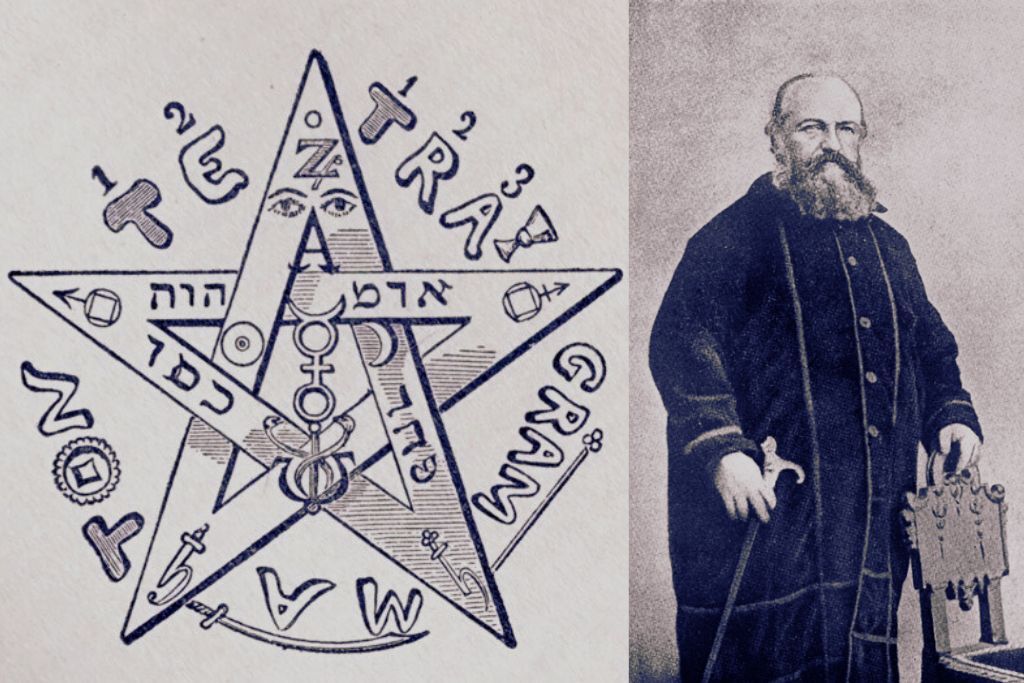
French occultist and socialist Eliphas Lévi and his pentagram design. (Project Gutenberg)
Karl Marx and Friedrich Engels are the names that usually come to mind when people hear the word “socialism.” These two were not, however, the originators of socialism, but rather of a particular variant rooted in an objective analysis of economic conditions and class interests. They took great pains to distinguish their “materialist” socialism from the “utopian” socialism of their predecessors.
The utopians, Marx and Engels argued, lacked rigorous engagement with the actual productive forces and class antagonisms of their time. They were pseudo-religious and quasi-mystical, sounding more like prophets than scientists. They excitedly drafted blueprints for ideal cities, but “the more completely they were worked out in detail,” wrote Engels, “the more they could not avoid drifting off into pure phantasies.”
The materialists won the debate. When we talk about socialism now, we mostly refer to a tradition that draws on Marxist concepts: the proletariat, the bourgeoisie, class consciousness. Largely forgotten is the lexicon of, for example, the utopian Saint-Simonians: social regeneration, universal association, woman-messiah.