We Desperately Need Maximum Wage Laws
With wealth inequality and billionaire control over American society growing ever more obscene, it’s well past time to implement a maximum wage limit.
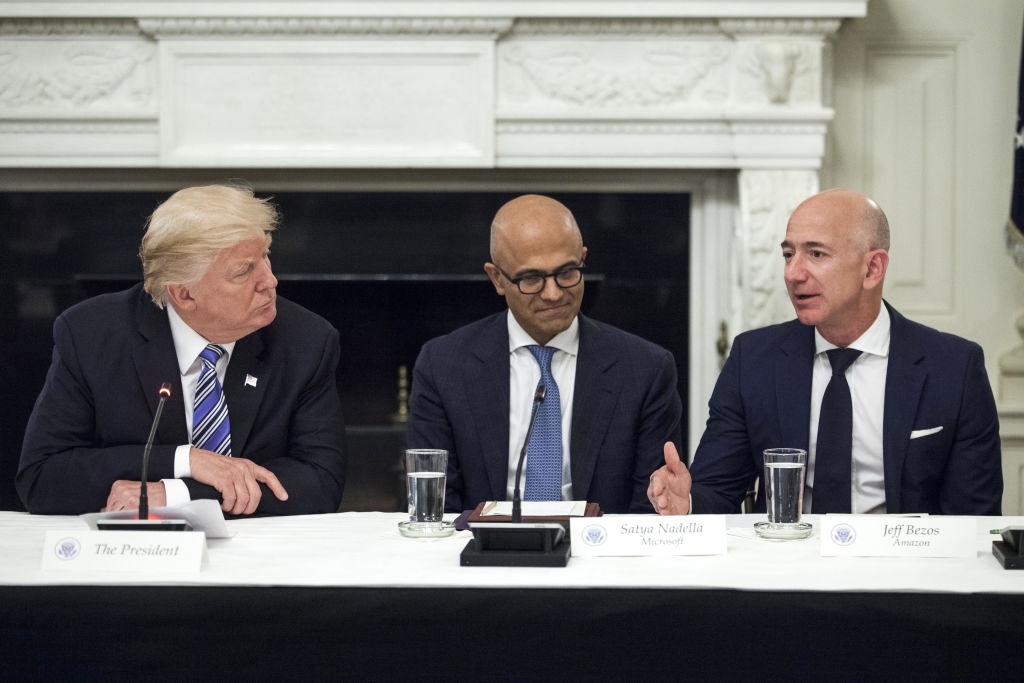
Linking minimum wages with maximums incentivizes companies to improve conditions for workers at the same time it encourages them to reign in runaway compensation for executives. (Zach Gibson / Bloomberg via Getty Images)
In the first year of President Donald Trump’s second term, the power of the extremely wealthy over public policy has never been more evident. As Sen. Bernie Sanders (I-VT) has asserted, “Trump has . . . said it loudly and clearly: we are a government of billionaires.” The troubling extent to which we are ruled by the rich is hardly debatable. The real question is: What can we do about it?
One solution that has been proposed in the past is implementing a “maximum wage.” Such a cap would limit the amount any individual can earn over a given period.
There are a couple different ways that this limit could be accomplished. One way would be to use tax policy: We could simply levy a 100 percent tax rate on income over a particular level. President Franklin D. Roosevelt proposed such a measure during his administration in the 1940s. Although he did not reach his goal, the US Congress passed the highest ever federal tax rate of 94 percent on top earners during World War II, and it kept the rate above 90 percent for the two decades that followed. (This is a far cry from the reality today, when the highest tax rate is 37 percent, and when few mainstream Democrats have supported Rep. Alexandria Ocasio-Cortez’s (D-NY) proposal to raise the tax on the top bracket to 70 percent.)