France Is in the Streets and Deep in Political Crisis
President Emmanuel Macron last week appointed France’s fifth prime minister since the start of 2024. This Thursday’s mass strike suggests that his gambit has done little to settle the country’s political crisis.
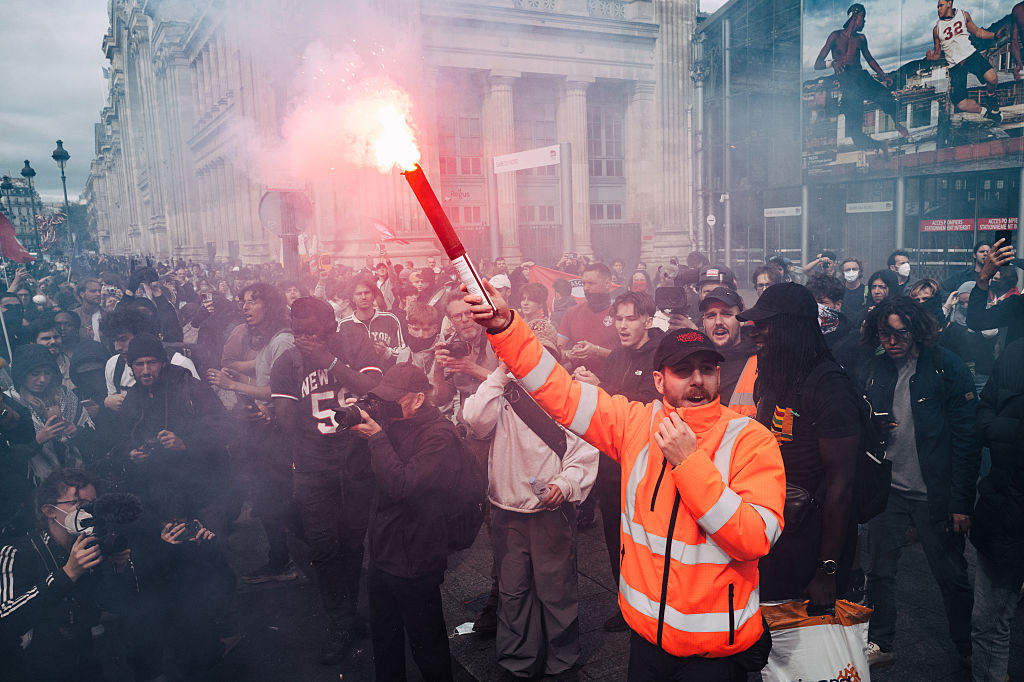
Thursday’s strikes across France were the latest upsurge of protest against president Emmanuel Macron. Unions hope that the protracted crisis in his government will allow a final defeat of his austerity agenda. (Jérôme Gilles / NurPhoto via Getty Images)
Around one million people took to the streets of France this Thursday, according to figures from the General Confederation of Labor (CGT), in protest against President Emmanuel Macron and his austerity policies. This was the second major mobilization in recent days, after the relative success of the Bloquons tout! (“Let’s Block Everything!”) movement’s call for strikes and blockades last Wednesday, September 10.
The appeal for last week’s mobilization had spontaneously spread online, before actions were organized through popular assemblies held in many French towns and cities. Bloquons tout! had called for the blocking of France’s transport routes in protest against the austerity budget presented by then prime minister François Bayrou.
The massive police deployment last week (with eighty thousand officers, a record number) dismantled the blockades, but more than two hundred thousand people participated in the mobilization — a considerable success for a movement that had not existed just a few months earlier. Even though the original call was launched by a small nationalist group, they were not involved in the organization of last week’s protests, where the Left had the most prominent role.