The Defeat of European Socialism Was Far From Inevitable
Contrary to popular belief, the 1970s was a period in which the European left was at its strongest. Unions were powerful, and socialists felt confident that the changing economy could benefit them. So why was the Left defeated a decade later?
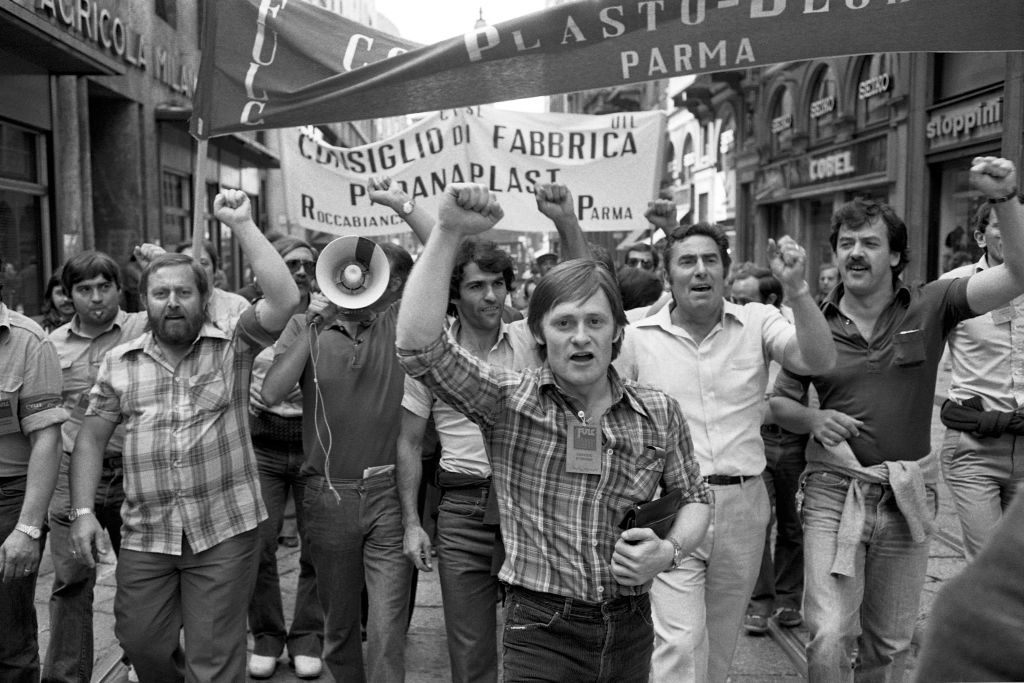
Trade unionists marching during a demonstration in Milan, Italy, on May 4, 1979. (Edoardo Fornaciari / Getty Images)
One of the dominant ways of understanding the history of European socialism in the second half of the twentieth century is as one of decline. According to this account, leftist parties, faced with globalization, deindustrialization, and cultural and ethnic shifts in the composition of the working class, were disorientated and unable to respond. In his book The Halted March of the European Left, Matt Myers, a lecturer in history at the University of Oxford, argues that the 1970s were far more complicated than their interpreters make out.
Far from being a period characterized by socialist retreat, the Left was at its strongest in the 1970s, and workers, unions, and their leadership felt confident that they knew how to navigate the changing economic landscape. Myers spoke to Jacobin about what this history, based on years of archival research in England, France, and Italy, can teach us about the real causes of the defeat of the Left and what could be done to renew it today.
Ashok Kumar
How did you come to write your book The Halted March of the European Left?
Matt Myers