Kenyan Women’s Gulf Jobs Begin With Hope and End in Horror
Reporting from Kenya, our correspondent spoke to women who returned from domestic work in the Gulf under the kafala system, which binds workers to employers and strips them of basic rights. Their testimonies reveal a pattern of exploitation, abuse, and death.
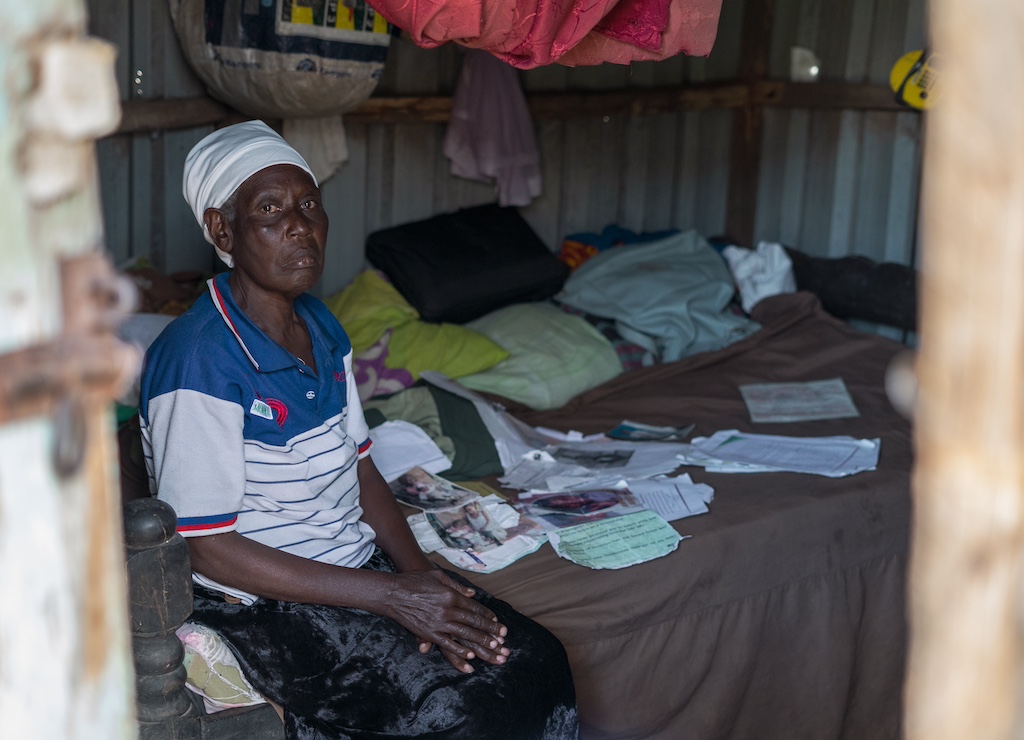
Mercy Wanjiru Ndungu and fliers of her daughter Beatrice, who died while working for an abusive employer in Saudi Arabia. (Courtesy of Jaclynn Ashly / Jacobin)
Mercy Wanjiru Ndungu speaks from inside her single-room tin shack in Nairobi’s Kasarani neighborhood, her voice tight with emotion. “I feel so much bitterness,” she says, her eyes red and glassy. “When I think about my daughter, I feel like I want to die. But I’m waiting on God for justice.”
Wanjiru’s twenty-one-year-old daughter, Beatrice Waruguru, a smart secondary school graduate, traveled to Saudi Arabia for domestic work in 2021. Beatrice had dreamed of university and lifting her family from poverty. But just months after arriving, the family received news that Beatrice was dead.
The Saudi death certificate ruled it a suicide. But when Beatrice’s body was repatriated, her eyes were gouged out, and she had visible marks of torture, including burns. The family believes her Saudi employer murdered her.