The FDA Is Approving Drugs Without Evidence They Work
Over the last several decades, the Food and Drug Administration has allowed pharma companies to sell hundreds of drugs to patients without adequate evidence that they work and, in many cases, with clear signs that they pose a risk of serious harm.
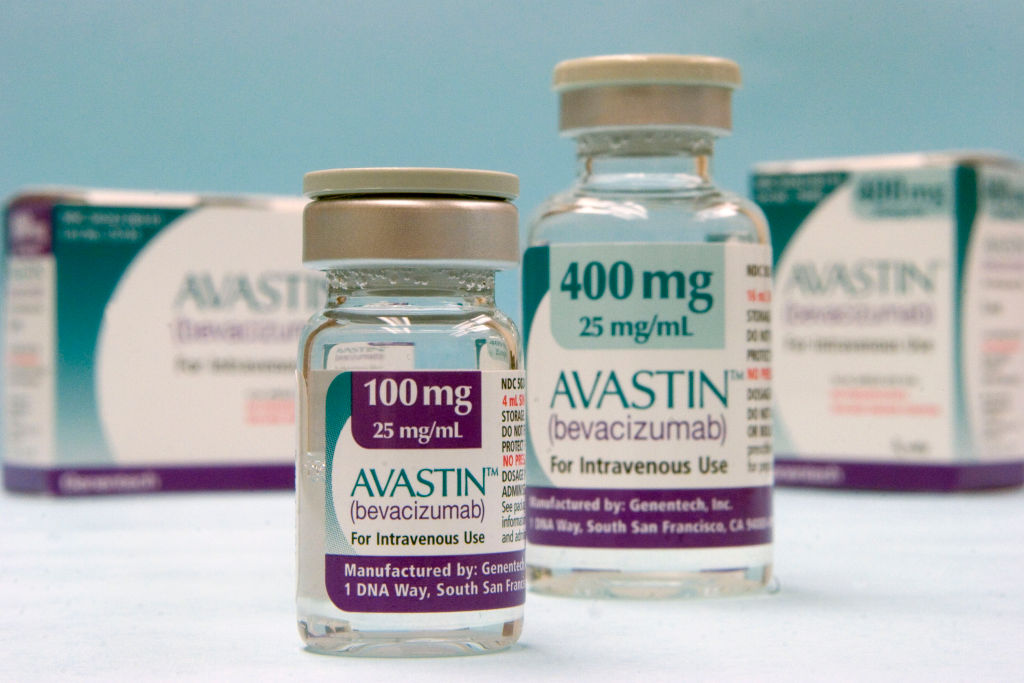
In 2009, the FDA authorized Avastin for recurrent glioblastoma, a fatal brain cancer. In 2017, after the requisite “confirmatory” trials, the agency granted it full approval — even though the follow-up studies failed to show it helped patients live any longer. (JB Reed / Bloomberg via Getty Images)
Nieraj Jain was puzzled by the patient sitting quietly in front of him. The woman, in her sixties, was losing her eyesight; that much was clear. Her vision was blurred, and she was having increasing difficulty seeing at night and in bright sunlight. Less obvious was the cause. A retinal specialist and surgeon at Emory University in Georgia, Jain pored over specialized scans of her eye and saw odd patches of pigment on her retina — patches that didn’t fit with any known diagnosis.
A fleeting memory pulled him up short; hadn’t he seen another patient a few months before with a similar finding? Combing through patient records, Jain dug up five more patients at Emory with the same puzzling retinal changes. All were going blind — and all happened to be taking Elmiron, a drug for a bladder condition called interstitial cystitis. In 2018, Jain and his colleagues published their findings about this new cause of blindness, dubbing it “pigmentary maculopathy.”
Meanwhile, gastroenterologists at Emory and other institutions were uncovering another troubling finding about Elmiron: some patients on the drug were being diagnosed with colitis, a chronic inflammatory bowel disease with potentially life-threatening complications.