Tariffs, Like Free Trade, Discipline the Global South
Nations across the Global South were forced to surrender economic self-determination under the banner of free trade. Absent a collective response, Donald Trump’s dismantling of this order will only further erode developing nations’ economic sovereignty.
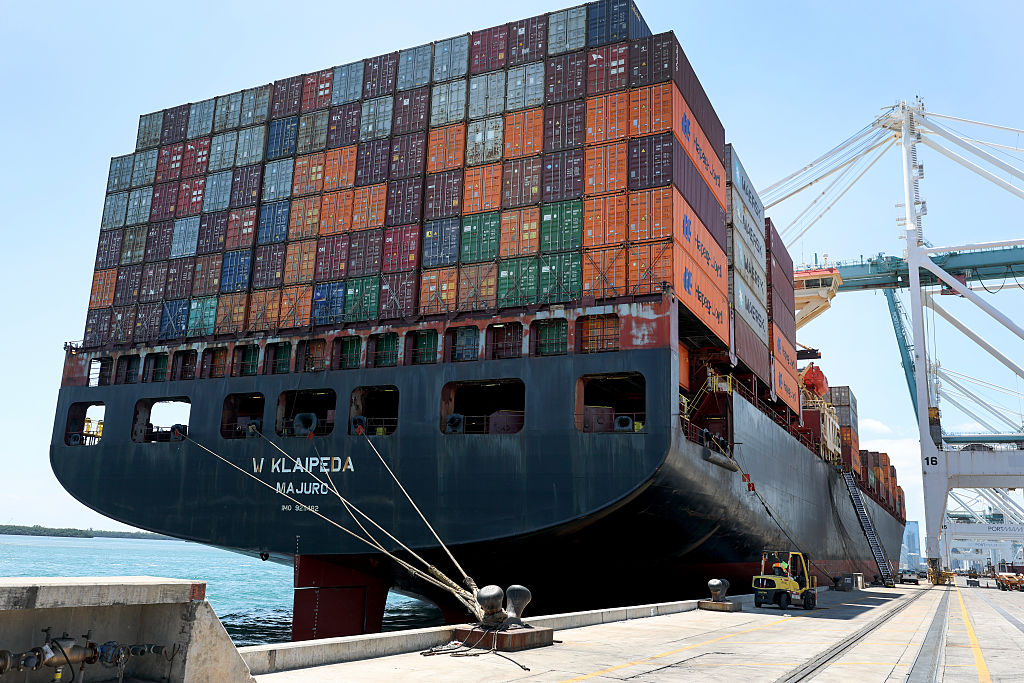
Shipping containers are stacked on a cargo ship at PortMiami on April 15, 2025, in Miami, Florida. (Joe Raedle / Getty Images)
The United States’ recent tariff offensive has left developing countries confronting a thorny dilemma. As Washington abandons the multilateral order in favor of unilateral economic measures, the Global South must grapple with the implications of this shift — not just in diplomatic terms but in terms of the shrinking space for independent economic policymaking.
The Trump administration — and increasingly, much of the US political mainstream — has portrayed tariffs as a tool to revive domestic industry and reassert national power. In advancing this agenda, the United States has discarded the foundational rules of the World Trade Organization and bypassed the very free-trade agreements that once promised developing countries a bulwark against economic unilateralism. In return for that supposed protection, these countries had already surrendered significant policy space in areas like intellectual property, capital controls, and foreign direct investment.
At first glance, this erosion of the multilateral trade order may appear to grant developing nations greater flexibility — an opening to pursue industrial and trade policies that had long been constrained by that very system. But before we celebrate a supposed broadening of policy space, it’s worth asking what exactly lies behind the Trump-era trade doctrine and, more important, what room it leaves to maneuver for Global South economies.