Pavement Made Music About Selling Out Without Selling Out
Pavement, one of the most celebrated indie rock bands of the 1990s, grappled with the challenge of making a living from music without slotting into the corporate machine. A new documentary recreates the group’s spirit for a very different cultural age.
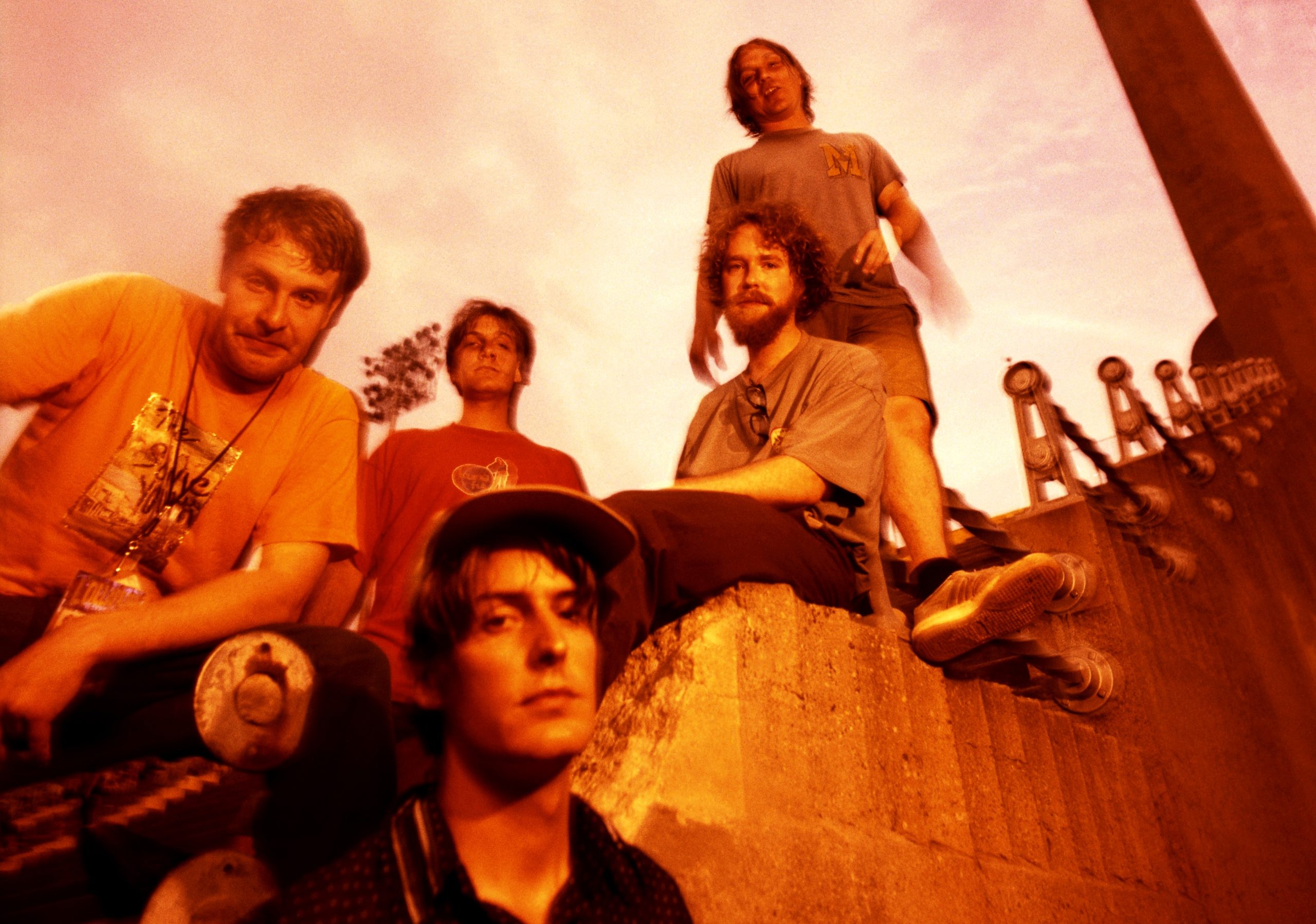
Stephen Malkmus, Bob Nastanovich, Scott Kannberg, Steve West, and Mark Ibold of Pavement posing for a group portrait at the Lollapalooza festival in Randall’s Island, New York, July 29, 1995. (Bob Berg / Getty Images)
The question of “selling out” was a defining concern of the independent music scene during the 1990s. Some bands who had paid their dues, like R.E.M. and Sonic Youth, saw the act of signing to a major label as a path forward to sustain their ambitions.
Younger and less experienced acts, like Mudhoney and Nirvana, found the opportunity they had dreamed of through lucrative recording contracts, only to confront corporate pressures and stifled aspirations, even when they achieved a high level of commercial success. Others still, like Fugazi and Bikini Kill, rejected outright the terms on offer from the corporate mainstream.
Selling out was not simply a question of money — after all, every musician wants to make a living — but one of how to attain financial independence without sacrificing artistic credibility. Pavement, the feted indie rock band founded in 1989 by Stephen Malkmus and Scott Kannberg, made this critical point of deliberation an integral part of their music.