Make May Day Great Again
We’ve come a long way from the days of Cold War paranoia, when unions wanted nothing to do with the Communist-sounding International Workers’ Day, also known as May Day. Can it become a real American holiday celebrating class struggle?
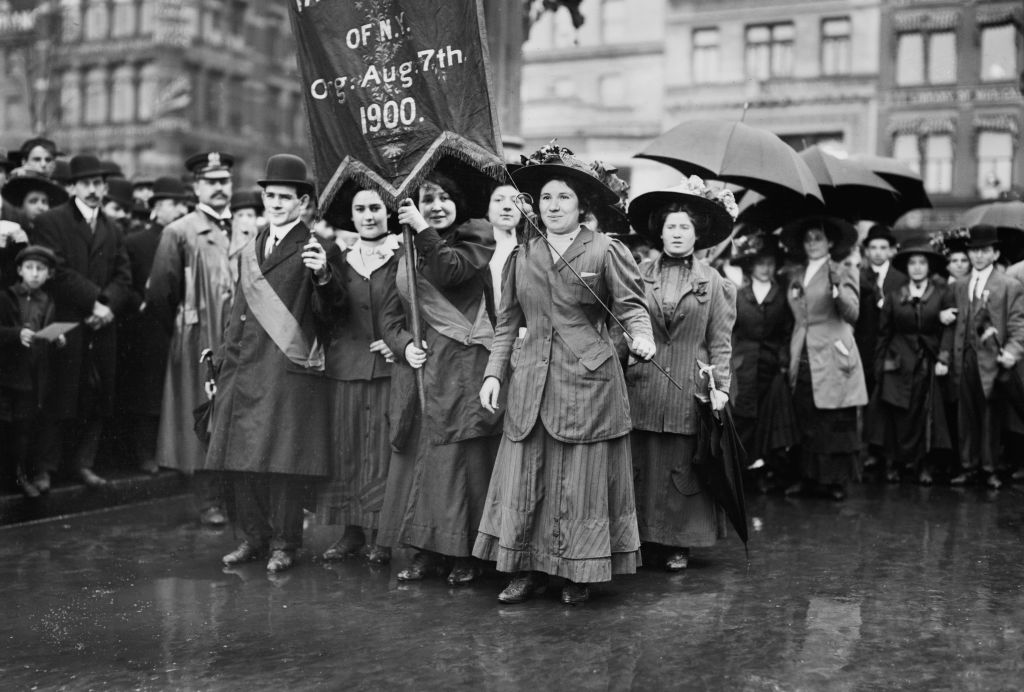
Women marchers at a May Day parade in New York City on May 1, 1909. (Universal History Archive / Universal Images Group via Getty Images)
When my children were little in the late 1990s, we attended an annual May Day event in verdant Tilden Park, near our home in Berkeley, California. Each year a flyer, resplendent with Walter Crane illustrations, would appear in our mailbox inviting us to come celebrate. I have no memory of how we got onto the mailing list, but I recall how much my kids loved arriving in the meadow, lining up with dozens of other families, and marching around the perimeter of our “commons” behind banners and signs, before participating in a kid-led theatrical presentation featuring authority-defying woodland peoples and a cruel but eventually vanquished evil overlord.
This mash-up of “green” and “red” May Days — the celebration of spring renewal dating back to time immemorial, and the more modern promotion of workers and class struggle — is typical of the dialectic that has animated the holiday in various times and places. This year’s May Day is shading red.
On April 5, an estimated three million people nationwide participated in the hastily organized “Hands-Off” demonstrations. With more than a thousand events in all fifty states, the day of action surpassed organizers’ predictions and ramped up expectations for the next big day of action, which happens to be May 1, International Workers’ Day.