In Canada, the Strike Is Under New Management
From Charter rulings to back-to-work laws, tools once used to manage Canadian labor disputes are now deployed more aggressively — and more often. Quebec’s Bill 89 is pushing this trend forward, making striking harder, riskier, and easier to repress.
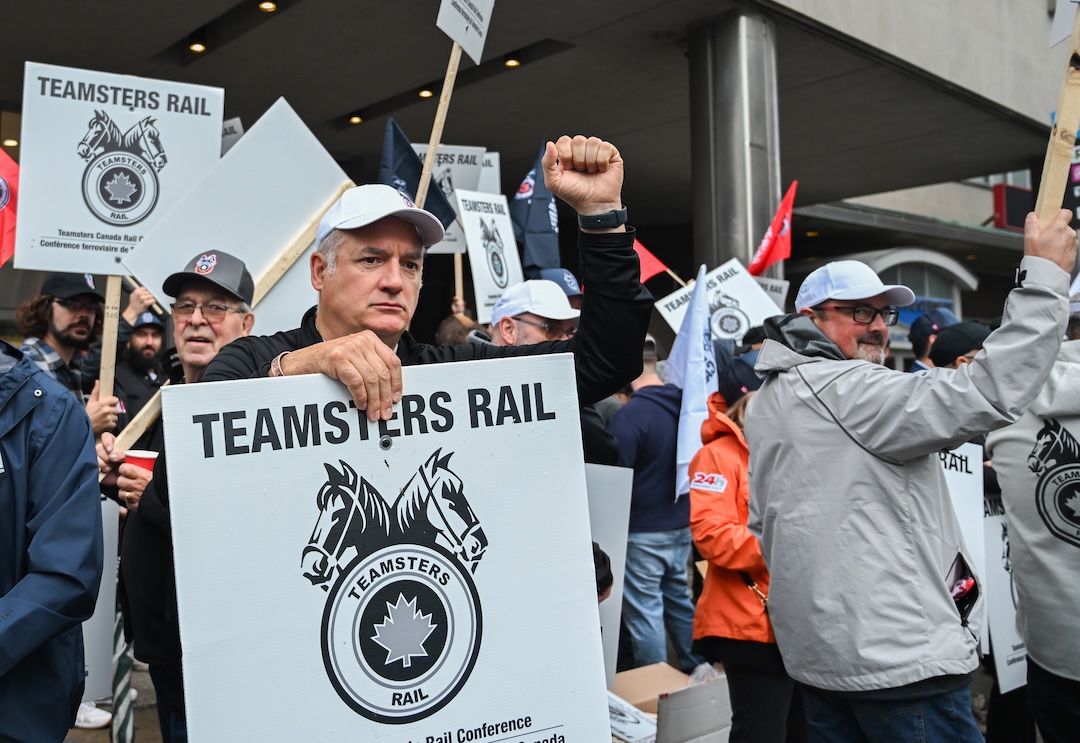
Railworkers and supporters during a strike in front of Canadian National Railway Company headquarters in Montreal, Quebec, Canada, on Thursday, August 22, 2024. (Graham Hughes / Bloomberg via Getty Images)
Nobody saw it coming. In February, Quebec’s labor minister, Jean Boulet, of the ruling conservative Coalition for the Future of Quebec (CAQ), introduced Bill 89 to the National Assembly of Quebec: “An Act to give greater consideration to the needs of the population in the event of a strike or a lock-out.” The announcement was met with shock. The proposed legislation is arguably the most anti-labor bill the province has witnessed to date. It would not only provide the government with tools to interfere directly in labor disputes but also infringe upon employees’ freedom of association and significantly reduce workers’ leverage. The business community has overwhelmingly supported the project — and even advocated for strengthening the bill’s provisions.
This extreme decision did not emerge from nowhere. It is the result of a relentless effort to asphyxiate the labor movement all across Canada — an effort that has partly succeeded. Unionization rates have fallen nationwide. In Quebec, however, the rate has long held steady at approximately 38 percent, relatively high by national standards. However, there’s a caveat: 85 percent of unionized workers in Quebec are in the public sector, compared to 75 percent in the rest of the country. Private sector unionization remains rare.
Recent developments make the stakes even clearer. When Amazon closed all seven of its Quebec warehouses — laying off thousands of workers after unionization efforts — it sent a chilling message. The labor movement in Canada is now facing some of its most serious threats in decades.