Canada’s Unifor Has Won Major Gains on Shifting Terrain
A new work of labor history charges Unifor, Canada’s largest private sector union, with retreating from visionary class politics to narrow opportunism. The narrative rests on a simplistic view of labor strategy and omits the union’s major accomplishments.
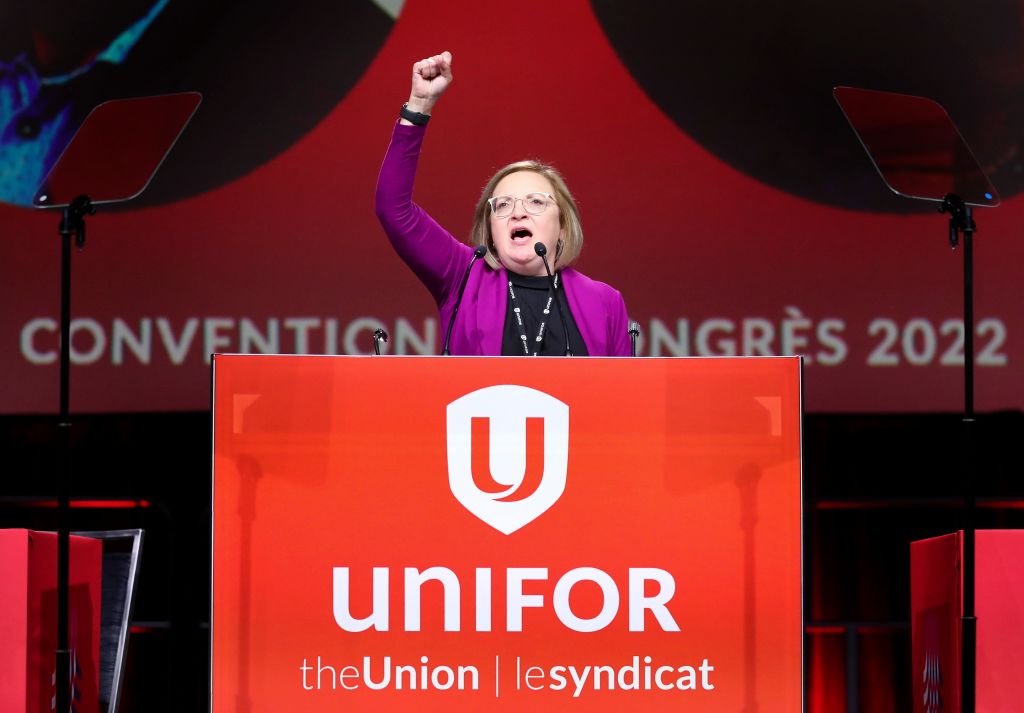
Lana Payne speaks to the delegates after being elected the new president of Unifor at the Metro Toronto Convention Center on August 10, 2022. (Richard Lautens / Toronto Star via Getty Images)
There’s lots happening in Canada’s union movement: new organizing, favorable legal reforms, big wage gains (5 percent per year since 2022), and a historic wave of strikes.
In this context, it’s surprising Jacobin would feature a scathing denunciation of a union at the forefront of this upsurge: Unifor, Canada’s largest private sector union. In his positive review of an equally scathing recent book by academics Stephanie Ross and Larry Savage, Shifting Gears: Canadian Autoworkers and the Changing Landscape of Labour Politics, McGill University professor Barry Eidlin says Unifor has “lost its way,” descending from a “vanguard” of working-class struggle into a “narrow, opportunist, sectionalist” union pursuing “transactional politics.”
No honest observer could deny Unifor’s leading role in Canadian union militancy. Unifor has launched ninety-seven strikes since the current leadership was elected two years ago. It’s won enormous wage gains (25 percent or more in many cases), and big progress on pensions and benefits. It has certified dozens of new units — including North America’s first unionized Walmart warehouse. Unifor’s feminist president Lana Payne is recognized as Canada’s most powerful, effective union leader.