Understanding the Basics of 21st-Century Finance Capitalism
Wall Street is always transforming itself, and recent years have proven no exception. Understanding those transformations is essential to challenging finance capital’s reign.
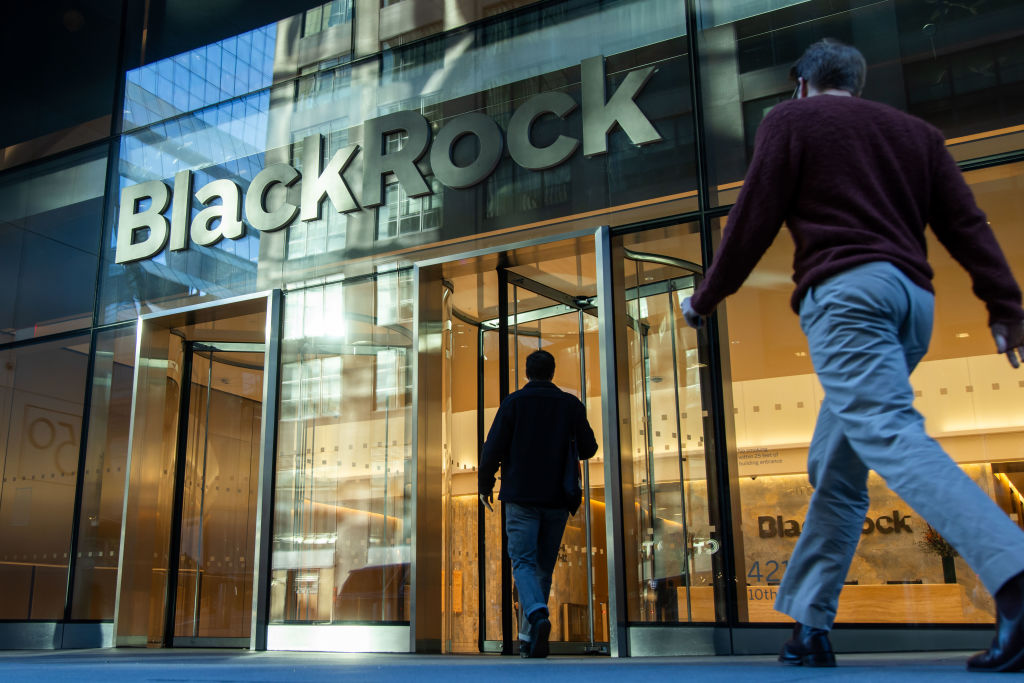
The BlackRock headquarters in New York, on October 11, 2024. (Michael Nagle / Bloomberg via Getty Images)
It has been a tumultuous week for the stock market, as Donald Trump’s quest to reshape the global capitalist order has sent investors into a frenzy. Where is all of this headed? Who knows. But going into a possible trade war, it’s worth stepping back to reflect upon the shape of our financial system.
To start: What are the most important developments on Wall Street in recent years? The short answer: massive asset managers — above all, the “Big Three” of BlackRock, Vanguard, and State Street — have become the dominant players in the financial system and the economy more broadly.
What do the Big Three do? They provide a basic financial service to investors: in exchange for a fee, asset managers invest their clients’ money in financial markets, for the most part in the stock market, or “public equities.” That sounds innocuous enough — until one understands just how much money we’re talking about.