Trump’s EPA Wants to Block Toxic Pesticide Warnings
Donald Trump’s Environmental Protection Agency is advancing a proposal to block states from warning consumers about herbicides and other agricultural products in their food — including the widely used glyphosate, which some studies have linked to cancer.
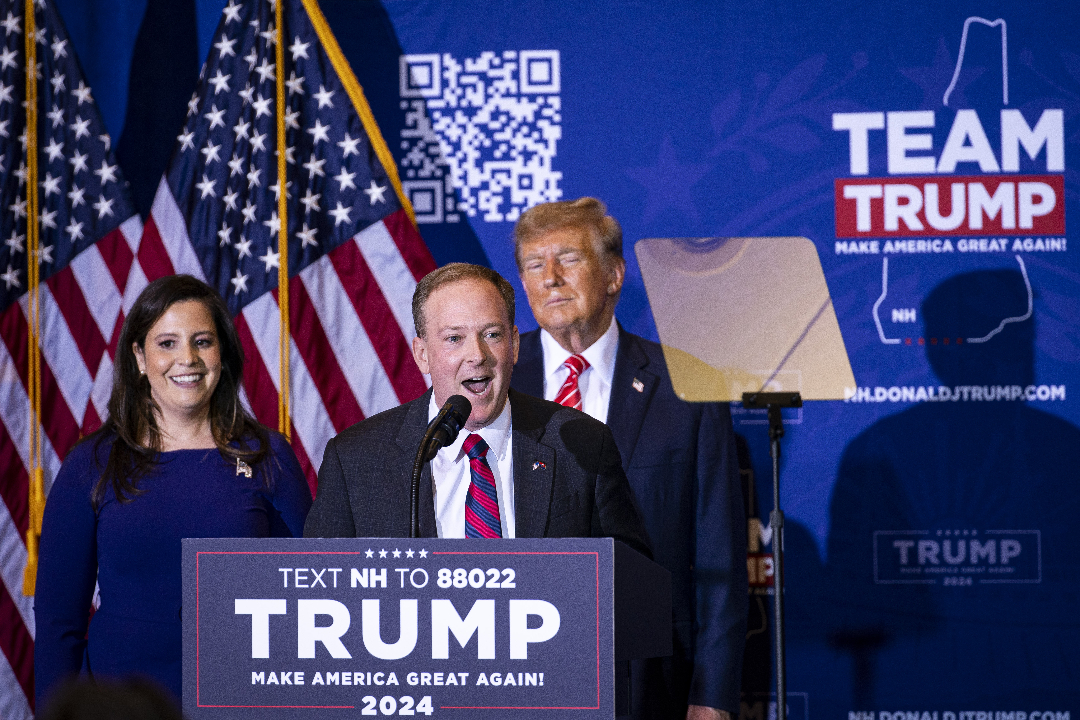
Former representative Lee Zeldin (R-NY), center, speaks as Rep. Elise Stefanik (R-NY) and Donald Trump attend a campaign event in Concord, New Hampshire, on January 19, 2024. Zeldin is now head of Trump’s Environmental Protection Agency. (Al Drago / Bloomberg via Getty Images)
President Donald Trump’s environmental regulators are advancing a proposal to block states from warning consumers about herbicides and other agricultural products in their food, according to federal documents reviewed by the Lever. Among the substances that could now go undisclosed is a widely used chemical that some studies have linked to cancer and that Trump’s own health secretary has called a “poison.”
Last month, Trump issued an executive order mandating agencies “fully address the growing health crisis in America.” But the initiative from Republican attorneys general — which would usurp state labeling authority — is now being moved forward by Trump’s Environmental Protection Agency (EPA). The measure would declare that any label citing scientific findings not acknowledged by Trump’s EPA would “constitute misbranding.”
The move could be setting up a confrontation with Robert F. Kennedy Jr, head of the Health and Human Services Department. Kennedy helped sue a major agrochemical company for failing to warn consumers of its pesticides’ harmful side effects. In a 2024 op-ed penned days after endorsing Trump for the presidency, Kennedy claimed that pesticides, among other issues, are to blame for widespread health issues afflicting Americans. He has specifically targeted glyphosate, a widely used herbicide that some studies have called carcinogenic. Trump’s EPA in 2020 said the compound is safe, but a court ruled that the decision “was not supported by substantial evidence.”