Cuba’s Sugar Workers Played a Key Role in Its Revolution
For centuries, Cuba was one of the world’s great sugar producers, with a long history of enslavement and exploitation of those who worked on the plantations. But sugar workers learned how to organize and were vital for the success of the 1959 revolution.
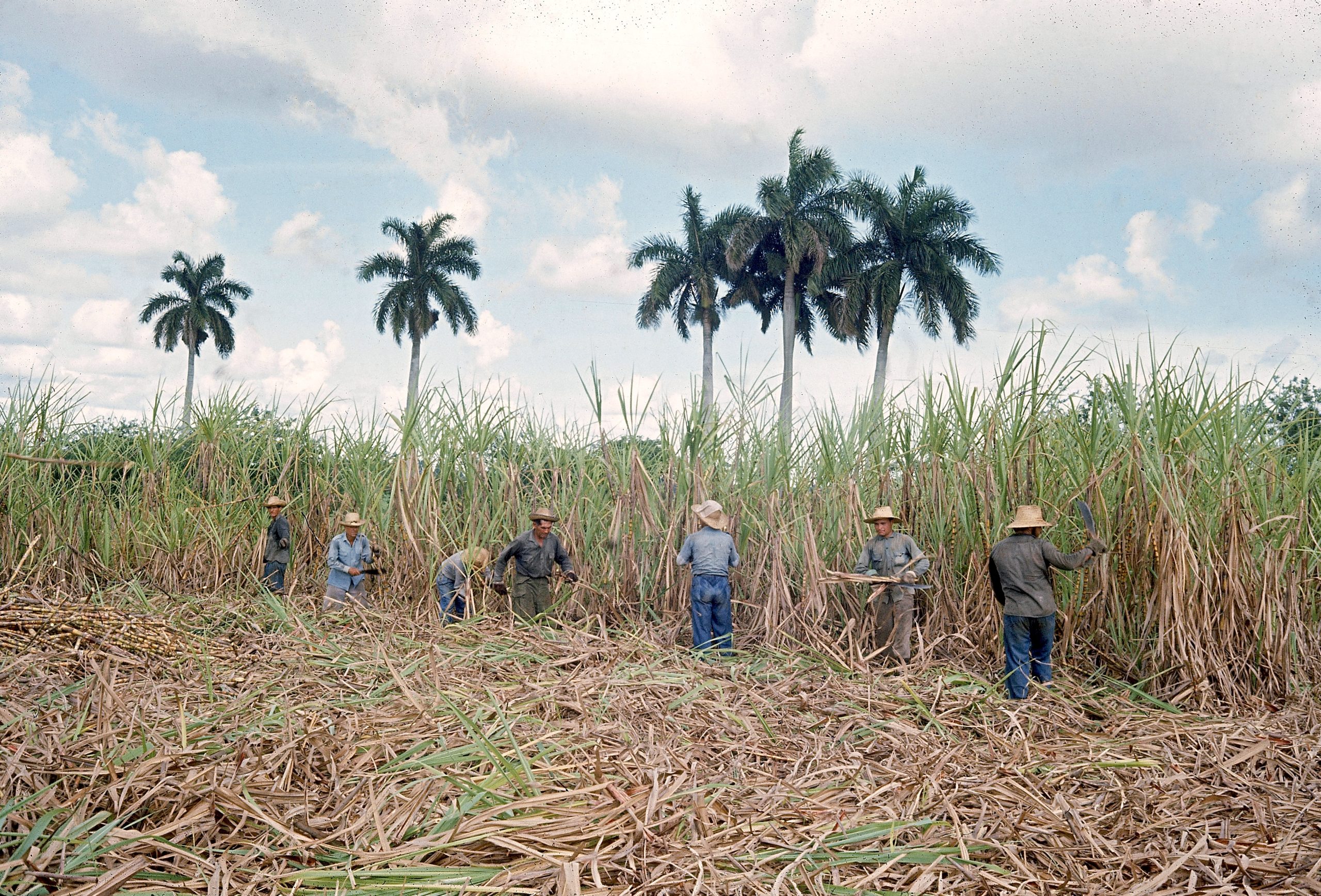
Workers cut sugar cane stalks in a field under palm trees in Cuba, 1959. (Getty Images)
In the first half of the twentieth century, Cuba was the biggest producer of sugar in the world, and sugar represented 80 percent of the country’s exports. This dependence on a single crop left the whole Cuban economy at the mercy of the world sugar market.
When the world price was high, this brought wealth to the plantation owners and poorly paid, backbreaking toil to the rural proletarian cane cutters. When the price crashed, the wealthy kept their riches and laid off the cane cutters, depriving them of their subsistence.
The sugar workers responded by forming one of the most important trade union organizations in Latin America, which organized a number of important strikes. It became the backbone of the general strike that ensured the victory of the Revolution in 1959.