Strikers, Scabs, and Sugar Mongers
How immigrant labor struggles shaped the Hawaii we know today.
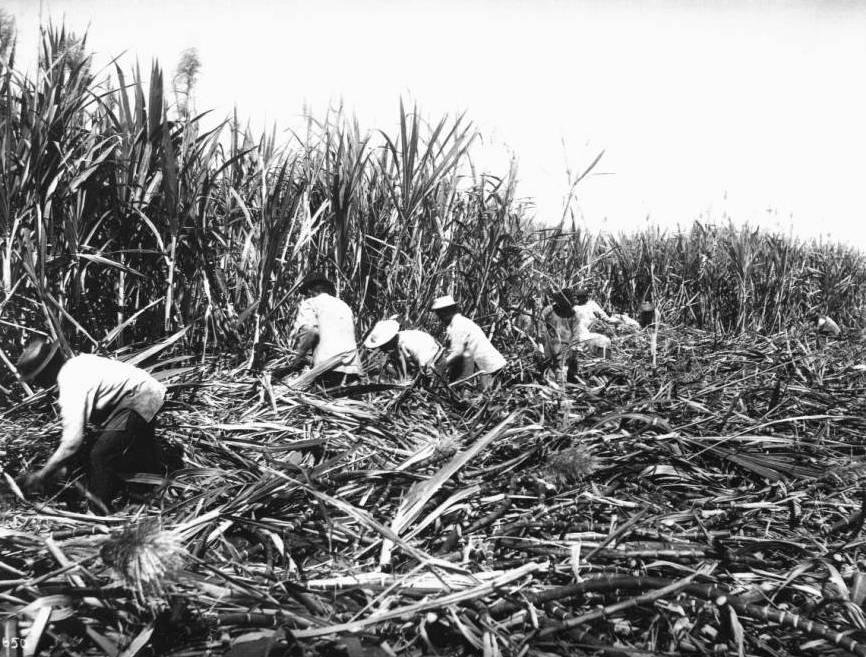
Workers cut sugarcane on a Hawaiian plantation. University of Southern California Libraries and California Historical Society
Last December, Hawaii’s last remaining sugar mill suspended operations. Speaking at a ceremony marking Hawai’i Commercial & Sugar Co.’s final haul, Chris Benjamin, president and CEO of the plantation’s parent company, waxed poetic about sugarcane’s role in the making of modern Hawaii:
Rarely has an industry so shaped and influenced a place and helped create a culture, a fabulous multi-ethnic culture, as the sugar industry did. The harmonious melting pot we enjoy in Hawai’i is a perfect counter to the divisiveness and isolationism that sadly much of the country is embracing.
Benjamin was only half right. While it’s difficult to overstate the sugar industry’s power, the idea that it ushered in a “harmonious melting pot” obscures Hawaii’s true history, which consists of capitalist conspiracies, worker uprisings, and one ill-conceived attempt to contrive a whiter working class, all set against the backdrop of ongoing Native Hawaiian resistance.