It Was Always in the US’s Power to Force a Cease-Fire
After 15 months of bloodshed, news has emerged of a cease-fire deal in Gaza. The US always had the power to restrain Israel but refused to use it.
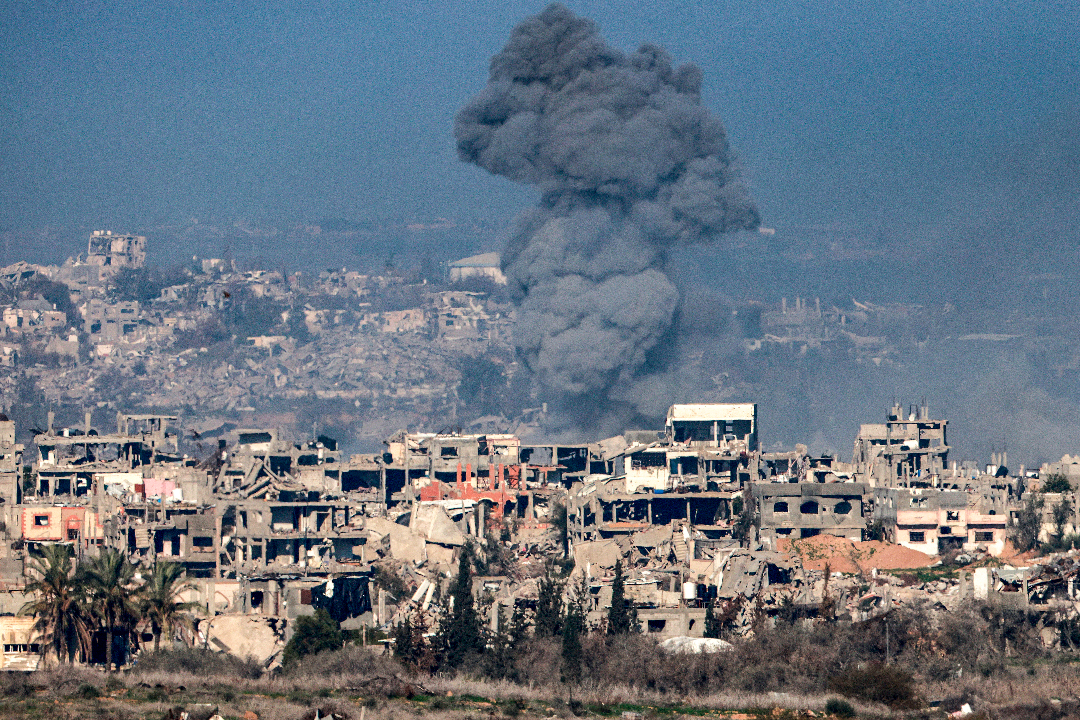
A smoke plume rises from explosions above destroyed buildings in the northern Gaza Strip on January 13, 2025. (Menahem Kahana / AFP via Getty Images)
Just hours ago, news emerged of a cease-fire deal between Israel and Hamas. The announcement was preceded by a post from incoming president Donald Trump, who wrote in all caps on Truth Social that “WE HAVE A DEAL FOR THE HOSTAGES IN THE MIDDLE EAST. THEY WILL BE RELEASED SHORTLY.” After almost fifteen months in which Israel subjected the population of Gaza to a reign of terror that has left tens of thousands dead and flattened most buildings, Benjamin Netanyahu seems to have conceded a cease-fire as suddenly as he declared war.
Jacobin spoke to Daniel Bessner, a scholar of American foreign policy and international relations, about these developments that, he argues, reveal that the United States always had the power to bring the bloodshed to a halt. In this interview, Bessner discusses the state of American power in the region, the possible foreign policy of the incoming Trump administration, and whether the liberal international order can survive the reemergence of great power politics.
John-Baptiste Oduor
It’s impossible to start without talking about the cease-fire deal, which is, of course, in a lot of ways a surprise. What’s your read on it? One interpretation is that Benjamin Netanyahu was trying to hold out against the Biden administration — that is, holding out for the possibility that Trump would take a favorable line, which he didn’t.
Daniel Bessner