The Destruction of Gaza Will Be Joe Biden’s Enduring Legacy
Joe Biden talked about wanting a cease-fire, but he continued sending weapons to Israel and refused to apply any pressure to end the attack on Gaza. That refusal, cosigned by Kamala Harris, is an integral part of both their legacies.
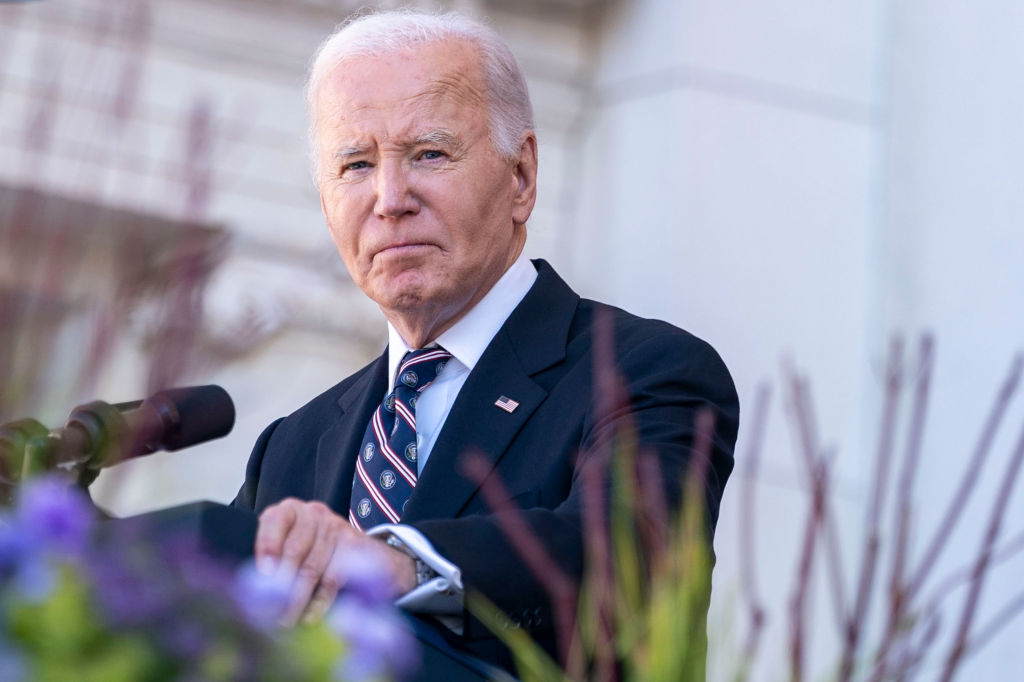
US president Joe Biden during the National Veterans Day observance at Arlington National Cemetery in Arlington, Virginia, on November 11, 2024. (Bonnie Cash / UPI / Bloomberg via Getty Images)
Akbar Shahid Ahmed, senior diplomatic correspondent for the Huffington Post, has been reporting on US support for the Israeli attack on Gaza over the last year, and is now working on a book that will give us the inside story. He spoke to Jacobin about why Kamala Harris wouldn’t distance herself from Joe Biden over Gaza, what impact it had on the US presidential election, and what is likely to happen next. This is an edited transcript from Jacobin’s Long Reads podcast. You can listen to the interview here.
Daniel Finn
In very broad terms, can you tell us what impact Gaza had (or might have had) on last week’s presidential election? What problems did it cause for the Democrats with particular groups of voters, notably in swing states like Michigan?
Akbar Shahid Ahmed
One week out, we know that Kamala Harris got significantly fewer votes than Joe Biden got in 2020, even among Democratic-leaning constituencies, so that’s an important indicator. It’s not so much that these voters were swinging to Donald Trump or seeing him as a savior for Gaza, but perhaps people were much less enthusiastic to show up for her. That applies to younger voters, many of whom did back Biden in huge numbers to eject Donald Trump in 2020, and to Arab and Muslim Americans.