Is Donald Trump a William McKinley or an Andrew Jackson?
The Trump presidency is not a pathology of mass politics. It’s a problem of our billionaire political economy.
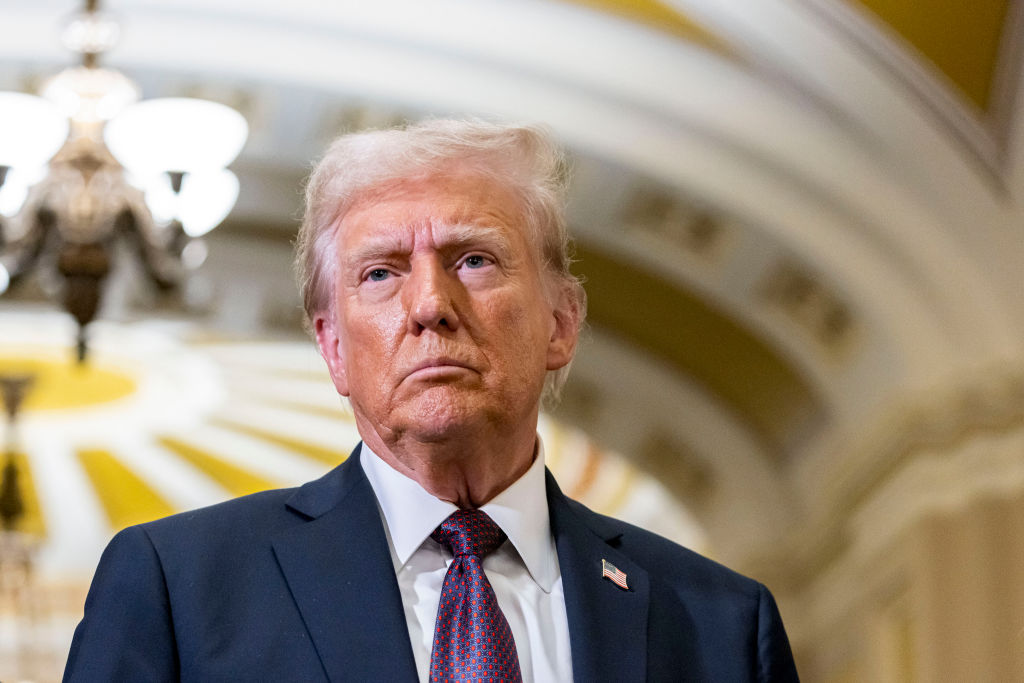
During Donald Trump’s second presidency, expect fewer mentions of fascism and more references to oligarchy. (Valerie Plesch / Bloomberg via Getty Images)
Democracy in America is not well, but what ails it? According to one diagnosis, the country is suffering from multiple strains of one-man rule — tyranny, fascism, authoritarianism. Variants of the virus originate in the people and their passions. Citizens vote the tyrant into power. Racism, misogyny, or some other affliction of cruelty and fear fuels their votes. Democracy is not just threatened by disease. It is the disease.
This idea, of despotism from the demos, has a distinguished pedigree. Plato and Aristotle thought that all, or nearly all, forms of tyranny arise from the people. The vulgar many oppose the virtuous few, whose ethos of remove is an irritant to the many. Stirred by a demagogue, the people and their leader lay waste to established institutions and elites, upending the rules and norms of the constitutional order. The result is a lawless multitude or lawless ruler, it scarcely matters which, for between a vicious democracy and a violent tyranny lies a narcissism of the smallest difference.
Scholars have shown, however, that tyranny in ancient Greece was less an affair of the masses than the classes, particularly the wealthy and wellborn. Small groups of elites turned recently accumulated surpluses, wrought from newly acquired colonies, into coercive monopolies of political power. Tyranny tracked concentrations of wealth rather than assemblies of the people. The problem was neither rule of the many nor rule of the one. It was rule of the oligarchic few. Far from destroying institutions, Matthew Simonton argues in his authoritative survey, the oligarchs of ancient Greece depended on institutions, both to manage conflict among themselves and to keep the people in a state of powerlessness.