How Left Economists Have Challenged Economic “Common Sense”
The US New Left spawned a generation of progressive economists who sought to challenge economic orthodoxy. For the “popular economics” movement, that has meant taking on pro-capitalist economics in academia as well as the public sphere.
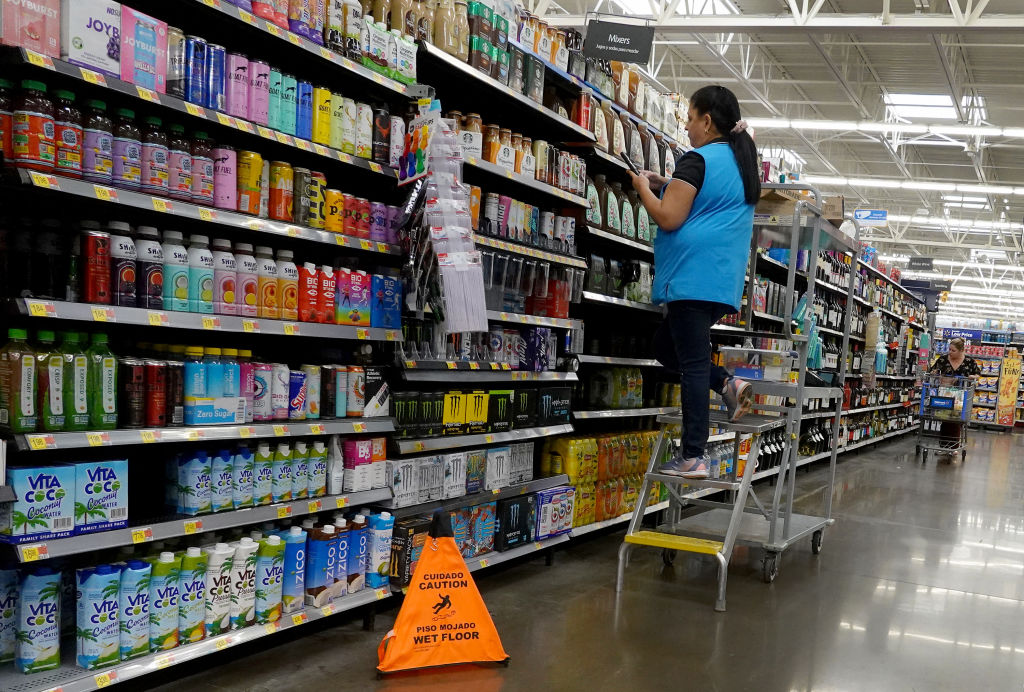
A worker stocks shelves at a Walmart in Miami, Florida. (Joe Raedle / Getty Images)
In the late 1960s and early ’70s, in the context of increasing outrage over the war in Vietnam and social movement ferment, the New Left in the United States splintered in a variety of directions. Some young leftists made the “turn to industry,” getting jobs in manufacturing, logistics, and other industries with the hope of organizing the working class; others joined Third Wordist–inspired guerrilla groups like the Weather Underground. Still others, of course, went into the academy, and some sought to bring their politics with them.
The latter included young economists and sociologists who were interested in challenging pro-capitalist economic orthodoxy in the profession and the broader culture. In 1968, many of these academics formed the Union of Radical Political Economics to promote this work; in 1974, some of them founded Dollars & Sense (D&S), a magazine intended to promote a left-wing analysis of economic issues to the broader public, especially activists in labor unions and other social movements.
On the occasion of Dollars & Sense’s fiftieth anniversary, we spoke with founding editor Arthur MacEwan, professor emeritus of economics at the University of Massachusetts Boston, and longtime editor Zoe Sherman, associate professor of economics at Merrimack College, about the history of this “popular economics” project and pressing economic questions confronting the Left today.