Using Research to Uncover Campus Complicity in Genocide
Across the US, students organizing against Israel’s assault on Gaza have made essential use of power research, uncovering financial ties between the Pentagon and campus labs and mapping out connections between university trustees and the war machine.
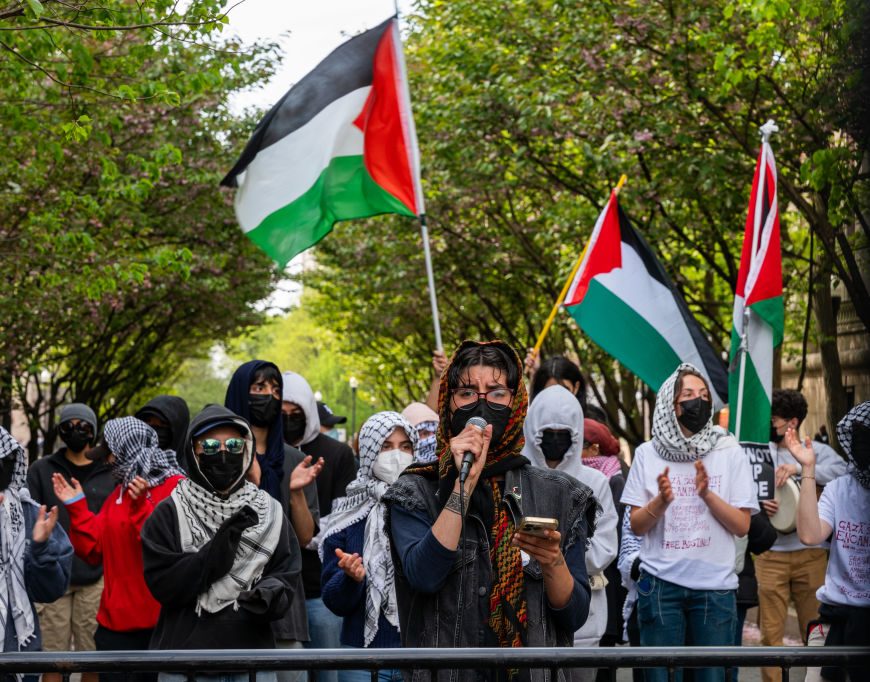
Pro-Palestine students demonstrate at the Columbia University encampment on April 30, 2024, in New York City. (Spencer Platt / Getty Images)
The explosion of campus protest movements against Israel’s siege of Gaza, especially during the April 2024 encampments, has been historic. These movements showed the whole world that swaths of young people across the United States stand in solidarity with Palestinians who are facing a genocidal assault. The encampments created crises for college administrators who purport to defend values of justice and human rights while also looking to appease their trustees and donor bases who back Israel’s brutal war.
A generation has been galvanized and politicized, experiencing extreme repression for simply demanding their institutions cut ties with one of the great human catastrophes of modern times: Israel’s indiscriminate destruction of Gaza, the killing of tens of thousands of people and injuring of many more, the use of starvation as a weapon of war, and the annihilation of Gaza’s universities.
A lesser-known thread stretching across this campus upsurge has been the critical role of power research in supporting movement organizing, labor struggle, political education, and protest strategy. Across universities and colleges, grad workers and undergrad students have done the nitty-gritty work of digging into their endowments’ investments, researching the financial ties between the Pentagon and campus labs, and mapping out the connections between university trustees and the war machine.