Learning From Italian Antifascism
You cannot understand antifascism if you don’t understand fascism, both in its contemporary guises and historically in countries like Italy.
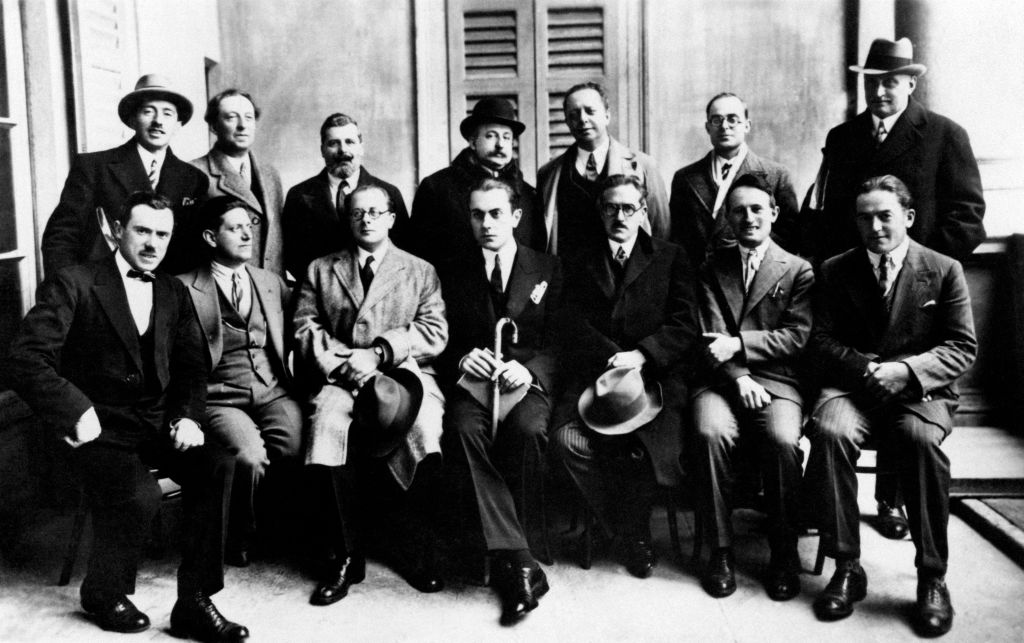
Carlo Rosselli sits with a group of members of the Italian antifascist movement Giustizia e Libertà in the 1930s.(Mondadori Portfolio / Getty Images)
The Italian antifascist movement Giustizia e Libertà (“Justice and Liberty”) reminds one of Brian Eno’s quip about the first Velvet Underground album: it sold just ten thousand copies at the time, but everyone who bought it started a band.
It was not a mass movement, but it attracted many of the leading antifascist intellectuals of the time, many of whom went on to play key roles in postwar Italian intellectual, political, and cultural life. Its leading figure, Carlo Rosselli, did not live to see the longer-term impact of his movement’s influence. French fascists, acting under direction from agents of Benito Mussolini’s regime, assassinated Carlo and his brother Nello in Paris in 1937. Their funeral brought 100,000 mourners into the streets, testifying to the brothers’ (but especially Carlo’s) status as antifascist militants in the eyes of their contemporaries.
Despite this, the memory of Giustizia e Libertà has largely been forgotten outside of Italy. This has been a loss for antifascists and socialists around the world, because Giustizia e Libertà left behind a treasure trove of ideas and inspiration for a new generation facing resurgent fascist and radical right-wing movements on every continent.