Pasta, a Weapon Against Fascism

When Benito Mussolini was ousted in 1943, a farming family called the Cervis celebrated by serving free helpings of pasta in the village square. It’s a ritual still repeated each July, upholding the community spirit at the heart of Italian antifascism.
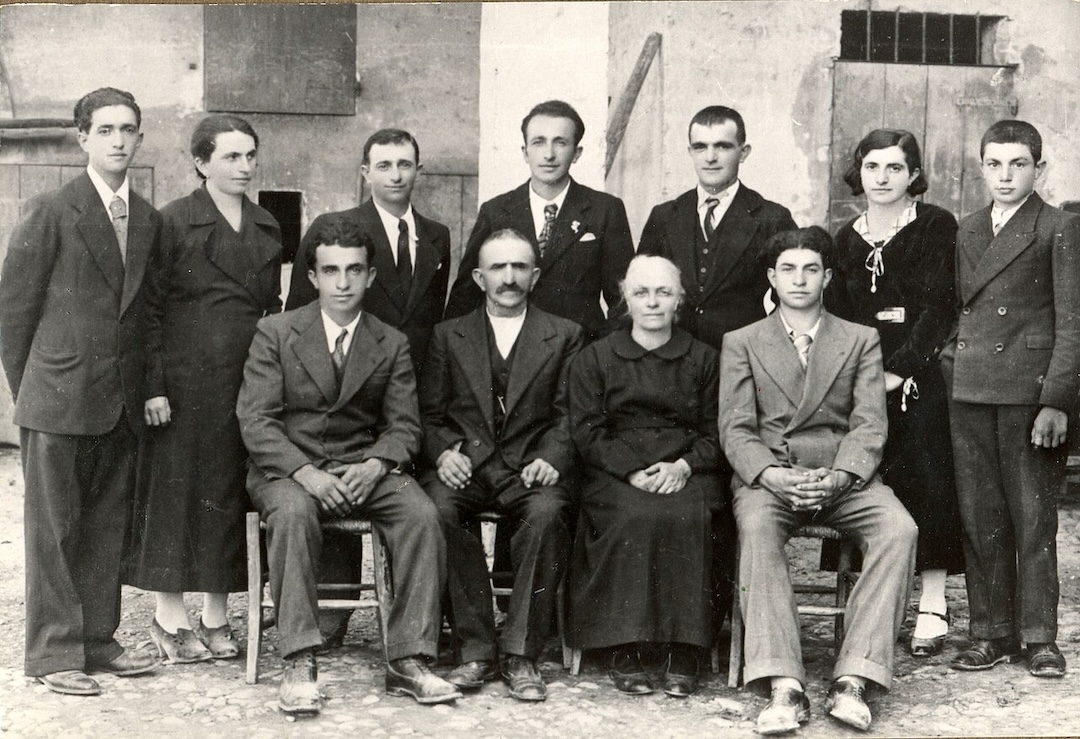
Alcide Cervi with his family, including his seven sons who were killed by Italian Fascists.

Alcide Cervi with his family, including his seven sons who were killed by Italian Fascists. (Alcide Cervi)


Antifascism can be served with a pot of overcooked pasta.

On July 25, 1943, after twenty-one years of dictatorship, Benito Mussolini was dismissed and arrested. Amid Italy’s worsening position in World War II, the Fascist Grand Council turned against Mussolini during the night, and Marshal Pietro Badoglio was appointed head of government. Across Italy, the news spread unevenly, slowly, passed by word of mouth, amid rumor and disbelief. Many thought not only that fascism had fallen but that the war itself might finally be over.

In the countryside around Reggio Emilia, in northern Italy’s Emilia-Romagna region, the Cervi family heard the news after returning from work in the fields. Alcide Cervi, his wife Genoeffa, and their seven sons and two sisters were peasants from Gattatico, near Campegine. They were a Catholic farming family who, during the 1930s, had developed new agricultural techniques and managed to free themselves from sharecropping.

But they had also developed an antifascist consciousness. Their politics emerged from the democratic and socialist traditions of Emilia-Romagna, close to the humanist and reformist socialism associated with Camillo Prampolini. In Campegine, they helped organize clandestine activity, including a small circulating library with Didimo Ferrari, later known in the Resistance as Commissario Eros.

Some of the brothers’ political awareness deepened during their military service. Aldo Cervi, in particular, came into contact with Communist circles through Lucia Sarzi, an antifascist theater actress. In summer 1943, she worked with future leading Communist Giorgio Amendola in a printing press hidden in the countryside near Correggio, republishing clandestine issues of party newspaper l’Unità. The Cervi brothers were later involved in the partisan movement under German occupation.

Yet the gesture for which the Cervi family is most widely remembered was a meal.

The Cervis decided to celebrate Mussolini’s fall by cooking pasta with butter and cheese and distributing it free to the people of Campegine. The pasta was cooked in Gattatico and transported to the village square. By the time it arrived, July 27, it was badly overcooked. The exact quantity distributed does not matter much. What matters is that it was prepared in abundance and offered to everyone, without distinction.

It was a simple gesture, but not a neutral one. It was a collective meal against dictatorship, hunger, war, and fear. It was a celebration of community against what Alcide Cervi — the father who survived the extermination of all seven of his sons — would later call the “fascist cancer.” It was antifascism from below, enacted through solidarity and food.

The hope did not last. On July 28, soldiers fired on workers at the Officine Meccaniche Reggiane in Reggio Emilia, killing nine people. And Badoglio’s government did not bring peace either. After it agreed to an armistice with the Allies at the start of September 1943, Nazi Germany occupied northern-central Italy. The Cervi brothers established the first partisan band in the area. They moved to the mountain to avoid capture then later returned to operate in the Po Valley lowlands, hiding and assisting former prisoners escaped from nearby camps.

After the birth of the Nazi-puppet Repubblica Sociale Italiana, nominally restoring Mussolini to power on September 23, 1943, repression soon intensified. On December 28, the seven Cervi brothers — Gelindo, Antenore, Aldo, Ferdinando, Agostino, Ovidio, and Ettore — were shot by the Fascists together with the partisan Quarto Camurri.

This is why the pastasciutta matters. It is not a sentimental anecdote about “good Italians” in a dark time. It is a reminder that antifascism was made by peasants, workers, women, smugglers of books and bread, clandestine readers, and ordinary people who turned everyday acts into political gestures.

Fascists Against Pasta

There is also a more specific reason why pasta mattered. Today pasta is treated as the most obvious symbol of Italian identity. But this was not always the case. Before the industrialization of food production after World War II, pasta was not consumed everywhere in Italy in the same way. In much of the North, polenta remained central; in the South, bread was often more important.

Fascism had an ambivalent, and often hostile, relationship to pasta. In the context of autarky, the regime wanted to reduce dependence on imported wheat. The fascist ideal of the “new Italian” was disciplined, rural, virile, and militarized. Pasta, especially in futurist rhetoric, was attacked as heavy, softening, sleep-inducing; an anti-modern food that supposedly weakened the national spirit. Filippo Tommaso Marinetti’s polemic against pasta expressed something real about fascism’s desire to regulate bodies, tastes, habits and everyday life.

In that context, a public distribution of pasta was, more than a meal, a challenge to fascist discipline. It was an action by civil society against the state’s attempt to control everyday life. It was a political gift, a way of saying: we are still here; we can still gather together; we can still share; we can still imagine life after fascism.

In Emilia-Romagna, pasta carried a different, quietly subversive significance. In many socialist families, cappelletti in brodo, traditionally eaten on May 1, became a symbol of community and political belonging. Cappelletti was never outlawed. Rather, what the fascist regime abolished in 1923 was May Day, erasing the workers’ holiday and suppressing its rituals. Yet the tradition endured behind closed doors: preparing and sharing cappelletti on May 1 became a subtle act of resistance, a way to keep alive a memory the regime sought to extinguish. In my family in Carpi, in the province of Modena, we have continued to eat cappelletti in brodo every May 1 ever since.

After the war, in the newly founded Italian Republic, the memory of the Cervi family did not remain politically neutral. The Partito Comunista Italiano (PCI) turned the seven brothers into one of the great popular myths of the Resistance. If Antonio Gramsci became, in some ways, the foremost intellectual legend of Italian and global antifascism, the Cervis became one of its popular myths: peasants, martyrs, brothers, sons of the people.

For many years, the Cervis’ pasta remained primarily a local memory, in Reggio Emilia. It was only after the Cold War that it began to be revived as a broader antifascist celebration. In 1988, volunteers at the Museo Casa Cervi in Gattatico, a museum since 1974, organized a new Pastasciutta Antifascista, serving plates of pasta on July 25. From the mid-1990s onward, it became a regular event.

Today it takes place in many towns across Italy and abroad. It is present wherever Italian antifascist memory travels with migrants, associations, students, workers, political communities, and even university lecturers like me, in London organizing a plate of pasta and a glass of Lambrusco to talk a little about history and memory. In this sense, the pastasciutta has become a transnational antifascist ritual.

More Than Remembering the Past

But what does it mean to celebrate antifascist pasta today?

Memory matters and is a part of civic life. But history is something more. To think historically means asking about causes, transformations, institutions, class relations, political languages, cultural hierarchies, and forms of domination. If memory can preserve, history must also unsettle. Memory says: do not forget. History asks: How was that possible, why did it happen, what has changed, and what has not?

That distinction is important because the question of fascism is today often badly posed. If memory is detached from history, antifascism can become merely ritual. Today antifascism can seem “cool” again. The symbols circulate easily: songs, slogans, T-shirts, posters, social media posts, red scarves, vintage graphics, partisan aesthetics. This isn’t a bad thing. Political cultures need their rituals and pathos. But there is also a risk of using antifascist symbols as a moral decoration, emptied of their context and political substance. There’s a risk that antifascism becomes a mere brand, reduced to a lifestyle or a gesture of cultural distinction rather than something really practiced.

One of the sharpest definitions of fascism was given by Vittorio Foa, a socialist partisan who became a member of parliament in Italy’s postwar republic. Responding to a senator elected for the postfascist Movimento Sociale Italiano, Foa replied: “If you had won, I would be in prison. Since we won, you are a senator.” He suggested that antifascism is not the suppression of disagreement but the condition that makes democratic disagreement possible.

There is, of course, still a nostalgic fascism, especially in Italy: pilgrimages to Mussolini’s hometown of Predappio, Roman salutes, Fascist memorabilia, and the grotesque cult of the Duce.

Yet the more serious danger lies in the hollowing out of democracy, the erosion of rights, the normalization of political violence, and the return of political languages that turn social problems into enemies to be expelled. This does not always look like fascism; it may operate within the formal boundaries of liberal democracy. It may speak the language of security, tradition, nation, religion, the natural family, or common sense. It may not present itself as dictatorship; it may present itself as “the people” against its enemies, be they migrants, artists, feminists, workers, intellectuals, judges, the LGBTQ movement, or journalists.

The real threat is not that fascism is returning. Rather, today the danger is that fascism is dehistoricized, turned into one opinion among others, one side of an allegedly eternal fracture in the national story. Too often, Fascism is presented not as a regime with its causes, institutions, violence, class alliances, colonial wars, and racial laws but a temperamental expression of “Italian culture.” Fascism becomes one more story in the national photo album, one more supposed identity available for political performance.

The Pastasciutta Antifascista resists this. It asks us to make history public again, to bring people together not only to celebrate but also to discuss, argue, understand, and organize. The point is not nostalgia for the Resistance of World War II but to recover the popular, material, and collective dimension of antifascism.

Obviously, a plate of overcooked pasta did not defeat fascism. But it announced, publicly and collectively, that fascism could be defeated. It turned the end of a regime — or what people hoped was the end — into a shared act of liberation.

For this reason, the Pastasciutta Antifascista still matters. We need occasions to think historically together. To remember the Cervi is not only to say that they were killed by fascists. It is to ask what kind of world made fascism possible, what forms of solidarity made resistance possible, and what forms of indifference might make authoritarianism possible again.

Antifascism, after all, is not only the memory of those who died. It is something practiced by those who live.