Carlo Ginzburg and the Antifascist Tradition

The late Carlo Ginzburg is the best-known pioneer of microhistory, looking at social change from below. His approach was deeply affected by his family’s experience of fascism and the rival antifascist traditions shaping postwar Italian society.
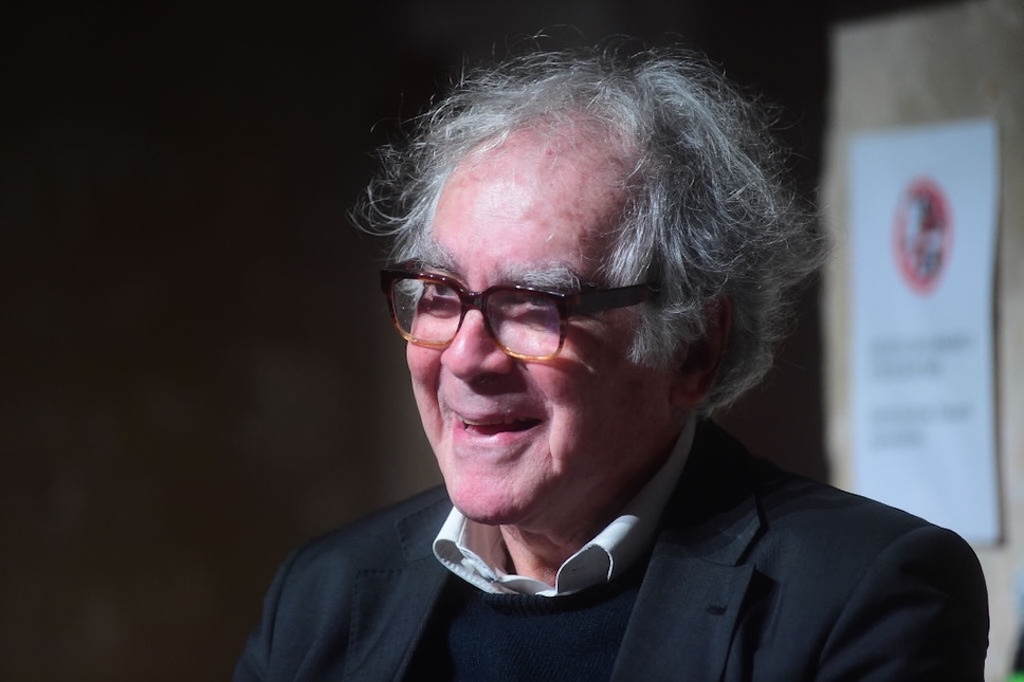
Carlo Ginzburg attends a conversation about "Piero Della Francesca" with Arturo Galansino at Testo Literature Festival at Stazione Leopolda on February 26, 2023, in Florence, Italy.

This month saw the passing of historian Carlo Ginzburg, a pioneer of microhistory. His focus on defeated radicals and heretics was not just a matter of concern for the past but reflected his thinking on the meaning of revolution today. (Roberto Serra - Iguana Press / Getty Images)


If we wanted to capture the meaning of Carlo Ginzburg and his family’s relationship to antifascism, we could do no better than read Winter in the Abruzzi (1944), one of the finest stories by his mother, the celebrated writer Natalia Ginzburg.

His father, Leone Ginzburg, a scholar of Russian literature and one of the founders of the Einaudi publishing house, had been sentenced to internal exile in the village of Pizzoli, near L’Aquila, as a “civilian war internee” (as both an anti-fascist and a Jew.) For Natalia, those years remained a kind of exile: a peasant world that seemed almost suspended outside time, governed by the rhythm of the seasons, by snow and sunshine, by the sound of church bells and the various kinds of fire.

It was in that world, at once enchanting and frightening — marked by Girò’s village shop with candles and oranges, and their serving girl Crocetta’s “long stories about death and cemeteries” — that Leone and Natalia lived between 1940 and 1943. They wrote, and edited proofs for publisher Einaudi, while their children, Carlo, Andrea, and Alessandra, played on the floor. After the brief downfall of Benito Mussolini in summer 1943, Leone returned to Rome to join the Resistance. Later arrested while part of the clandestine editorial team of the anti-fascist newspaper Italia Libera, Leone Ginzburg died at the hands of his Nazi torturers in Rome’s Regina Coeli prison on February 5, 1944. Of that time in Pizzoli, Natalia would retain a memory suffused with melancholy happiness, forever overshadowed by “the horror of his solitary death” and “the anguish that preceded his death.”

Carlo Ginzburg later became one of the most influential historians of his generation, best known for pioneering microhistory and for his classic The Cheese and the Worms, centered on the sixteenth-century miller and heretic Menocchio. Rather than writing political history from above or broad-brush social history, Ginzburg focused on Menocchio — an apparently marginal figure — in order to explore the world of popular culture. Yet the emphasis on his methodological innovations — a theme running through many of the obituaries published after his death on June 17 — risks obscuring another, no less important aspect of his intellectual trajectory: his oblique but enduring engagement with politics or, more precisely, with the problem of revolution as refracted through the anti-fascist tradition. This is a vast and complex subject, one that can only be explored here through a series of preliminary observations.

The Many Anti-Fascist Traditions

Leone and Natalia named Carlo in memory of Carlo Rosselli, who less than two years before his birth (April 15, 1939) had been assassinated together with his brother Nello in an ambush carried out by a French terrorist group at Mussolini’s behest. Carlo Rosselli was the founder of the revolutionary anti-fascist movement Giustizia e Libertà, of which Leone Ginzburg had been a leading figure in Turin during the 1930s. For Carlo Ginzburg, engaging with politics meant first and foremost coming to terms with an anti-fascist tradition deeply inscribed in his family’s memory. Yet although he had been “profoundly shaped by the tradition of antifascism,” Ginzburg admitted that he had tried to defend himself against antifascism when it became an “overwhelming force” within the youth protest movements of the 1960s and ’70s.

From the interwar years onward, antifascism embodied many often divergent and sometimes contradictory political ideas and practices, both in Italy and elsewhere. After 1945, it became one of the constitutional foundations of the Italian Republic. Above all, however, it was appropriated by the Communist political culture, which invoked its leading role in the Resistance to legitimize its commitment to parliamentary democracy. Yet during the 1960s and ’70s, antifascism was reimagined by new and rising students’ and workers’ movements as a language of ideological mobilization aimed at the radical transformation of Italian society. In that context, it often assumed totalizing, uncompromising — and at times violent — forms. “Many people of my generation,” Ginzburg explained,

were completely swept up by it. I believe that, in some way, I managed to keep myself outside it and to make a different choice. I think that this difference — or, if you prefer, this loyalty through tortuous and unobvious paths — is ultimately what has motivated all my choices, sometimes even unconsciously.

It is no simple task to grasp the meaning of these choices, including their unconscious dimensions, and to retrace their winding paths. It is not easy to unpick the memory of Leone (1909–1944), a father who was at once absent and profoundly present in the son’s life, and the central role played by his mother, Natalia (1916–1991), within the privileged social and cultural world in which Carlo grew up. Nor is it easy to historicize the diverse and layered trajectory of one of the greatest practitioners of the historian’s craft in recent decades, beyond the many self-representations that he himself offered. In short, it will not be easy to reread Ginzburg through Ginzburg, after Ginzburg. However, we can start with reference to his wider intellectual formation.

Geneaology

The foundational books of his trajectory — Antonio Gramsci’s Prison Notebooks, Ernesto de Martino’s The World of Magic, Carlo Levi’s Christ Stopped at Eboli, and Cesare Pavese’s Dialogues With Leucò — all pointed toward the world of the countryside, populated by “subaltern classes,” with their myths and rites. It was the rural world for which the Russian populists (narodniki) had fought in the late nineteenth century, seeking to mobilize its communal traditions in order to avert the traumatic transition to capitalism. His father, Leone, had been born in Odesa in 1909, under the Russian Empire, and felt a deep attachment to those traditions. Undoubtedly, in many ways, this intellectual genealogy shaped Ginzburg’s orientation toward the history of peasant religious radicalism during the 1950s and early 1960s.

Yet looming in the background were vast historical processes: Italy’s postwar economic boom, the decline of a centuries-old agrarian civilization, and the Second Vatican Council, a moment of profound renewal of the Church’s social and liturgical doctrines. It was within this context, rich in contradictory trends, that Ginzburg’s first extraordinary studies of the agrarian cults of the Friulian benandanti took shape. Through the records of inquisitorial trials, Ginzburg’s early research, including Night Battles (1966), I costituti di Don Pietro Manelfi (1970), Nicodemismo (1970), Giochi di pazienza (with Adriano Prosperi, 1975), and The Cheese and the Worms (1976) brought to light a radical peasant tradition. They opened a fissure in the solid wall of the victorious ruling classes and dominant ideologies of the sixteenth and seventeenth centuries, partially overcoming the hierarchical dichotomy between high and low, and restoring to history the voices of “a peasant religion impatient with dogmas and ceremonies,” ultimately silenced by inquisitorial authority.

The disruptive force of Ginzburg’s research, which unearthed fragments and deep strata of peasant radicalism, lay in its corrosive critique of mainstream left-wing cultures — based on deterministic ideas of modern industrial progress. In his understanding, those cultures were themselves, in their own way, “victims” of the historical rupture produced by the triumph of the Counter-Reformation, the imposition of a hierarchical culture, the marginalization of dissident groups, and the erasure of popular culture, largely pre-Christian in origin, over the course of the seventeenth century.

The meaning of past defeats, intertwined with those of the present, became the object of a reflection in which an awareness of the very long timescales of history was coupled with a determination to recognize the importance of the shorter timescales of politics. As the wave of youth protest movements rose in the late 1960s, along with the political and social conflicts that stemmed from the sense that the Resistance of 1943–45 had somehow been incomplete or its results “betrayed.” At the time, Ginzburg moved — always in his own way — within the orbit of the extraparliamentary left, particularly Adriano Sofri’s Lotta Continua. In a characteristically sharp and selective interpretation, set out in the Einaudi History of Italy (in his 1973 essay, “Folklore, Magic, Religion”), he argued that once “the effects of the shock imparted to Italian society by armed struggle and insurrection” had begun to subside, the Catholic hierarchy launched “a full-scale crusade, albeit one conducted with modern technical means.” Yet faced with the eruption of new impulses toward “carnivalesque liberation,” he also reminded his readers that “revolution” was a “long and tedious affair.”

Beneath the Surface

One of his most important works, The Cheese and the Worms, analyzed the cosmology of the miller Domenico Scandella, known as Menocchio, and his “desire for a ‘new world,’” where an ancient substratum of popular beliefs and millenarian expectations of justice converged. It was no accident that Walter Benjamin served as Ginzburg’s guide in this inquiry: “Nothing which has ever happened is to be given as lost to history,” even though “the past would fully befall only a resurrected humanity.” Yet this messianic and libertarian vision of the history of the defeated was accompanied by another, utterly different one — a dark and despairing outlook — suggested by the epigraph from Louis-Ferdinand Céline: “Everything of interest takes place in the shadows. . . .  We know nothing of the true history of men.” One might recharacterize this by asking: For every Menocchio who is “redeemed,” how many others have been swallowed by oblivion?

The German Jewish Marxist philosopher Benjamin and the French pro-fascist antisemitic writer Céline may make for an odd pair. Indeed, Ginzburg’s loyalty to the anti-fascist tradition, but outside its mainstream, opened up a broad space for cultural engagement without jeopardizing his uncompromising political orientation. Perhaps Ginzburg was also speaking about himself when he wrote that Menocchio “felt the need to appropriate the culture of his adversaries.” Following his Marxist critics — notably Eric J. Hobsbawm and Perry Anderson — we might ask to what extent Ginzburg’s fascination with the persecuted, the defeated, the marginal, and the heretical, while moving through terrain deeply marked by Romantic sensibilities, brought him to the threshold of irrational identification, even if he never crossed it. Yet his early fascination with what lay beneath the surface of historical experience remained a constant. First articulated in the “evidential paradigm” based on “clues,” it later evolved into a reflection on the epistemological status of “distance” and “proof” and found fuller expression through his engagement with Marc Bloch: “What is deepest in history may also be what is most certain” (Apology for History, or The Historian’s Craft, 1949).

To understand Carlo Ginzburg’s intellectual trajectory and his relationship to literature, culture, and, more broadly, politics, it is also essential to grasp his relationship with his mother, Natalia. As the custodian of Leone’s memory, a central figure at the postwar Einaudi publishing house and a writer who became increasingly engaged in public life through the Partito Comunista Italiano (PCI), Natalia exercised a profound influence on her son. She not only took responsibility for the upbringing of Carlo (alongside his brother, Andrea, and his sister, Alessandra) but also introduced him to some of the leading writers of the age, above all Italo Calvino. Equally important, she nurtured Carlo’s narrative gifts — one of the defining features of his work as a historian — and encouraged him to experiment with new forms of expression that would later become part of the intellectual and stylistic foundations of microhistory. The academic trajectory that then led him from Bologna to Los Angeles, precisely as he was invigorating and directing, together with Giovanni Levi, Einaudi’s Microstorie series (1981–1991), altered and broadened the scale of his research. In the meantime, his interests had shifted and expanded dramatically, bending in directions that also hinted toward an implicit self-criticism of his earlier paths. Ginzburg fought against postmodern neoskepticism, which denied the status of truth and severed its connection to reality and thereby opened the way to negationism, denying the extermination of the Jews of Europe.

In his most methodologically “extreme” work, Ecstasies: Deciphering the Witches’ Sabbath (1989), microhistory intersected with a form of global history avant la lettre, ranging from Friuli to Siberia across the vast Eurasian expanse of shamanism in search of historical and morphological connections. The witches’ sabbath was interpreted as a “formation of cultural compromise” between elements of learned and folkloric origin, crystallizing in the western Alpine region during the fourteenth century and emerging from inquisitorial action against Jews, lepers, and Muslims, and subsequently against witches and sorcerers.

As in the case of the royal healing touch exercised by the kings of France and England, which Marc Bloch had analysed in The Royal Touch (1924), this amounted to “a veritable fabrication.” “After all,” Ginzburg wrote in 1989,

the conspiracy is only an extreme, almost caricatural instance of a much more complex phenomenon: the attempt to transform (or manipulate) society. Growing scepticism about the efficacy and results of both revolutionary and technocratic projects obliges us to rethink the manner in which political action intervenes in deep social structures, and its real capacity to modify them.

Intellectual Shift

These were words that seemed to take leave of the European revolutionary tradition, at the culmination of a trajectory that preceded the postcommunist transitions of Eastern Europe in 1989. In the background loomed the fractured and painful memory of Italy’s Years of Lead — the turbulent decade of political violence, terrorism, and social conflict that marked the 1970s. It was no coincidence that in these years, Ginzburg used the same philological tools that he had applied to inquisitorial records to the documents relating to the trial of Adriano Sofri. The former leader of far-left group Lotta Continua, Sofri was later tried and convicted for his role in the 1972 assassination of police commissioner Luigi Calabresi, one of the most controversial political murder cases of the Years of Lead. After the 9/11 terrorist attacks and the launch of the US-led “war on terror,” Ginzburg’s attention increasingly focused on Niccolò Machiavelli, Thomas Hobbes, and the new tyrannical tendencies of power, grounded in “fear, reverence, and terror.” Yet Ginzburg’s fascination with rebellious figures, and with the revolutionary energy they were capable of inspiring, was far from extinguished. It could be discerned, for example, in the subtle texture of his writings on the much-loved Stendhal: “Julien Sorel [the leading character in Stendhal’s Red and the Black] is not a liberal; he is an anachronistic Jacobin. Le rouge et le noir tells the story of a tragic individual defeat, not of a victorious revolution.”

From this perspective, Perry Anderson’s polemic regarding Ginzburg’s alleged drift toward a “conservative liberalism” missed a fundamental point. Certainly, as global transformations unfolded and generated local repercussions — beginning with the rise of Silvio Berlusconi’s charismatic populism in the early 1990s — his fidelity to the anti-fascist tradition followed even more tortuous and subtle paths, without thereby cutting the thread of a personal and political continuity. It was an attitude that Ginzburg himself said he had learned from reading Gramsci’s Prison Notebooks, where Gramsci had recognized that “fascism triumphed because it was able to provide a (reactionary) answer to questions that were not themselves reactionary.”

As he explained in a 2002 dialogue with the trade unionist and anti-fascist veteran Vittorio Foa — a former member of Giustizia e Libertà and a friend of his father, Leone — Ginzburg was careful to distinguish the radicalism of thought from radicalism in action. This was one of the lasting lessons he drew from Italy’s Years of Lead. Meanwhile, his battle against neo-skepticism had led him toward an intellectual project quite different from the one with which he had begun, gradually shifting his focus from the problem of “revolution” to that of the modern function of the political lie as “conspiracy.” Increasingly preoccupied with political propaganda and its mechanisms of mass manipulation, he turned his attention to what a nearly forgotten 1934 work by the Russian psychologist Wladimir Drabovitch had called “the fragility of freedom and the seduction of dictatorships” — a book that Ginzburg had recently rediscovered and reread.

In the bleak and awful world of Donald Trump, Vladimir Putin, and the fake news, phenomena that seem to thrive in the terrain cultivated by extreme deconstructionism, Ginzburg continued, to the very end, to insist on the necessity of seeking truth as an essential precondition for individual freedom.