Israel Is Kurd-Washing Its Crimes in Gaza
Faced with criticism of the war in Gaza, Israeli leaders cynically ask why the world worries about the Palestinians and not the Kurds. Israel’s supposed pro-Kurdish stance is empty posturing — and risks damaging the Kurdish fight for liberation.
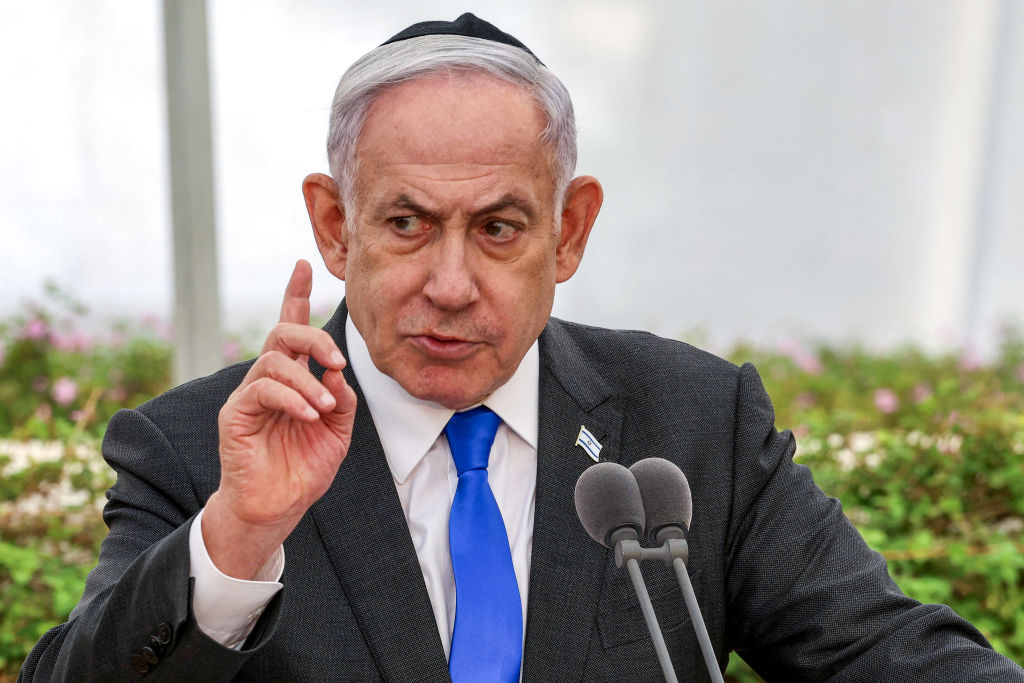
Israeli PM Benjamin Netanyahu speaks during an event commemorating the 1948 Altalena Affair, June 18. (SHAUL GOLAN/POOL/AFP via Getty Images)
Days after an airstrike on a Gazan refugee camp killed dozens of civilians, Palestinian campaigners urged “All eyes on Rafah.” But far-right podcaster Yair Netanyahu instead urged “All eyes on Kurdistan.” The Miami-based thirty-two-year-old, the failson of the Israeli prime minister, here attempted a typical kind of “Kurd-washing.” The trick has been repeatedly deployed during the war by his father Benjamin Netanyahu and other prominent Israeli lobbyists and leaders, notably foreign minister Israel Katz — most recently in a war of words over Israel’s mooted operation in Lebanon. Kurdish suffering is raised as a mere ruse to deflect criticism of a war that has seen the International Court of Justice warn Israel against acts of genocide.
In turn, one of the Kurdish cause’s foremost enemies — Turkish president Recep Tayyip Erdoğan — styles himself as defender of the Palestinian struggle. Given the historic and contemporary state violence committed against the Kurds by many of Israel’s enemies, from Iran to Iraq and Syria, it might seem obvious for Israel and the Kurds to find common cause.
But in truth, the divides aren’t quite so simple. Erdoğan continues to profit from oil sales fueling Israel’s slaughter, striking a diplomatic balance between vocal opposition to and pragmatic engagement with Israel in order to maintain regional influence and secure post-conflict reconstruction contracts. Likewise, Israel’s nominal support for the Kurdish cause might line the pockets of US-allied Iraqi Kurdish elites but does nothing to help millions of ordinary Kurds. Rather, it exposes innocent Kurds to retributive violence from Iran, helps Erdoğan garner support for his attacks on the Kurds, and endangers recent gains made by the transnational left-wing Kurdish movement, notably in Rojava (Syrian Kurdistan).