Anabaptism Was the Revolutionary Face of Reformation Europe
The challenge to the Catholic Church in Europe’s Reformation also stirred up a wave of social revolt by peasants and the urban poor. The Anabaptist movement became a channel for this revolt before it was savagely repressed by a fearful ruling class.
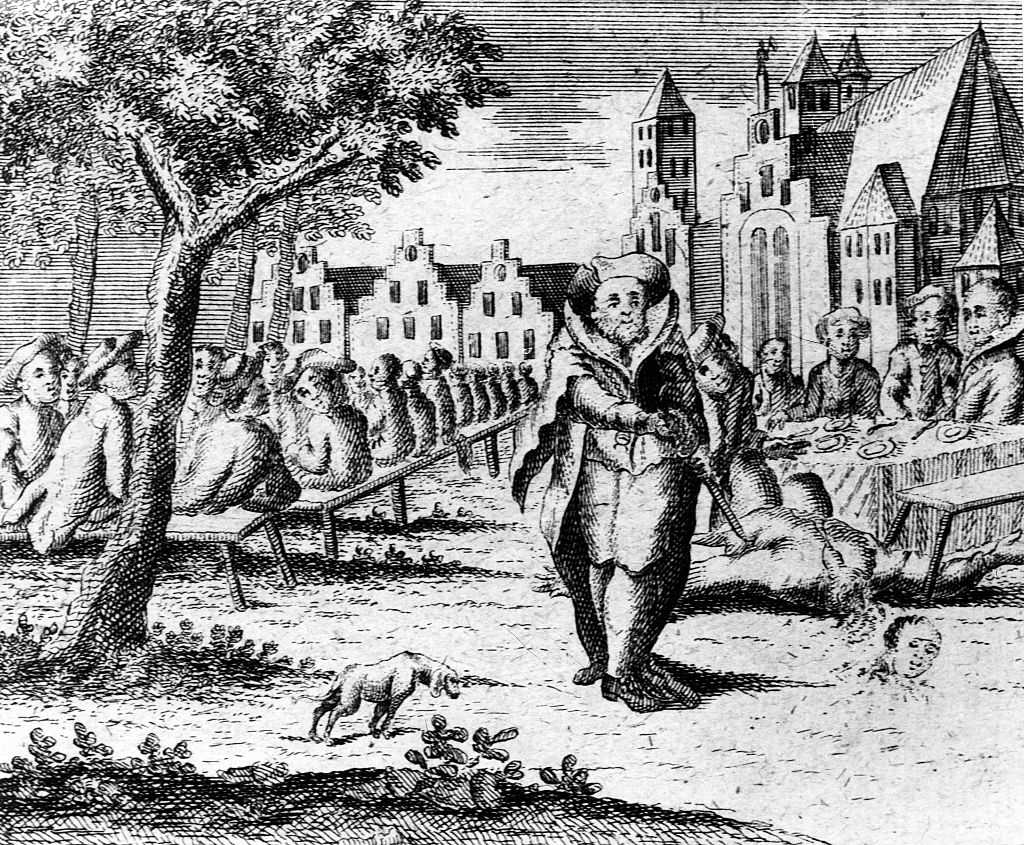
Copper engraving of Anabaptist leader Jan van Leiden of Münster, Germany, beheading a nonbeliever at a banquet, 1534. (Ullstein bild via Getty Images)
In 1525, the revolt historians refer to as the German Peasants’ War was defeated. Hundreds of thousands of peasants and other members of the “common people” had risen up against German princes and bishops. Inspired, in part, by the Reformation that had begun a few years earlier, these rebels moved far beyond this starting point, demanding the democratization of their communities, an end to oppression and unjust taxes, and a restoration of common lands and property.
Some figures, like Thomas Müntzer, went further than simply posing demands to reform society and the church by raising ideas about how society could be remade in a truly radical way. They preached an end to the corrupt and exploitative rule of the princes and nobles, arguing that people could live communally, sharing resources and wealth among the commons.
The peasant uprising threw the members of the German ruling class onto the back foot, but they quickly recovered. Fearing revolution from below, they drowned the rising in blood. Tens of thousands of peasants were massacred. In the aftermath, anyone who had taken part in the rebellion — or had even shown sympathy for it — was at risk of imprisonment, torture, and execution.