The Egalitarian Radicalism of Thomas Müntzer
Reformation-era preacher Thomas Müntzer’s menacing of elites and his role in the Peasants’ War won him a lasting reputation as a theologian of revolution. Müntzer fostered apocalyptic dreams of equality in a time of tyrants, only to find his head on a spike.
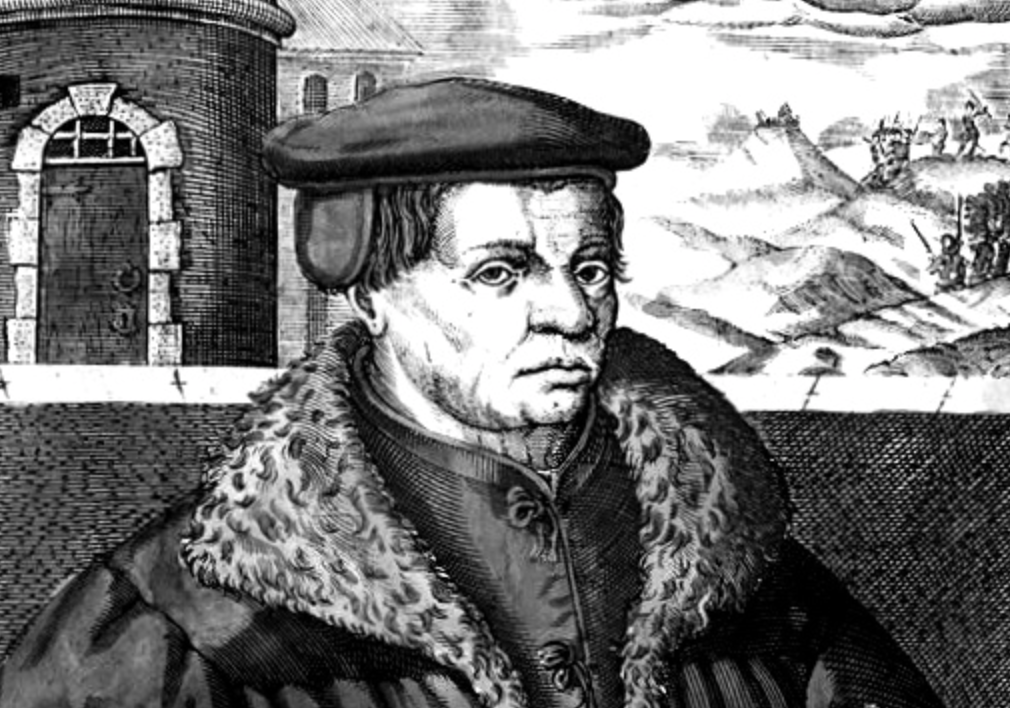
Engraving of Thomas Müntzer. (Wikimedia Commons)
When the princes finally captured Thomas Müntzer, they put the thumbscrews on him. Shortly before he was beheaded on May 27, 1525, he confessed under torture to starting the Peasants’ War “in order that Christianity should make all men equal.” Any noble who refused to share his goods “amongst everyone according to their need” was “to have his head chopped off or be hanged.” These revelations gave this inflammatory preacher a lasting reputation as a theologian of revolution.
Müntzer was a hero to the German Democratic Republic, whose leaders made a present of his manuscripts to Joseph Stalin and built a grand memorial to him on the site of his bloody defeat at Bad Frankenhausen. Today the local tourist office markets it as “the Sistine Chapel of the North.” However, celebrations of Müntzer as a protocommunist come up against a scarcity of corroborating evidence. Torturers get the answers they want, but Müntzer’s publications and correspondence provide no hint of his opposition to early capitalism or private property.
Andrew Drummond’s skeptical and compassionate biography documents a life that is as much a warning as an inspiration to the modern left. Its evocative, exquisitely detailed panorama of Reformation Germany leads us to reflect on the tangled links between religious zeal and the successful exercise of political power.