The EU Comes Out of Its Elections Weaker and Meaner
Analysis of June’s European elections widely highlighted the rise of far-right parties. But the campaign also capped a much deeper shift: an EU trapped in a mood of decline and able to offer few forward-looking projects other than militarizing its borders.
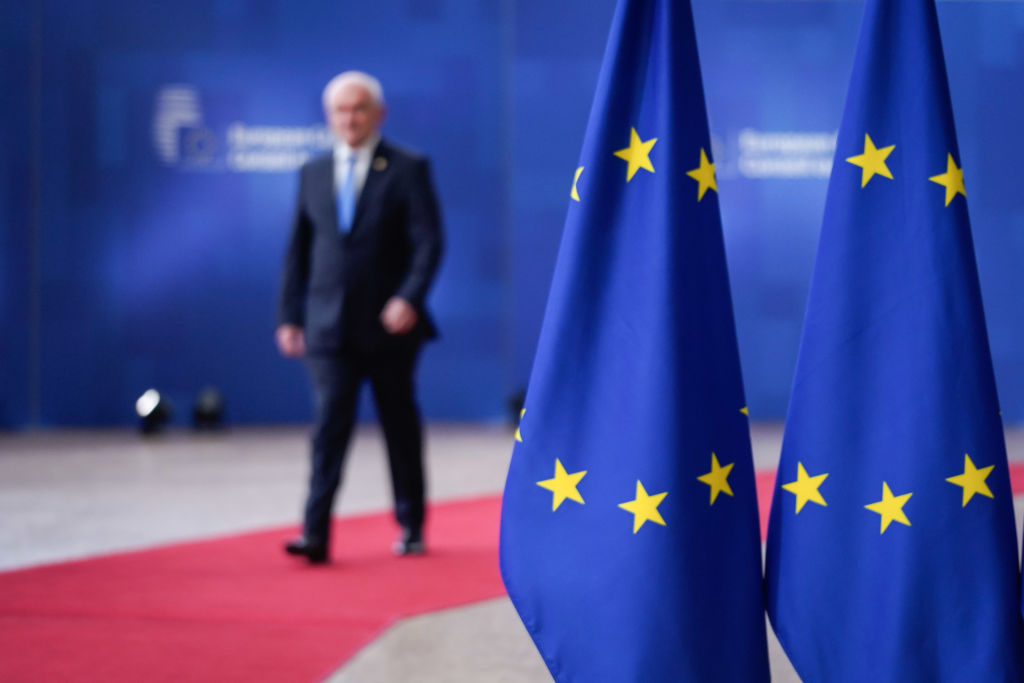
European Union flags at a meeting in Brussels, Belgium, on June 17, 2024. (Simon Wohlfahrt / Bloomberg via Getty Images)
Five years seems a long time ago.
When Europe last went to the polls, its politics certainly weren’t healthy. EU-backed austerity blighted lives across the continent, the radical right was rising, and from France’s gilet jaunes protests to Britain’s Brexit crisis, countries were wracked with social conflict.
But there were things to be hopeful about. Popular movements had catapulted new left-wing forces into parliaments. Reacting to an antiestablishment surge, even the citadels of capitalism recognized the need for reform. Critics of billionaire tax avoidance spoke at the World Economic Forum in Davos, left-leaning industrial strategists advised conservative governments, and — rhetorically at least — tackling the climate emergency was a settled issue across the political spectrum.