The European Elections Should Be a Wake-Up Call for the Left
Left-wing parties like Die Linke and Podemos look set to perform poorly in this weekend’s EU elections. Working-class voters are far from happy with the current EU leadership, but the Left is failing to convince them that it can change things.
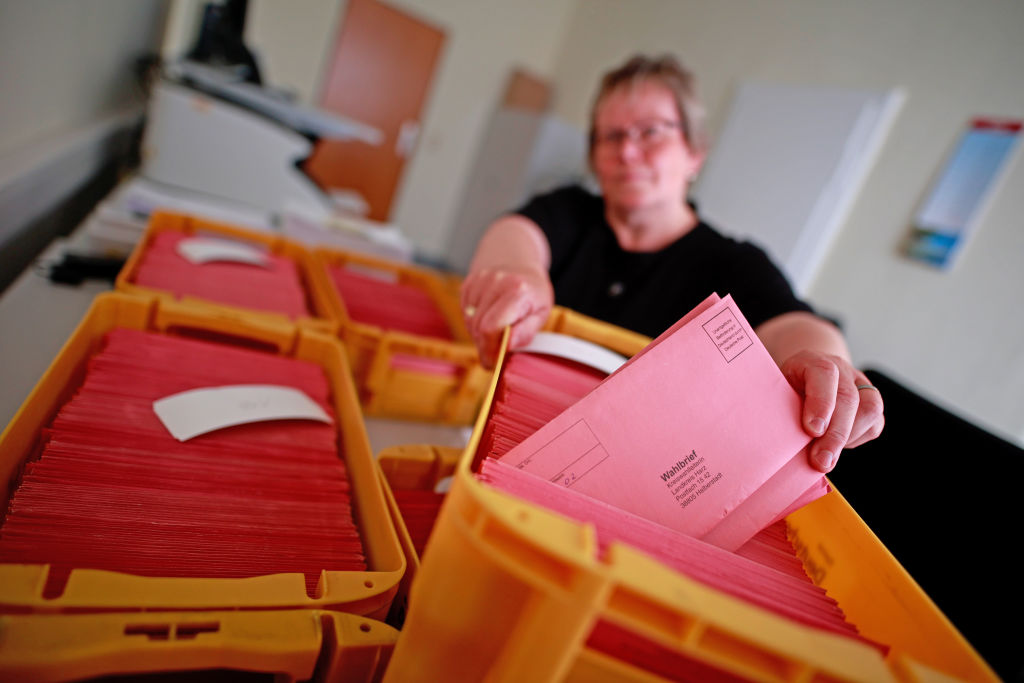
Sorting incoming postal vote envelopes for the European elections, Saxony-Anhalt, Halberstadt, Germany, June 6, 2024. (Matthias Bein / picture alliance via Getty Images)
As elections for the European Parliament get underway, the parties of the Left have little to get excited about. In country after country, forces that ten years ago fronted what looked like a European-wide revolt against austerity are barely keeping their heads above water. Podemos in Spain and Die Linke in Germany are both polling between 2 and 3 percent. La France Insoumise, which won 22 percent in the 2022 presidential elections, is at 8 percent. In Greece, once the epicenter of the revolt, a Syriza now shorn of any pretensions to radicalism limps on at about 15 percent; it is uncertain that any of the various left-wing splits there will even win seats. Only in tiny Belgium, where the Workers’ Party (PTB) is polling around 17 percent — double its 2019 score — does the Left seem to be decisively bucking the trend.
Doubtless, the polls can be wrong, and the EU elections have never been the Left’s strong suit. Turnout tends to be low and generally skews middle class, giving a natural advantage to parties like the Greens. But this time around, it’s not centrist liberalism that looks to win big, but the far right. In Germany, the Alternative für Deutschland (AfD) is still polling in the high teens, despite several scandals involving candidate Maximilian Krah and the moves by French far-right leader Marine Le Pen to ditch her German allies. In France, Le Pen’s Rassemblement National heads polls by a wide margin and could take one-third of the vote.
The parties that make up the two far-right groups in the EU’s parliament, Identity and Democracy (ID) and the European Conservatives and Reformists (ECR), are likely to win something around 150 of the 720 seats. The Left, by contrast, already the smallest group, is likely to drop to the low thirties, marking a further decline from its high watermark of fifty-two seats in 2014 and forty-one in 2019. Until recently, rumors had swirled that a left group would not come together at all.