Rigoberta Menchú Paved the Way for an Opening in Guatemala
Guatemalan indigenous activist Rigoberta Menchú helped set the tone and forge the climate that convicted the rabidly anti-communist general Efraín Rios Montt and condemned many others guilty of genocide during the country’s brutal civil war.
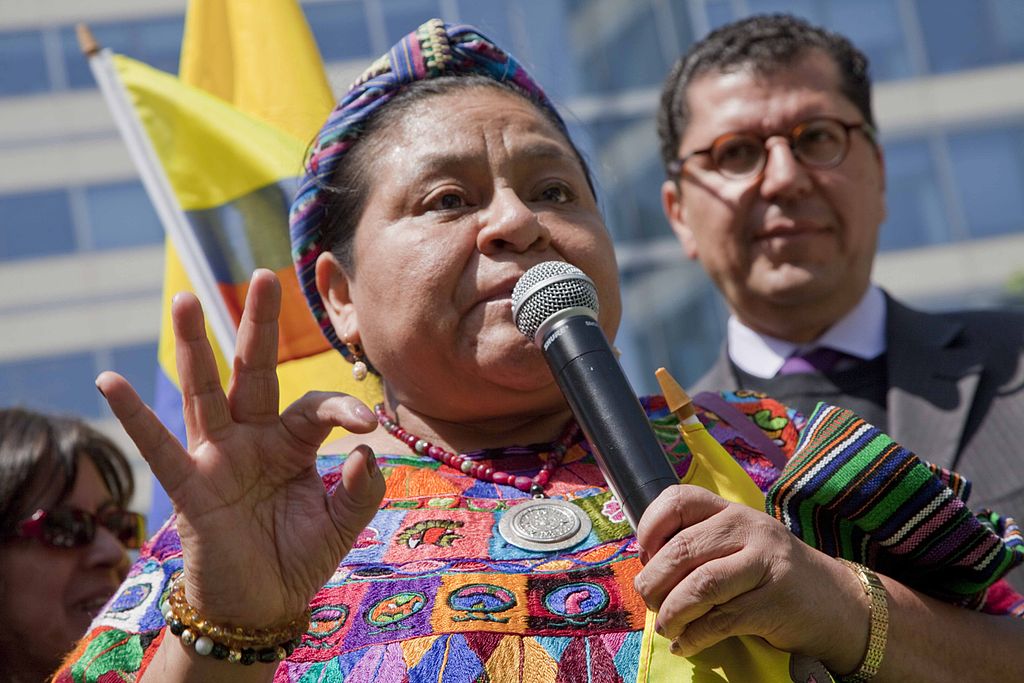
Rigoberta Menchú speaks outside the World Bank headquarters in New York on April 21, 2015. (Wikimedia Commons)
“It is said that our indigenous ancestors, Mayas and Aztecs, made human sacrifices to their gods,” Rigoberta Menchú once quipped. “It occurs to me to ask: How many humans have been sacrificed to the gods of capital in the last five hundred years?” The activist’s 1983 memoir, I, Rigoberta Menchú, recounts the shocking story of an American-sponsored counterinsurgency against the majority Maya population.
Acting largely in self-defense in a system of exploitation and forced labor going back centuries, Menchú’s fellow Maya were attacked in the name of anti-communism. Tens of thousands of villagers were massacred, whole villages were eradicated, women were raped, and children were killed.
But even before her family was dragged into the insurgency for their humble fight to keep their small parcel of land, Menchú suffered unimaginable losses. Before her decade-long exile to Mexico and Europe — where she told her story in a spoken testimonial that became the acclaimed memoir — she was orphaned by the military regimes that she and her family lived under, losing almost her entire family.