Don’t Be So Quick to Laud Woodrow Wilson
An effort is underway to restore President Woodrow Wilson’s reputation and laud him as a great reformer. But his best reforms were won by a mass movement, often pushing against Wilson himself. It’s that movement that should be revived, not Wilson’s legacy.
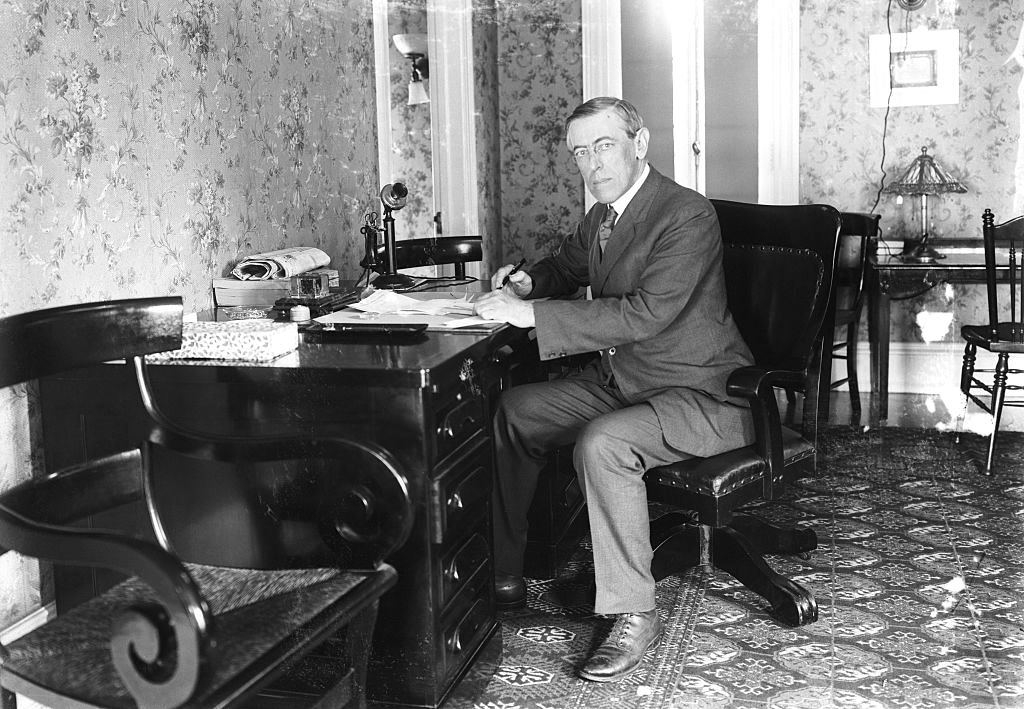
Woodrow Wilson working at his desk on May 1, 1917. (Bettmann / Getty Images)
In a recent article for the Atlantic, Republican columnist and former George W. Bush speechwriter David Frum responded to what he perceived to be President Woodrow Wilson’s unfairly declining reputation. In an attempt to “un-cancel” Wilson, whose legacy Frum feels has been wrongly maligned by members of the twenty-eighth president’s own Democratic Party, Frum reached across the aisle to extend qualified praise to Wilson, holding him up as a “great domestic reformer.”
Both Wilson’s greatest admirers and his most strident detractors today recognize that his legacy is about more than the man himself. Our analysis should be as well: we should try to comprehend what his presidency can tell us about the coalitional forces in Democratic Party politics. Understanding how and why Wilson’s loose “progressive” coalition failed offers lessons for the fractious political tendency that goes by the same name today.
Back then, as now, the Democratic Party was a conflicted big tent of centrist business elites, avaricious war hawks, working-class Americans, and technocratic reformers. With vague and contradictory gestures to organized labor and wary capital, Wilson’s Democrats promised a revitalized and reformed America. They did not deliver.