Basic Press Freedoms Are at Stake in the Julian Assange Case
In Julian Assange’s ongoing extradition battle in the UK, the United States is asserting its right to track down any journalist anywhere in the world, seize them, haul them to the US, and throw them into a US prison.
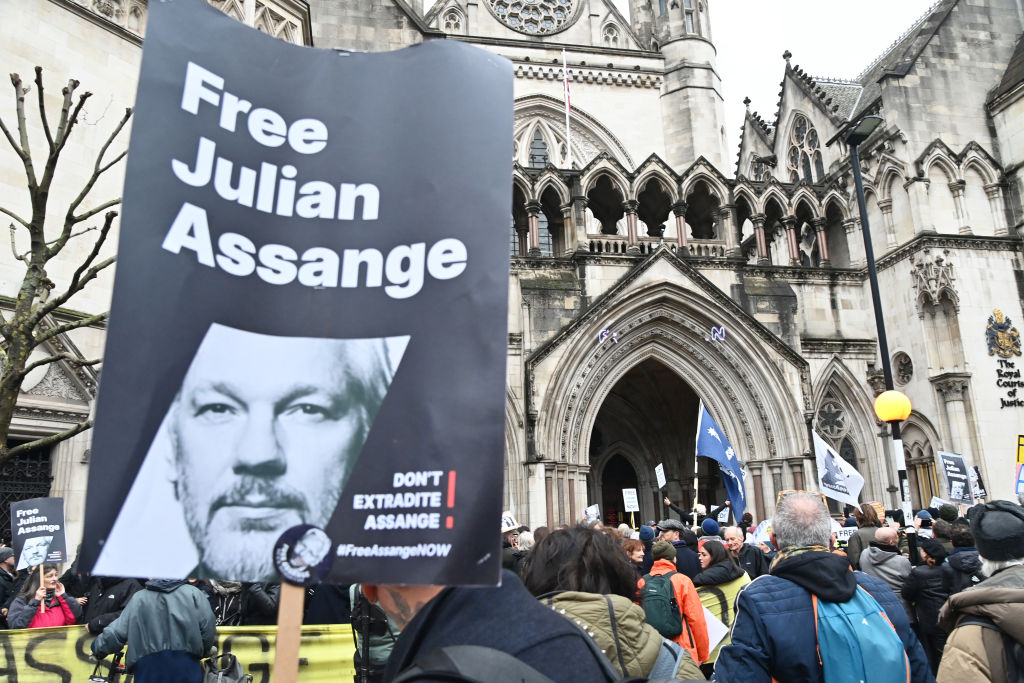
A rally for Julian Assange on February 21, 2024 in London, UK. (Dave Benett / Getty Images)
At least a half hour before the Royal Courts of Justice opened their doors on Tuesday, February 20, thousands had already gathered outside the courthouse. In two hours, two British judges would be hearing two days of arguments in what may be journalist Julian Assange’s final plea that the UK courts halt his extradition to the United States. The United States is seeking to put the WikiLeaks founder on trial for exposing its war crimes — which would set a precedent that the Espionage Act can be used to prosecute journalists who publish information the US government doesn’t like.
The opinion of protesters gathered outside could be heard in their chant: “There is only one decision, no extradition.”
Over the next two days, protesters remained outside the courthouse. They gathered before court opened, and many were still outside when it ended. When members of Assange’s family, legal team, and WikiLeaks exited the court each day, they were greeted by applause. It rained Wednesday morning, but hundreds were still outside before the court opened. By the time the proceedings adjourned, the rain was gone and numbers again grew to the thousands. Yellow “free Assange” ribbons covered the courthouse gates. Everyone entering and exiting the courthouse had to pass through the crowds.