Tony Blair’s New Labour Subordinated the Party to Capitalists
In the 1990s, Tony Blair and his circle “modernized” the British Labour Party by minimizing the power of members and embracing neoliberal dogmas. But it was the prior hollowing out of the party’s institutions that allowed New Labour to come to power.
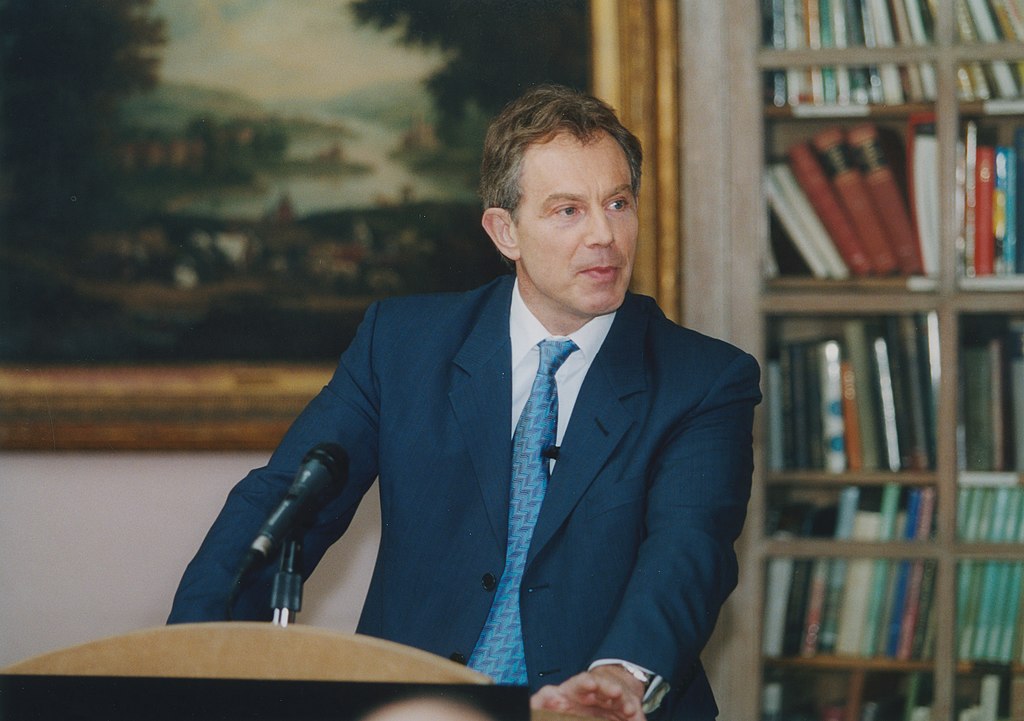
Then UK prime minister Tony Blair speaking on “The Next Steps for New Labour” at the London School of Economics, March12, 2002. (LSE Library via Wikimedia Commons)
To speak of the “modernizers” in the context of British Labour Party in the years culminating in the landslide election victory of 1997 has become synonymous with Tony Blair, Gordon Brown, and their immediate circle. They believed that Labour needed to ruthlessly centralize power inside the party to minimize the power of members, ditch Clause IV (its historic constitutional commitment to socialism and public ownership), and, if not positively embrace, then at least accept the inevitability of capitalist globalization under the aegis of neoliberalism.
Under the rebranded New Labour, the party would need to cast aside its historical claim to be the vehicle of the organized working class in order to become a broad, cross-class progressive force. While the “link,” which saw a number of unions financially affiliate to the party, would just about remain intact (though not without critics on either side), a New Labour government would claim to treat the unions with fairness but offer them no special favors. The election of Bill Clinton as US president in 1992 gave further impetus to this effort to realign Labour as something akin to the Democrats.