Keir Starmer Is Keeping New Labour’s Authoritarianism Alive
The Blair-era Labour Party introduced a raft of policies hostile to civil liberties. The British government continues to push legislation to clamp down on protesters and protect police, and Keir Starmer is letting it happen.
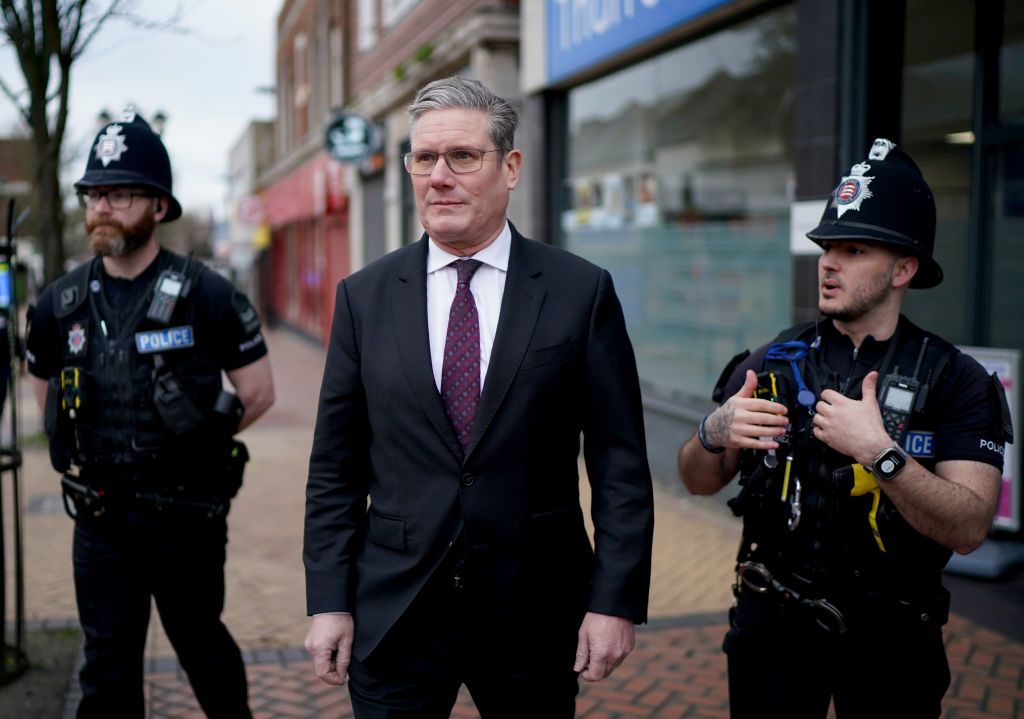
Labour leader Keir Starmer meeting with police in Thurrock , Essex, UK, on February 20, 2023. (Gareth Fuller / PA Images via Getty Images)
There was uproar earlier this month when the Metropolitan Police preemptively arrested several people planning to protest the coronation of Charles Windsor. Those arrested and held in custody for as long as sixteen hours included Graham Smith, chief executive of anti-monarchy pressure group Republic, which nevertheless successfully mounted a protest with a turnout estimated at around two thousand. While the protest appeared to be more concerned with the cost of the occasion than the affront to democratic principle represented by the continuing existence of the monarchy, the demonstrators’ refusal to go meekly along with the whole charade should be applauded.
But it is indicative of the tetchy, McCarthyite mood currently prevalent among British politicians, police, and securocrats that even a liberal NGO like Republic should find itself caught up in such a draconian anti-protest crackdown. Indeed, Republic said it had been in “close conversation” with the Metropolitan Police for four months prior to the protest, so it can hardly be accused of not playing by the book. Also among those arrested were a number of activists from Just Stop Oil — whose activities have whipped up the right-wing press into a state of hysteria — and Animal Rising, which disrupted last month’s Grand National at Aintree.
Those apprehended were arrested under the Public Order Act, passed into law earlier this year, which imposed further restrictions on the right to protest to those contained in last year’s Police, Crime, Sentencing and Courts (PCSC) Act. The Public Order Act grants police new powers to stop protests, extends suspicionless stop-and-search, and specifically makes “locking on” a criminal offence, as well as introducing new banning orders preventing individuals subject to them from attending protests. The PCSC Act had already empowered police to stop protests considered to have the potential to be too noisy or for causing a public nuisance.