Nobody Should Look to Tony Blair and New Labour as a Model for Anything
The New Labour years were an opportunity for the Labour Party to break with Margaret Thatcher's disastrous legacy. Instead, Tony Blair and co. left Thatcher's economic architecture in place and locked Britain into a free-market nightmare.
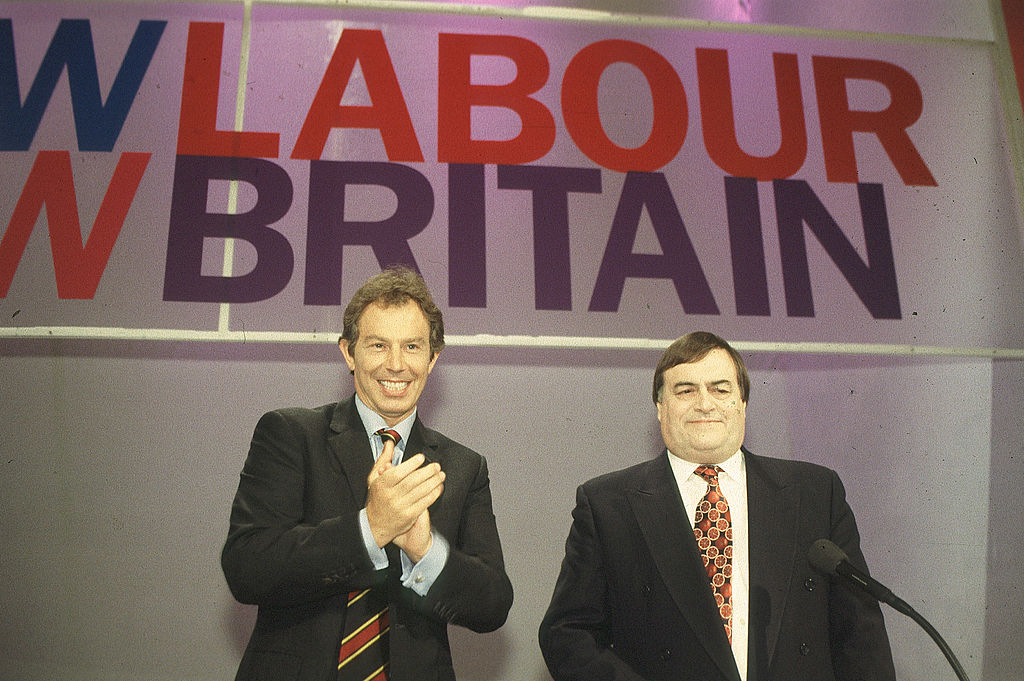
Prime Minister Tony Blair and Deputy PM John Prescott at the 1998 Labour Party Conference. (Jeff Overs / BBC News / Current Affairs via Getty Images)
New Labour has always been good at self-promotion, but in recent years, it’s been waging an all-out war to defend its economic legacy. The Tony Blair Institute (a not-for-profit that doesn’t declare who funds it, but is rumored to have received £9 million from the Saudi government) has led the way, releasing an endless stream of videos and reports claiming that Tony Blair and Gordon Brown were secret Keynesians who strove to make Britain “more equal” during their thirteen-year reign.
The same narrative is pushed in in the BBC’s latest documentary series — the rather tedious Blair & Brown: The New Labour Revolution — in which Ed Balls makes the startling claim that their government was “the most redistributive since 1945.” (Of the three series consultants, one is high priest of Blairism John Rentoul and another worked for the Cabinet Office in the early 2000s.)
In classic New Labour fashion, this narrative has been carefully chosen to fit the times. If you wind back to 2015, two key New Labour acolytes and cabinet ministers, John Hutton and Alan Milburn, were boasting about how much less their government spent compared to Margaret Thatcher’s. If you go all the way back to 1997, the New Labour manifesto proudly committed them to maintaining Tory fiscal plans for two years and promised to maintain the new macroeconomic consensus.