What We Should Remember on Armistice Day
World War I wasn’t a war for democracy — it was a catastrophic, barbaric conflict that left tens of millions of people dead and set the stage for anti-democratic rollbacks for years to come. Anti-war socialists were right to oppose it.
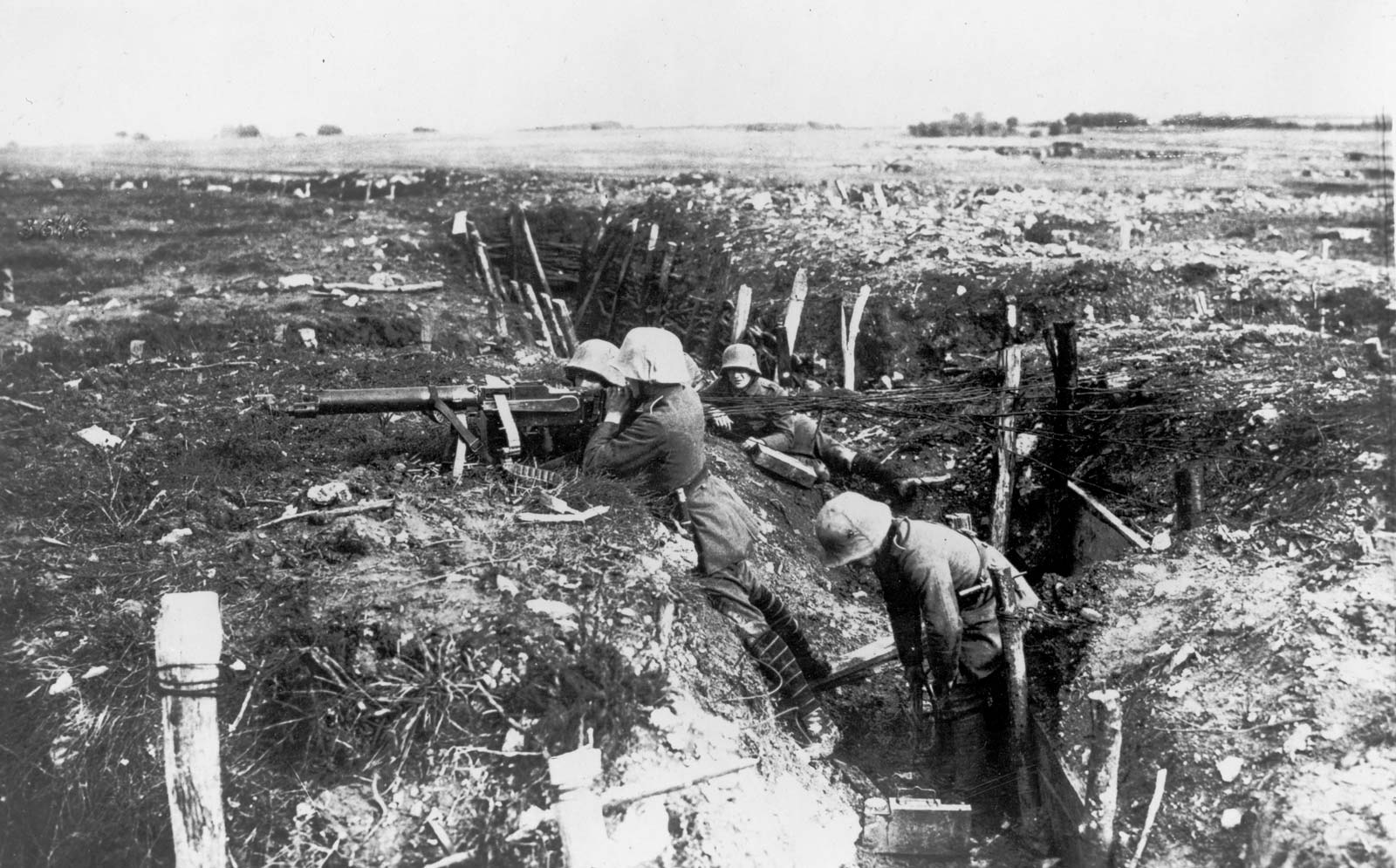
A German machine gun emplacement during World War I.(Library of Congress)
“We are far from wishing war,” Russian tsar Nicholas II wrote to his cousin, Kaiser Wilhelm II of Germany, in the days leading up to World War I. Wilhelm, too, felt the weight of the war’s imminent arrival — a war that would ultimately leave 9 million soldiers and millions more civilians dead — but likewise deflected any role he had in creating the conditions for it. “In my endeavors to maintain the peace of the world I have gone to the utmost limit possible. The responsibility of the disaster . . . will not be laid at my door,” he insisted, his pleas for peace crossing in the telegraph wires the same day Nicholas sent his own telegram: July 31, 1914.
The infamous, dynastic exchange between the two relatives (the so-called “Willy-Nicky telegrams”) are suffused with the naked confusion and sheer incompetence of Europe’s early-twentieth-century rulers, so unsure about how to stop a global war whose wheels they had set in motion. Reckless military mobilization, an international arms race, and nationalistic fervor — combined with a willingness to relinquish decisions to generals — sparked the conflagration; the sources of Europe’s unraveling were entirely of elites’ own making. The assassination of Archduke Franz Ferdinand on June 28, 1914 simply lit the spark under the decades-long system of secret treaties and elite alliances solidified through imperialism and anti-democratic hostility.
As Ferdinand’s death activated the defenses of a reactionary yet tenacious ancien régime — and the shared self-absolution of its leaders — Russia, Germany, and their respective allies (France and England for Russia, Austro-Hungary for Germany) were left pleading relentlessly, insufficiently, to stop a war they clearly anticipated, and at least some wanted. Europe deliberately stumbled — “sleepwalked,” in the view of one historian — into total war, bringing the United States into the conflict three years later.