Sleep Easy, Shane
With humor, warmth, and delicate beauty, Shane MacGowan’s lyricism profoundly shaped a generation — and was never afraid to denounce injustice, no matter how unpopular this made him with the powerful.
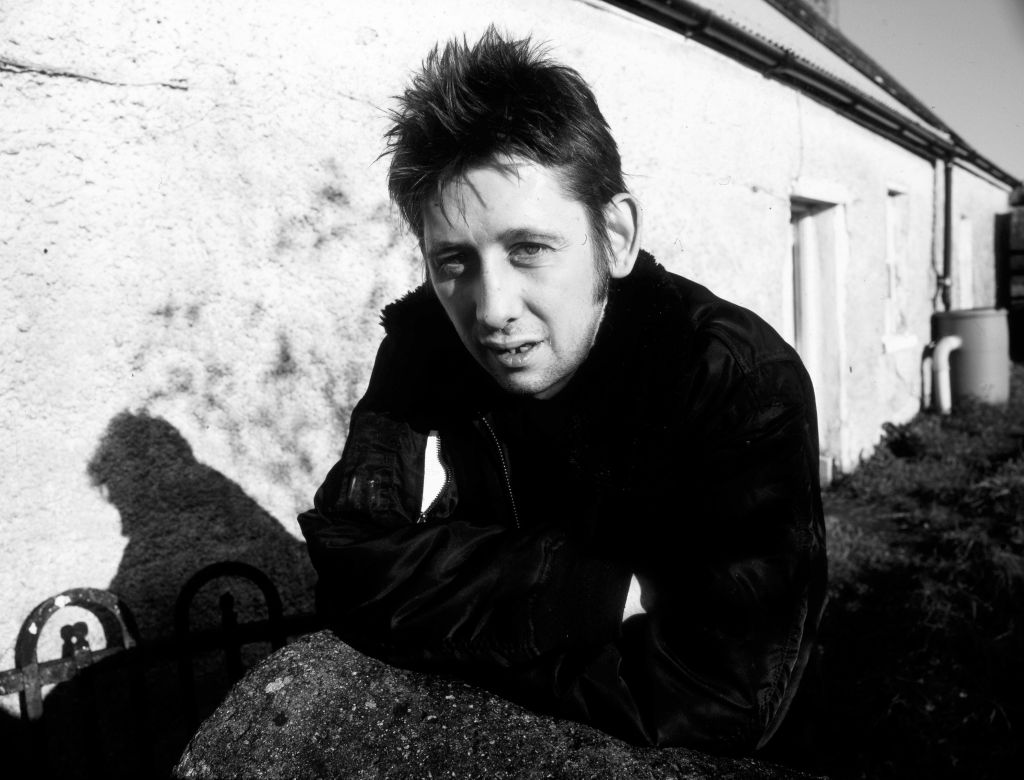
Singer and musician Shane MacGowan, of the Pogues, at his family home in Nenagh, Tipperary, Ireland, 1997. (Martyn Goodacre / Getty Images)
If Shane MacGowan had a hero, it was the Irish writer and playwright Brendan Behan. When the New Musical Express (NME) sought out Brendan’s mugshot for a 1984 feature on the working-class Dublin writer, the image credit went to “Shane MacGowan.” The image had been on the wall in his London apartment, part of a shrine to MacGowan’s heritage. NME readers were informed, in a quote from the novelist Flann O’Brien, that Brendan was “proprietor of the biggest heart that has beaten in Ireland for the past forty years.” Tragically, Brendan died at just forty-one. The theater director Joan Littlewood, recounting her feelings on hearing the news of Behan’s passing in 1964, said she was so angry she wanted to go to Dublin and kick the coffin.
For Shane MacGowan, getting Behan into the pages of the NME was an honor in itself. In his memoir he remembered how “all I said was I was an Irish Republican, and that was enough. I said that one of my favourite writers was Brendan Behan. And that made them have an article about Brendan in the NME.” There is a certain tragedy in Shane passing on in the centenary year of his idol’s birth. Both contributed much to the cultural understanding of the Irish in Britain, and both battled the same demons of addiction.
Born in Kent on Christmas Day 1957, MacGowan’s background was in some ways typical of the Irish migrant experience. It was estimated that half of those born in the Ireland of the 1930s had left the country, the majority for the neighboring island. What E. P. Thompson had observed of the nineteenth-century Irish emigrant, that “it is not the friction but the relative ease with which the Irish were absorbed into the working-class community which is remarkable,” remained true, as Mary E. Daly notes in her history of Irish population decline. In cities like Manchester, Liverpool, and London, Irish migrants established a strong cultural presence. Indeed, when the great ethnomusicologist Alan Lomax traveled Ireland in the 1950s, he did so because he felt “the last notes of the old, high, and beautiful Irish civilization are dying away — a civilization which produced an epic, lyric, and musical literature as noble as any in the world.” He would find as many Irish voices to record, and as much evidence of that important culture, amid the emigrants who settled in Britain.