Rest in Power, Sinéad O’Connor
Sinéad O’Connor was more than just a musician. She was a symbol of a changing society in Ireland that made defenders of the status quo incredibly uncomfortable.
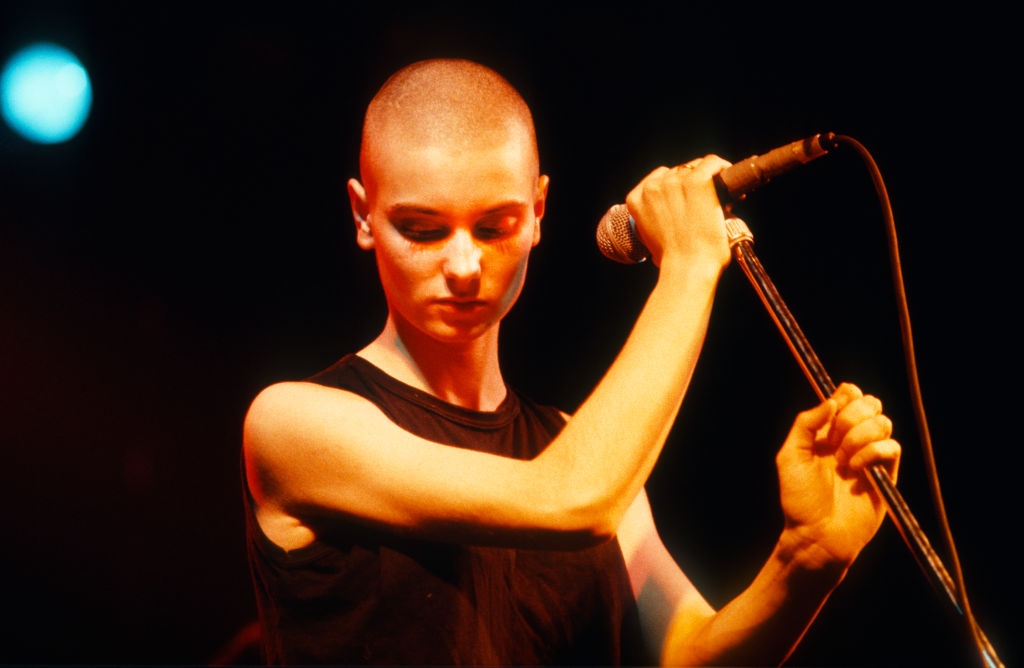
Irish singer Sinead O’Connor (1966–2023) performs on stage in Gent, Belgium, 1988. (Gie Knaeps / Getty Images)
The words of James Connolly, socialist and Irish revolutionary, cropped up again and again under pictures of Sinéad O’Connor the night of her death on July 26. His quote, referring to the attitude toward the revolutionaries of the 1798 United Irishmen rebellion, holds as true to the legendary singer today as it did to Wolfe Tone and Connolly himself.
The grief was palpable on Irish social media the night Sinéad died as the nation collectively mourned the death of the music giant. Within minutes of the news breaking, timelines were flooded with tributes to Sinéad: stories of her talent, stories of her often anonymous kindness, stories of her activism against injustice of all kinds. Tune into any national radio station and it wouldn’t be long until you’d hear “Mandinka.” Vigils were organized to send her off with tearful goodbyes.
For myself and many others, Sinéad O’Connor held a strange position in the Irish zeitgeist. Relentlessly principled and profoundly before her time, Sinéad used her superstar platform to lift the voices of the vulnerable and admonish those in power from the very start of her career. For that, she was vilified and cast aside by a body politic that was neither willing nor ready to listen. But those who loved and believed her thought it would only be a matter of time before she would be vindicated and embraced as the national treasure that she was. Her vindication would come too late.