The Welfare State Can Survive the Great Aging
Workers spend their whole lives producing wealth for society, only to be told that being provided for in old age is impossible. It’s not a rollback ordinary people should accept.
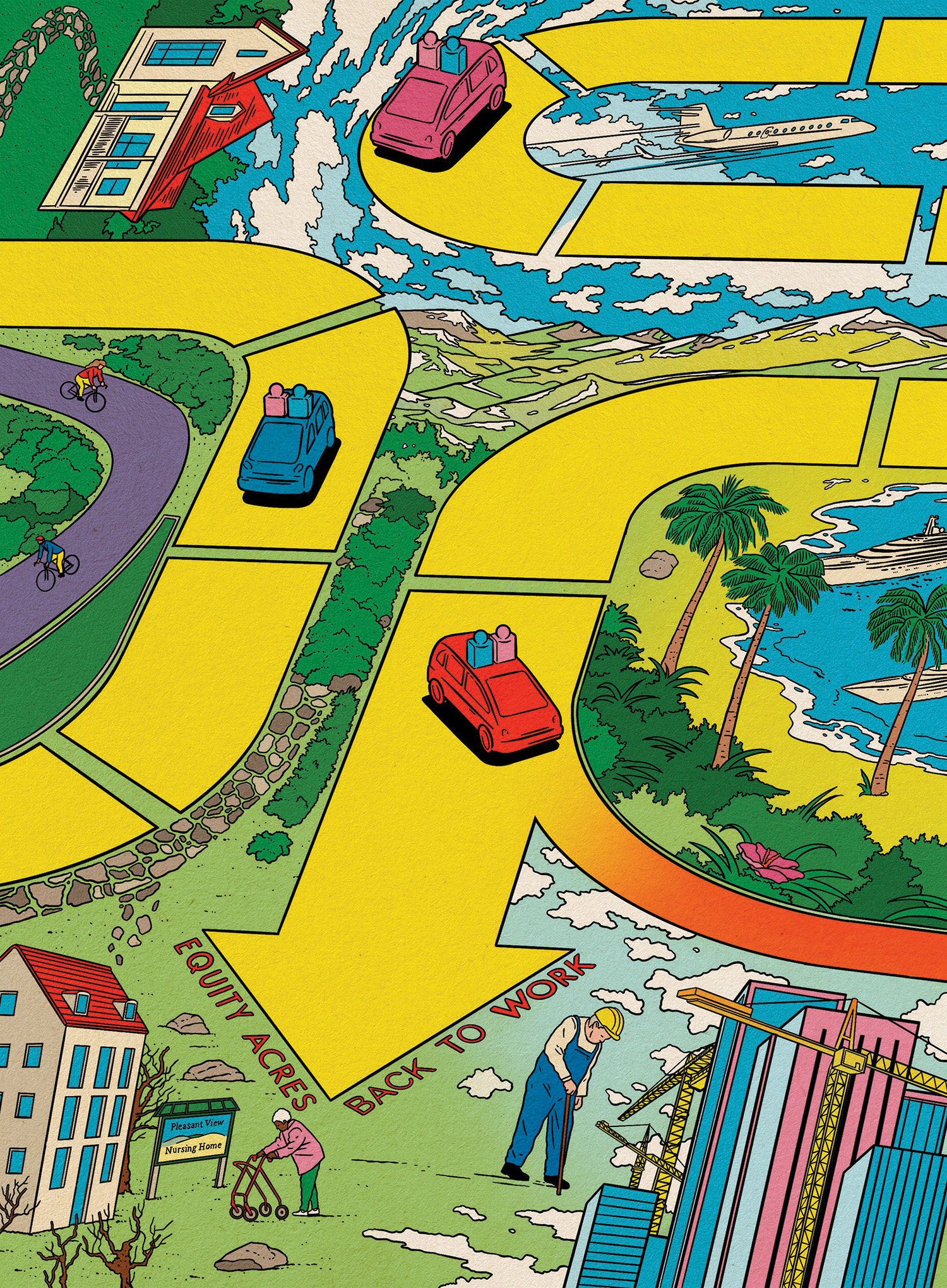
Illustration by Simon Bailly / Sepia
Alongside the warming of the climate, the aging of the population — most prominently in the rich world but increasingly in poor countries as well — represents the most profound shift in the human condition we will face as the century advances. Global life expectancy, which stood at under 47 years in 1950, exceeds 72 today. That is a historically unprecedented change, and yet its impact has barely begun to be felt.
Between 1950 and 2022, the median age of the world’s population increased by only eight years, from 22 to 30. But by the century’s end, it will surge to 43. The numbers are even starker if we look at the rich world alone. In high-income countries, the median age has already risen from 28 to 41, and the over-65 share of the population has already increased two and a half times over, from 8 to 20 percent. By the end of the century, fully one-third of the rich countries’ populations will be what we now consider to be retirement age — though by that point it’s unlikely we will see it that way.
Aging is not, of course, an artifact of capitalism per se, and the problems it presents might not require any full-blown transformation of the mode of production, however desirable that might be on other grounds. But along with so much else, the prospects for socialist politics will be profoundly affected, one way or another, by how societies grapple with the demographic shift now underway.