Benjamin Netanyahu’s Political Future May Be Over
Rather than bolster Benjamin Netanyahu in a “rally around the flag” effect, the October 7 attack on Israel has destroyed his standing with voters. Netanyahu's political career, which has fundamentally reshaped Israeli society, may be effectively finished.
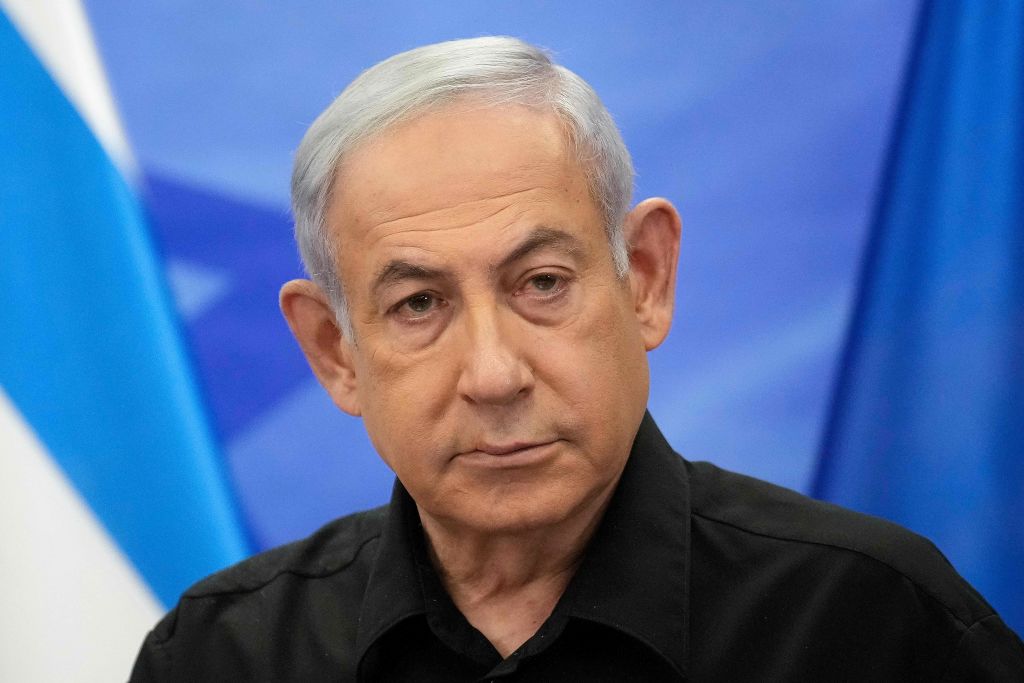
Israeli prime minister Benjamin Netanyahu addresses media in Jerusalem on October 24, 2023. (Christophe Ena / AFP via Getty Images)
On its face, Hamas’s October 7 brutal attack on Israel might have been expected to shore up support for longtime right-wing prime minister Benjamin Netanyahu. Instead, polling suggests that Israelis overwhelmingly blame his government and would vote for the opposition if elections were held today.
Josh, aka Ettingermentum, is a graduate student and prolific political analyst whose Substack has quickly become among the most widely read of its kind. In the following interview, he joins Jacobin’s Luke Savage for a far-ranging discussion of his recent piece, “Life After Netanyahu,” the political origins of Israel’s current consensus, why this month’s violence represent an existential threat to Netanyahu’s entire political brand, and how Israel’s shifting political dynamics may impact the Palestinians. Their interview has been edited for length and clarity.
A Brief History of Electoral Politics
Luke Savage
The jumping-off point of your recent analysis was the formative role of Benjamin Netanyahu in establishing and solidifying Israel’s long-standing political consensus — a consensus you argue was shattered by Hamas’s attack earlier this month. Before we come to recent events, how would you characterize Netanyahu’s significance in his country’s political history? And what would you say are the fundamental tenets of the consensus he’s synonymous with?
Ettingermentum