In Parma, the Working Class Defeated the Fascists on the Barricades
In August 1922, Benito Mussolini’s Fascists crushed a general strike by force. But on the barricades of Parma, the working class imposed a stunning military defeat on the Blackshirts — a victory that inspired enduring resistance against the Fascist government.
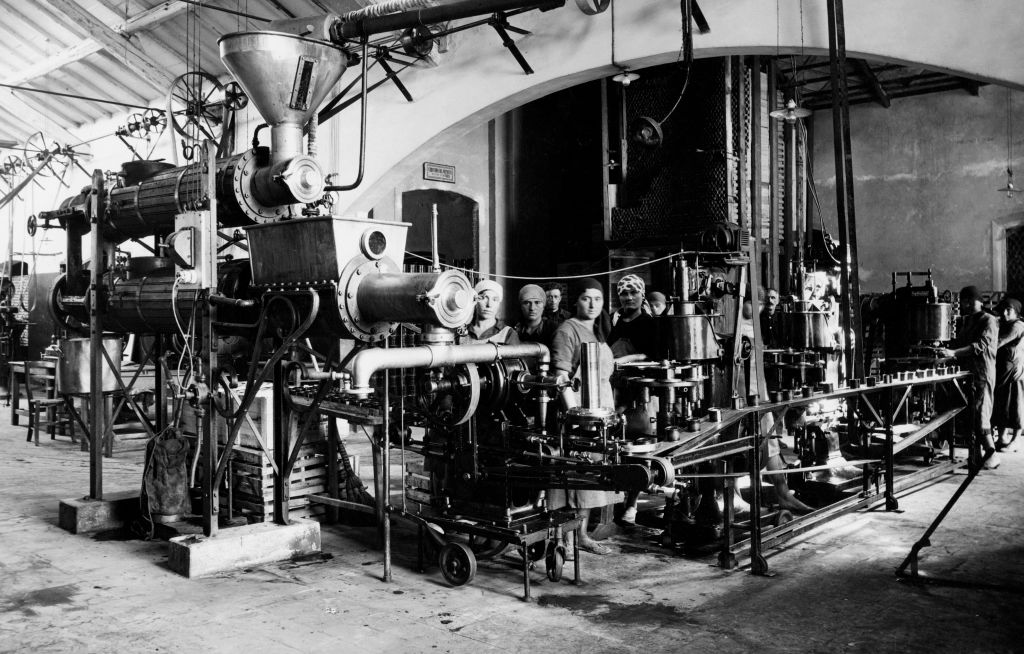
Italian workers in a factory, circa 1920–30. (Touring Club Italiano / Marka / Universal Images Group via Getty Images)
The story of Italian Fascism’s rise to power has often been told as if it was an unstoppable force. In this account, Blackshirt violence — tolerated, if not outright aided, by the royal authorities, culminating in the March on Rome and Benito Mussolini’s appointment as prime minister in 1922 — easily defeated a labor movement whose leaders were either sectarian or inept.
However, historians’ work points toward a more complex picture of Italy in the years after World War I. Not only because in 1919–21 the Fascist movement turned into a fierce defender of the bourgeois order — winning it the support of landowners and industrialists. But also because across much of Italy, workers and farmhands did keep the struggle alive.
From the cities to the countryside, many communities did not bow to Fascist violence; instead, the so-called “subversive working-class” movement — with its various strands of Socialists, Communists, anarchists, and revolutionary syndicalists — held firm. In summer 1922, Mussolini’s men controlled much of northern Italy’s Po Valley region already, through a campaign of intimidation, beatings, arson attacks, and punitive expeditions. Yet the workers’ unions, joined in the Alleanza del Lavoro (“Labor Alliance”), were still able to launch a vast general strike throughout Italy on August 1, 1922.