Ivy League Admissions Favor the Rich by Design
Egalitarian reformers have argued that elite college admissions should focus less on test scores and more on personal statements, extracurriculars, and recommendation letters. New research suggests that this approach only further favors the wealthy.
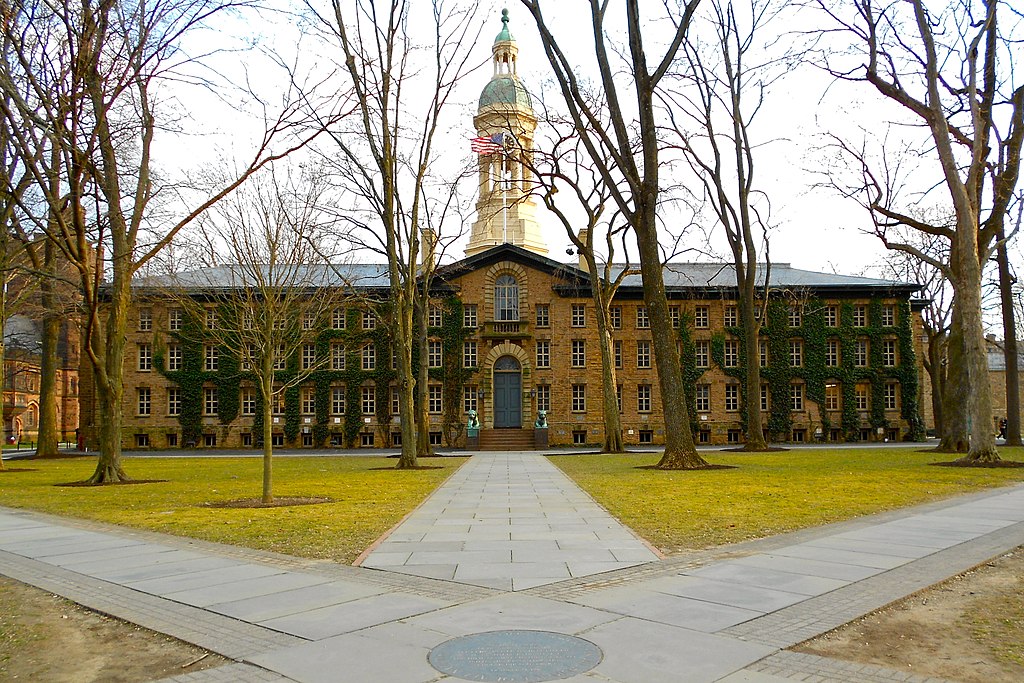
Nassau Hall at Princeton University in New Jersey. (Smallbones / Wikimedia Commons)
Raj Chetty, David Deming, and John Friedman put out a study this week that, among other things, tries to identify whether rich people are disproportionately admitted to top universities and, if so, why. This has been a topic of intense interest in the discourse for as long as I have been involved in it, and I think this study helpfully resolves some of the long-standing disputes in that discourse.
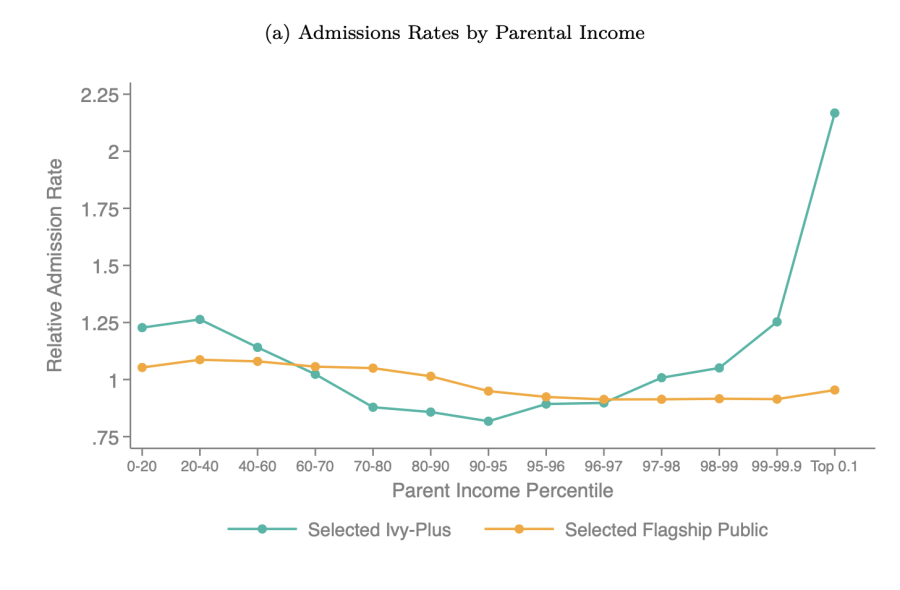
For starters, while it is true that children from the richest families have better academic qualifications than the population overall, it is not true that this fully explains their greater representation in the top universities. After controlling for test scores, the richest kids are admitted at more than twice the rate as the population overall. Notably, this admissions boost is found among the twelve Ivy-Plus schools analyzed in the study, but not at flagship public universities.