To Stop the Race to the Bottom, Europe Needs to Recognize Platform Workers as Workers
Plans for EU-wide regulation of digital platforms could finally enshrine labor rights for workers for firms like Uber. Neoliberals from Emmanuel Macron to the far right are resisting the move.
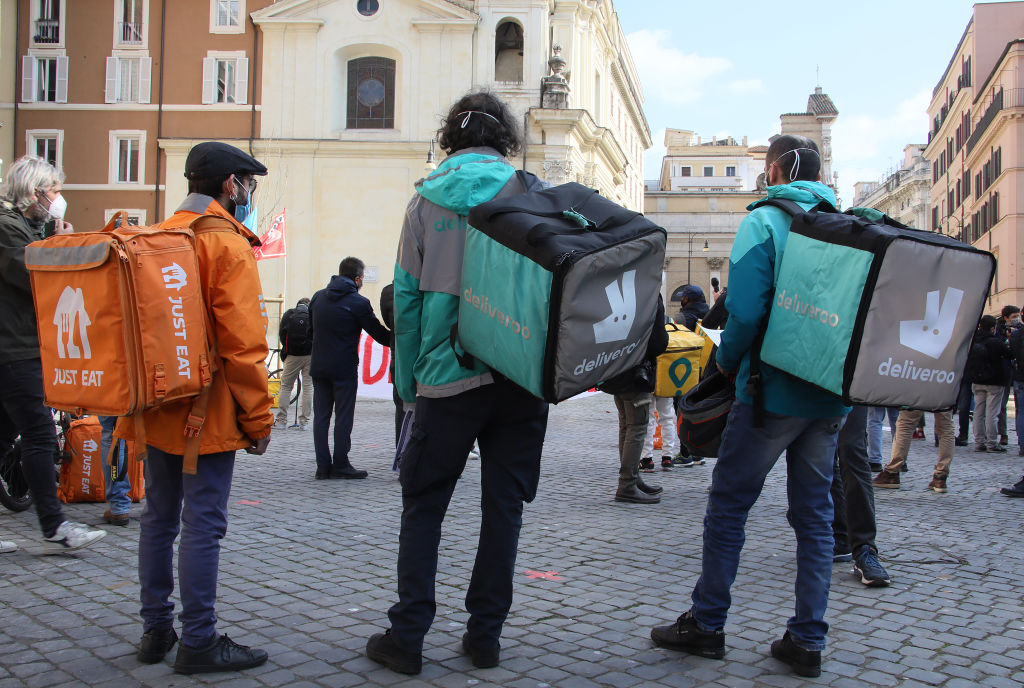
A protest by delivery riders for employment protections in the gig economy, Rome, Italy, March 26, 2021. (Marco Ravagli / Future Publishing via Getty Images)
On June 2, the CEOs of Deliveroo, Uber, Delivery Hero, Wolt, and Bolt joined forces in a show of unity among gig-economy bosses. Their aim: to sabotage European Union attempts at regulating platform work.
In an open letter in the Financial Times, the CEOs sought to defend business as usual. Naturally, they prioritized not the recognition of workers’ labor rights, but what they called “protecting the flexibility of genuine self-employment while encouraging measures that improve working conditions in a manner that is compatible with on-demand work.” They argued that in “focus[ing] almost exclusively on who is an employee and who is not,” the planned EU directive on the issue “does little to improve the rights of the self-employed.”
The dispute took a fresh step forward little over a week later, as the Council of the European Union approved its negotiating position on the directive, in view of its so-called trialogue with the European Parliament and the European Commission. Sadly, the result is a downward compromise that represents a brake on platform workers’ ambitions for proper labor rights. Yet, even with this complication, this struggle is far from over — and will have far-reaching consequences for precarious workers around Europe.